

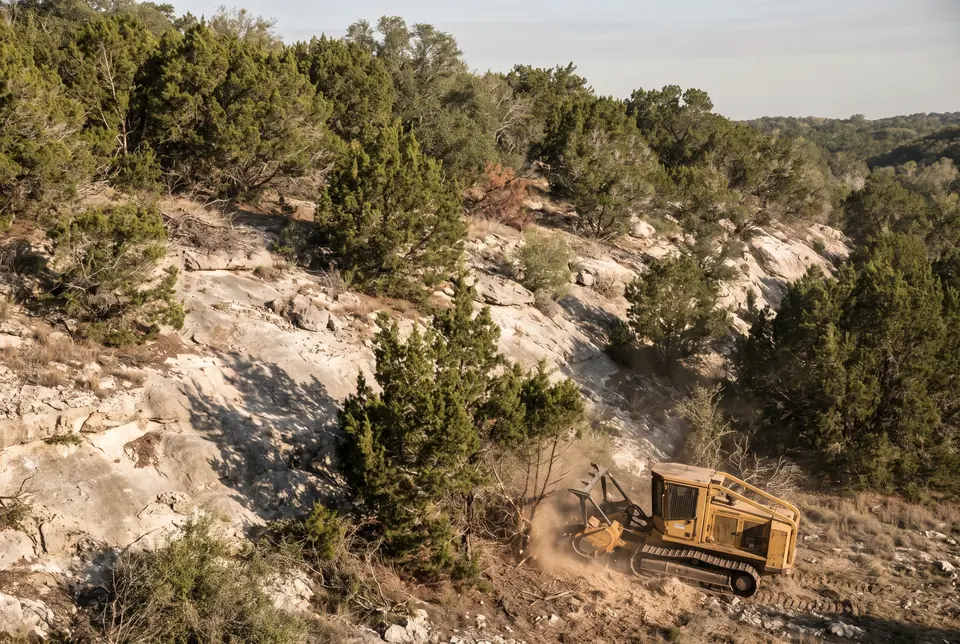
Texas cedar removal that leaves your best oaks standing
9 Arrow does cedar removal across the Texas Hill Country, grinding Ashe juniper where it stands and keeping the oaks you want. No burn piles. No hauling. No mess.
- Ashe juniper ground in place, no burning
- Selective clearing around the oaks you keep
- No tree size limit on our machines
- Fine finish that helps grass return
What is cedar removal?
Cedar removal is the clearing of Ashe juniper, the native evergreen most Texans call cedar, from pasture, home sites and woodland. In the Hill Country, 9 Arrow removes cedar by grinding it in place with mulching machines and clearing selectively around the oaks and other trees worth keeping.
Why Ashe juniper takes over Hill Country land
Ashe juniper is the native evergreen most Texans call cedar. Texas A&M research describes the species as most abundant on the eastern and southern Edwards Plateau, which takes in much of the Texas Hill Country. Birds such as robins and cedar waxwings eat the berries and drop the seed far from the parent tree. Ashe juniper pollen also drives the winter allergy season Texans know as cedar fever.
Left alone, scattered cedar thickens into dense stands that shade out native grass and close off access and views. Cedar removal is usually about getting that ground back for grass, livestock, wildlife, a home site or a sale.
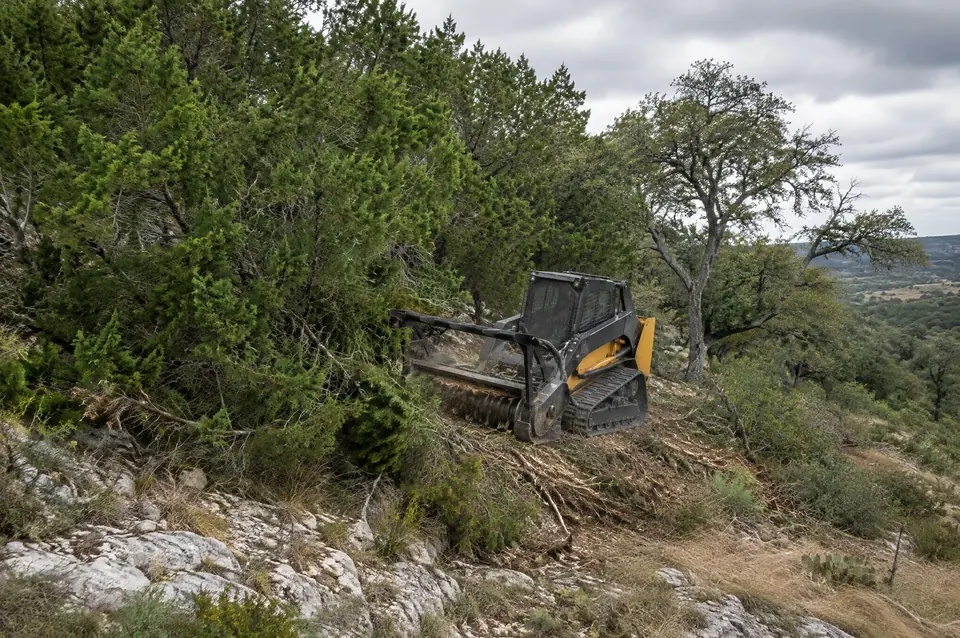
Selective cedar removal that protects your oaks
Selective cedar removal takes the Ashe juniper and leaves the live oaks, Spanish oaks and other trees you want to keep. Selective clearing is often the best way to protect healthy trees, and the trees left standing give Hill Country land its shade and character.
Oak wilt is common in Central Texas, spreads in defined paths, and infected trees cannot be restored. Texas A&M Forest Service advises avoiding pruning or wounding oaks from February through June and painting wounds on oaks at any time of year. Live oaks can pass the disease through connected root systems, and small sap-feeding beetles carry spores to fresh wounds.
If your property has oaks close to the cedar, talk with us about timing before the work is scheduled.
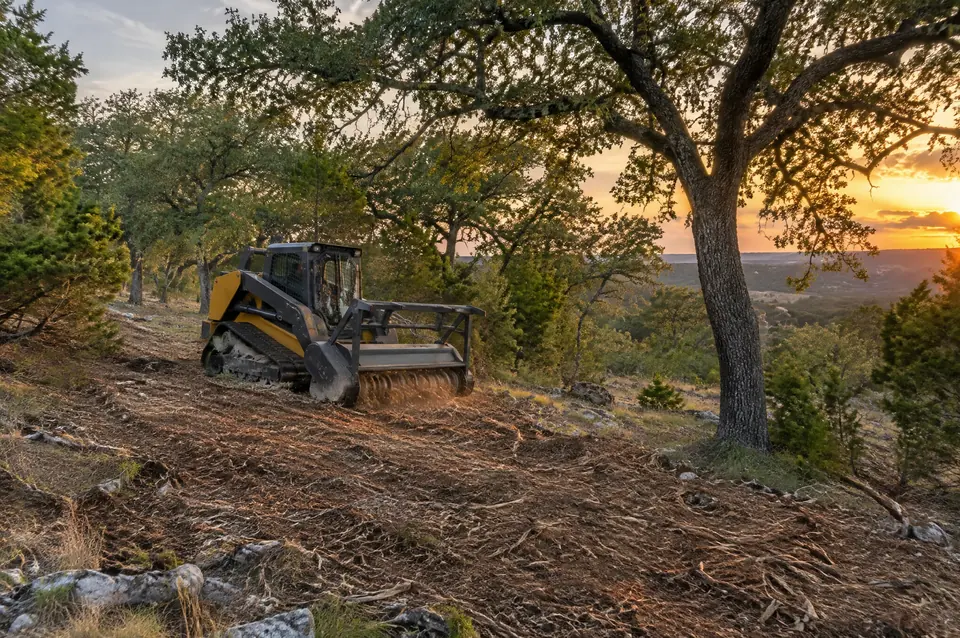
Grinding cedar in place instead of burning it
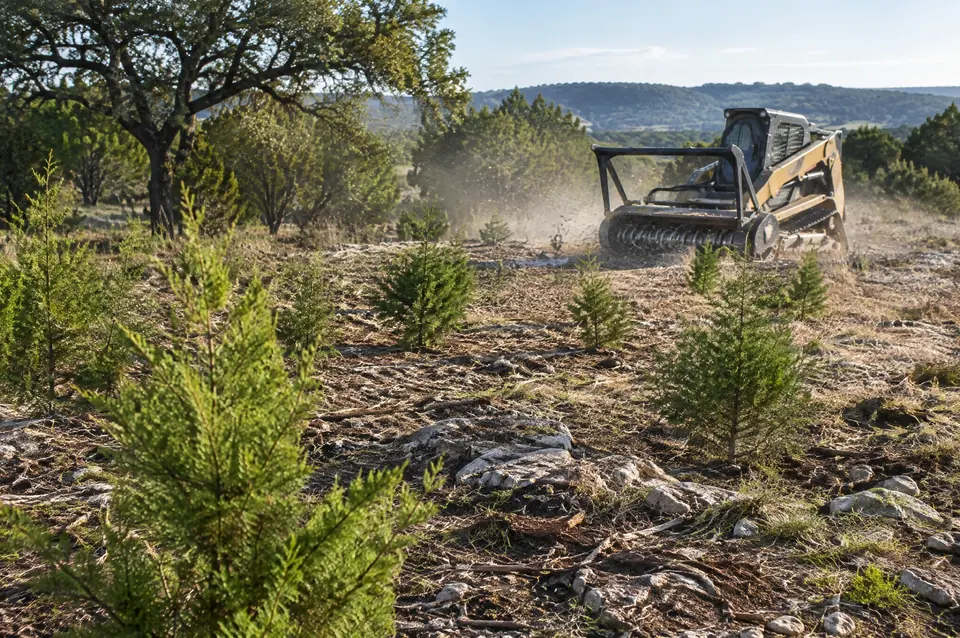
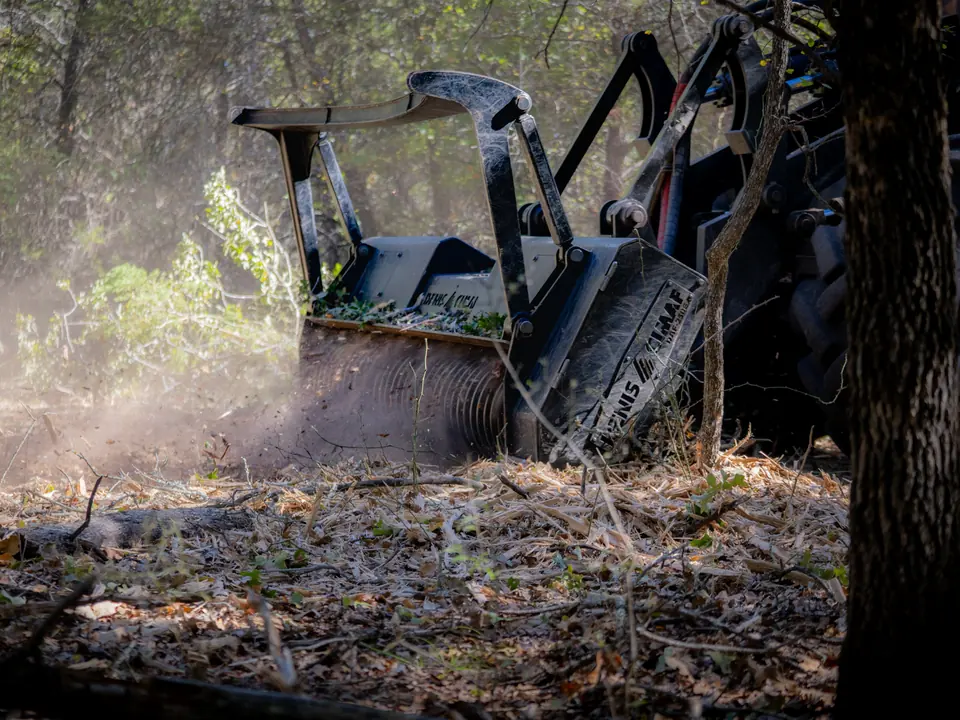
9 Arrow grinds cedar where it stands with mulching machines, so there is no pushing, piling, hauling or burning. Burning is often prohibited during burn bans, and mulched cedar needs no burn pile at all.
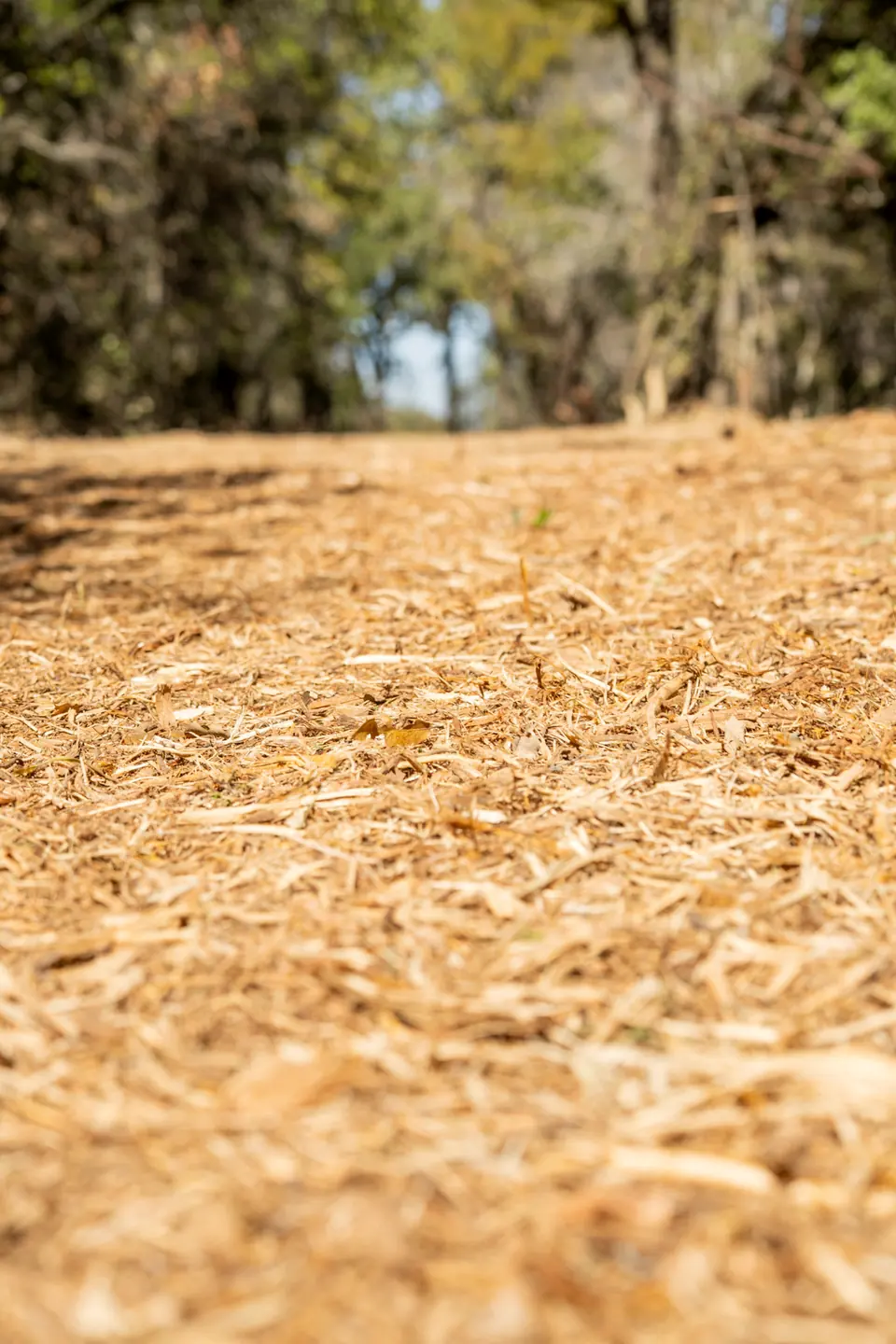
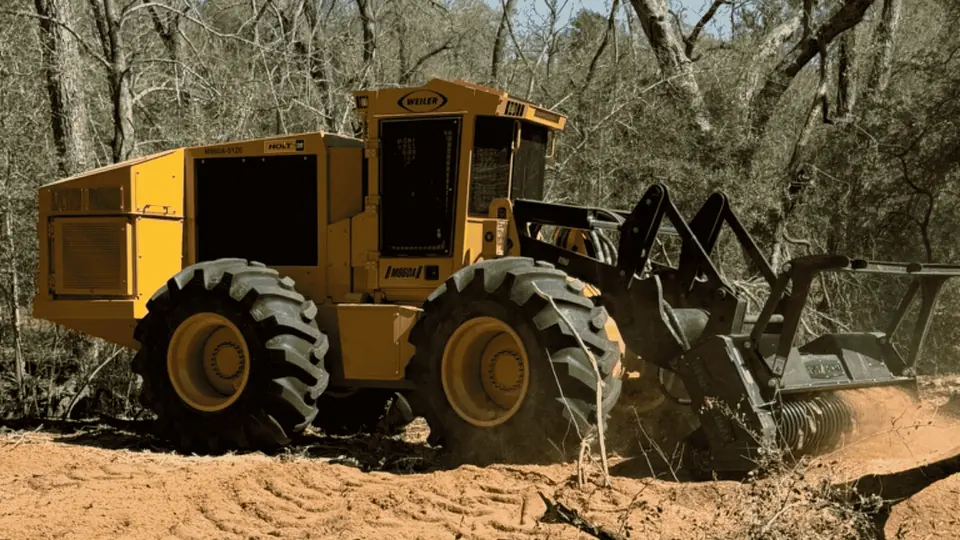
Compact track machines work tight spots, slopes and uneven ground, which describes a lot of Hill Country cedar. Large articulated wheel machines bring high horsepower to big, dense stands. The finish is fine, small material our crew calls toothpicks or hamster chips, and the root balls stay in the ground to hold the soil. The full method is laid out on our forestry mulching in Central Texas page.
Keeping cedar from coming back
Ashe juniper does not sprout back from the base once the top is killed, according to Texas A&M research, so cedar mulched down to the ground does not regrow from the stump. New cedar comes from seed, dropped by birds or carried by runoff, and seedlings will show up again over time.
Cedar seedlings are easy to deal with while they are small, and routine mowing keeps them from taking hold. For more, read how to clear cedar without regrowth. Redberry juniper, more common farther west, is a different case and can resprout from its base.
Where cedar removal fits on your Texas property
On grazing land, cedar removal is usually one piece of ranch land clearing in Texas, along with mesquite, brush and fence lines. Around a future house, cedar comes out as part of land clearing for a building site. For mixed brush and full tract clearing, see land clearing in Central Texas.
Cedar removal is estimated after a discovery call or a site visit. Density, tree size and species, topography, access, maneuverability and soil conditions all change the time a cedar job takes, and estimates are shown by the day or by the acre.
Five-star Google reviews
9 Arrow is an amazing company mostly because they are amazing people! Diligence, honesty, integrity through and through! Talented operators that listen and communicate well.
We exclusively use 9 Arrow for all land clearings, lot lines, and site prep scopes for our Texas projects. They are exceptional, keep up with our overwhelming volume, and deliver a level of quality and responsiveness we haven't seen anyone else rival.
Common questions
Is cedar the same as Ashe juniper?
Yes, in most of Central Texas. The tree people call cedar in the Hill Country is usually Ashe juniper, a native juniper and not a true cedar. Ashe juniper is most abundant on the eastern and southern Edwards Plateau, which covers much of the Texas Hill Country where 9 Arrow handles cedar removal.
When is the best time of year for cedar removal?
Ashe juniper can be cleared in any season, so the timing question for cedar removal is usually about nearby oaks. Texas A&M Forest Service advises avoiding pruning or wounding oaks from February through June, when oak wilt spreads most easily, and painting oak wounds year-round. Cedar well away from oaks is less sensitive to timing.
Will removing cedar bring my grass back?
Removing cedar opens the ground to sun and rain, and native grass often returns once dense stands are gone. Under a light mulch layer, grass can green up within days after a rain. Heavy mulch, up to 12 inches deep, can take 2 to 3 years for grass to grow through.
Can you remove large cedar trees?
Yes. 9 Arrow's mulching machines have no tree size limit and handle everything from small regrowth to large, mature cedar. Size changes the pace. A tree that takes an hour on a smaller machine can take as little as 15 minutes on a large, high-horsepower machine. Density and terrain also matter.
Related services
Nearby service areas
All service areasFrom the blog
All guides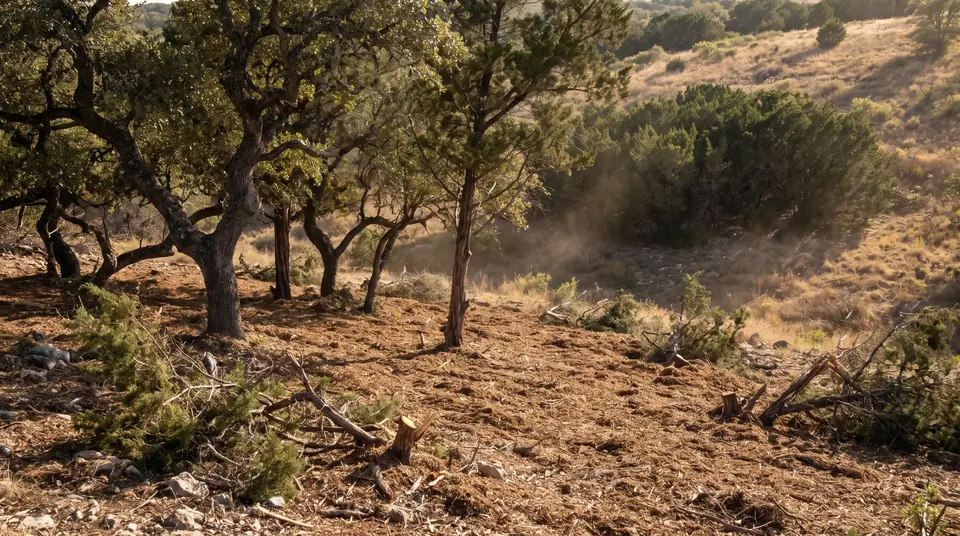
How to clear cedar and keep cedar regrowth in check
Cedar regrowth after clearing usually comes from trees cut too high or from new seedlings. Here is how to clear Ashe juniper low and keep the land open for good.
Read the article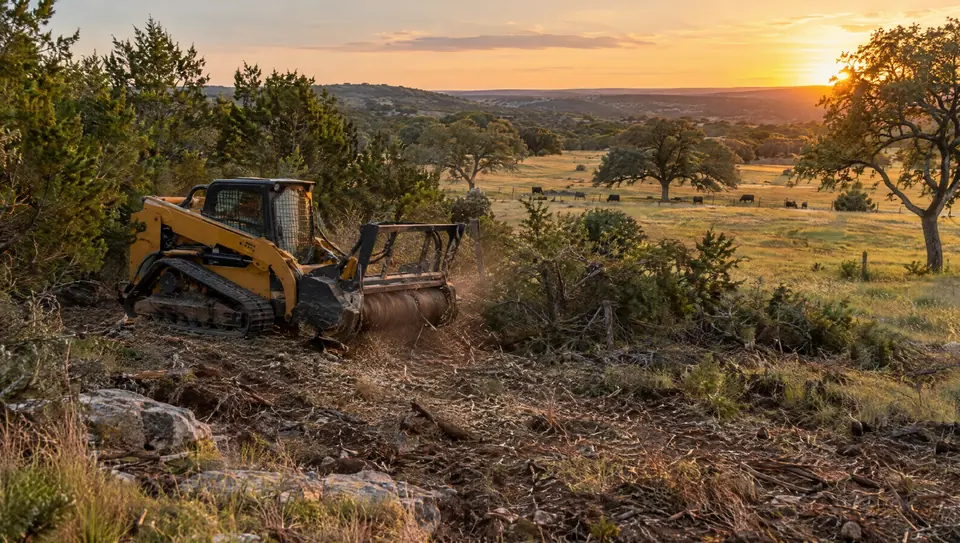
Reclaiming ranch pasture by clearing cedar and mesquite
Clearing cedar and mesquite on a Texas ranch takes two different plans, because cedar dies when cut low and mesquite resprouts. Here is how to reclaim pasture and keep it open.
Read the article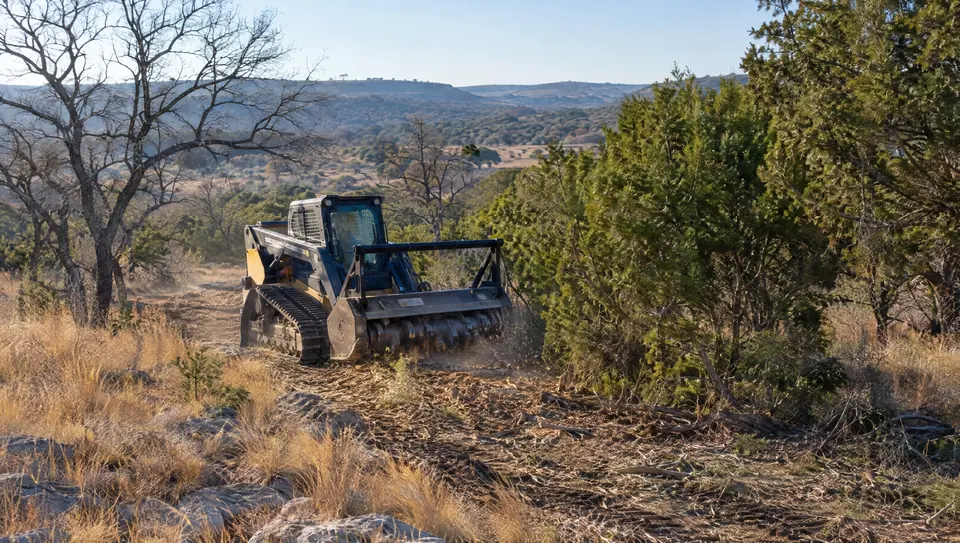
When is the best time to clear land in Texas?
The best time to clear land in Texas is usually late fall into winter, when ground is firm and oaks sit outside the spring oak wilt window. Here is how each season plays out.
Read the articleTalk to us about cedar removal.
Book a discovery call. We'll talk through the property and your goals, walk it with you, and price the work by the acre or by the day.