

North Texas land clearing, from the Metroplex to the Red River
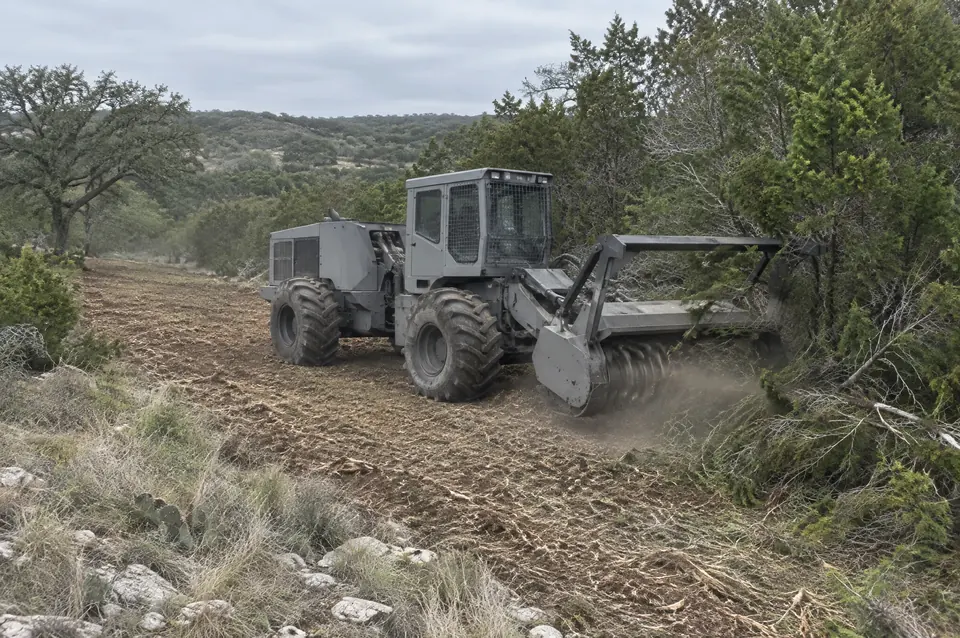
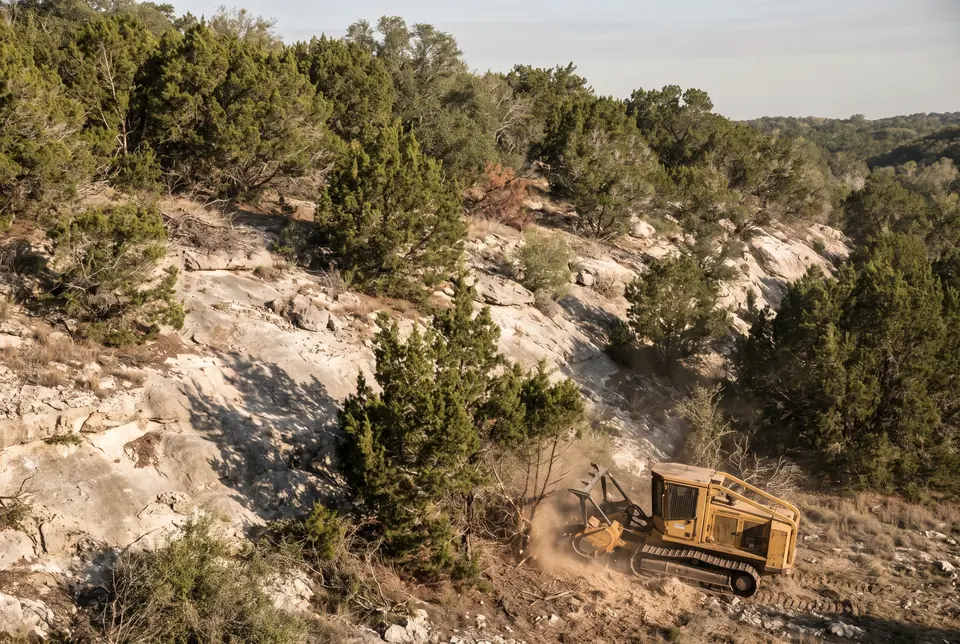
9 Arrow Land Service takes land clearing work across North Texas, from the Dallas-Fort Worth Metroplex out to the Red River. We grind cedar, mesquite and brush in place with forestry mulchers, so your land ends up open and usable with no burn piles left behind.
- Now taking work across North Texas
- No burn piles, no hauling
- Selective clearing that keeps your oaks
- GPS survey line and right-of-way clearing
What should landowners know about land clearing in North Texas?
Land clearing in North Texas runs through post oak and cedar on sandy Cross Timbers ground and heavy black clay on the Blackland Prairie, often next to new development. Ten DFW-area counties sit in an ozone nonattainment area, where TCEQ allows land-clearing burns only when no practical alternative exists. Forestry mulching grinds brush in place, so nothing is left to burn or haul.
North Texas ground, from the Metroplex to the Red River
North Texas usually means the Dallas-Fort Worth Metroplex and the counties around it, from Johnson and Ellis north through Grayson and Cooke to the Red River, the Oklahoma line. The ground is not the thin soil over limestone we clear at home in the Hill Country. It changes in bands as you cross the region.
- Cross Timbers: post oak and blackjack oak on sandy soil, some with a claypan. The eastern belt is about 20 miles wide and runs south from the Red River.
- Grand Prairie: open country between the two timber belts, with shallow soil over limestone on the Fort Worth Prairie.
- Blackland Prairie: deep black clay, called black gumbo, from the Red River to near San Antonio. Houston Black, the state soil, shrinks and swells with moisture and takes in water very slowly once wet.
- Rain: about 37 inches a year at DFW, closer to 25 on the western Cross Timbers.
Know the ground
North Texas, in one card
North Texas ground changes in bands, from oak timber to black clay prairie.
- Where
- The Dallas-Fort Worth Metroplex and the counties around it, north to the Red River and the Oklahoma line
- Ground
- Sandy Cross Timbers soil, shallow soil over limestone on the Fort Worth Prairie, and deep black clay on the Blackland Prairie
- What grows
- Post oak and blackjack oak, eastern redcedar, mesquite, hackberry, bois d'arc, greenbrier and Chinese privet
- Rain
- About 37 inches a year at DFW, closer to 25 inches on the western Cross Timbers
- Burning
- Ten DFW-area counties sit in an ozone nonattainment area, where TCEQ allows land-clearing burns only without a practical alternative
- Growth
- NCTCOG's 16 counties reached 8,952,590 people in January 2026, up more than 1.1 million since 2020
Cedar, mesquite and bottomland brush in North Texas
Most North Texas clearing jobs start with the same short list. The Noble Foundation says unmanaged eastern redcedar has spread across most rangelands in Oklahoma and Texas. Mesquite, hackberry and bois d'arc line prairie fence rows. Greenbrier tangles the Cross Timbers understory, and Chinese privet forms dense thickets in bottomland woods.
Not every cedar behaves the same. Noble notes that eastern redcedar does not resprout once it is top-killed. Redberry juniper, which Texas A&M AgriLife says is more common in west and north-central Texas, does resprout, and so does bois d'arc. See cedar removal in Texas and brush clearing.
Selective clearing keeps the oaks and open ground you want. Texas A&M Forest Service lists oak wilt across Central, North and West Texas and says not to prune or wound oaks from February through June, and to paint any oak wound.
Burn bans, ozone rules and the Trinity River floodplain
Burning brush is hard to plan in North Texas. Under Local Government Code 352.081, a county commissioners court can ban outdoor burning in unincorporated areas during drought for up to 90 days per order, then adopt a new order.
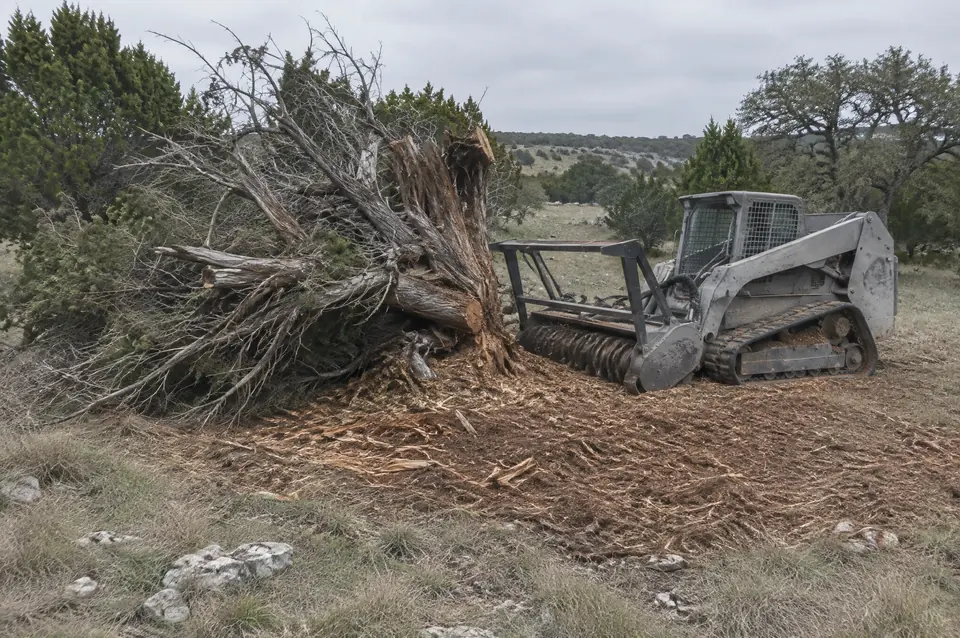
TCEQ also places ten Dallas-Fort Worth counties, from Collin and Denton to Parker, Johnson and Kaufman, in an ozone nonattainment area. There, land-clearing burns are allowed only when no practical alternative exists. Our forestry mulching and land clearing grinds trees, brush and old dozer piles where they stand. No burn piles. No hauling. No mess.
Low ground along the Trinity River has its own rules. In Dallas and Tarrant counties and nine cities along the Trinity and its forks, floodplain development goes through the Corridor Development Certificate process, which counts significant changes to vegetative cover. Creeks and wetlands can also bring in federal Section 404 rules. Your engineer or the U.S. Army Corps of Engineers confirms what applies before we start.
How we take on land clearing in North Texas
North Texas keeps filling in. NCTCOG counts 8,952,590 people in its 16-county region as of January 2026, up more than 1.1 million since the 2020 Census. Collin County alone added 64,703 people in 2025. That growth turns timber and pasture into homesites, subdivisions, utility corridors and solar ground.
We are based in Spring Branch, and the machines come to your land. As of October 2026 we have two jobs going in North Texas, a hot area for us. We also work in East Texas, including Henderson County, the Tyler area and soon Pittsburg. Each job starts with a discovery call and a site visit. Here is the work we bring north:
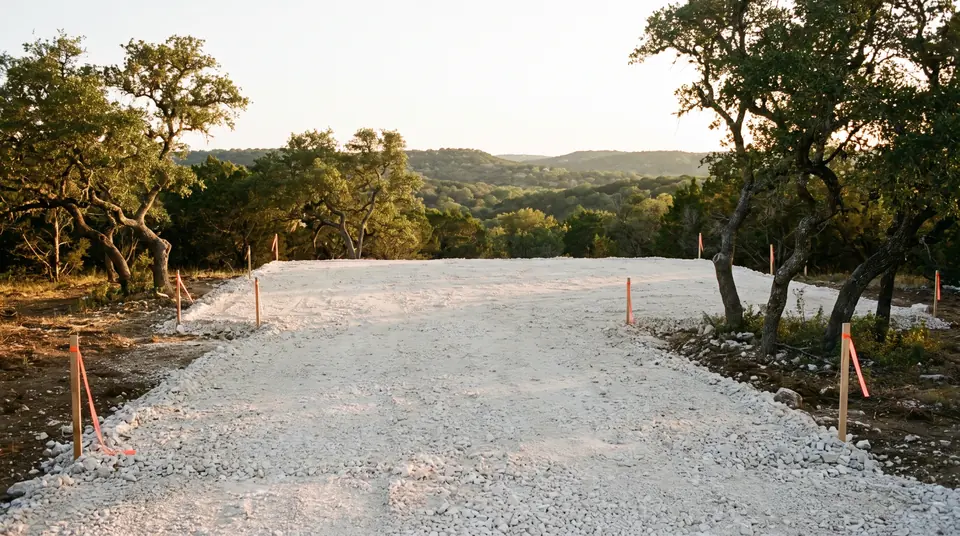
- Site prep for homesites, pads and subdivision lots, for land developers
- GPS survey line clearing that follows your licensed surveyor's CAD files
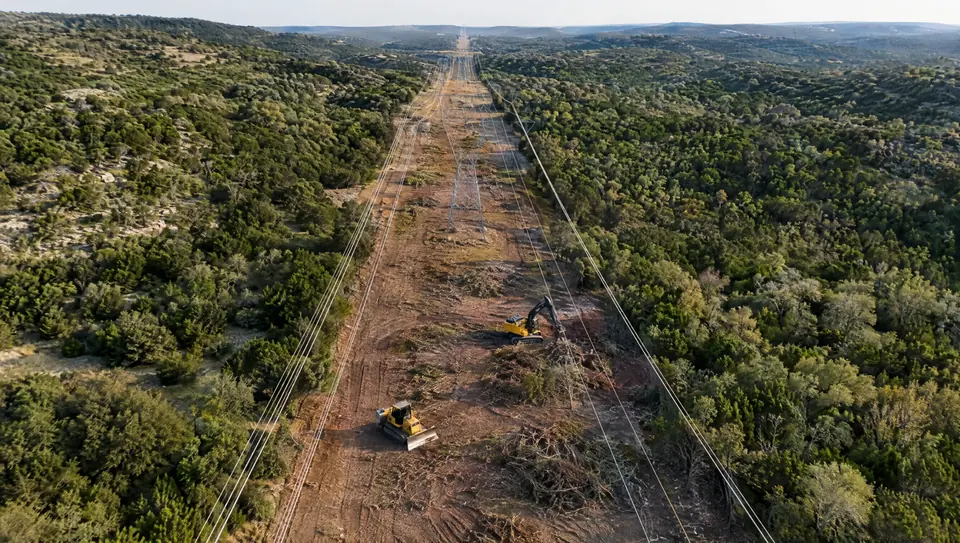
- Right-of-way clearing for power line and pipeline corridors, often 90 feet or wider, for energy and utility work
- Clearing for solar sites and ranch pasture
Serving North Texas
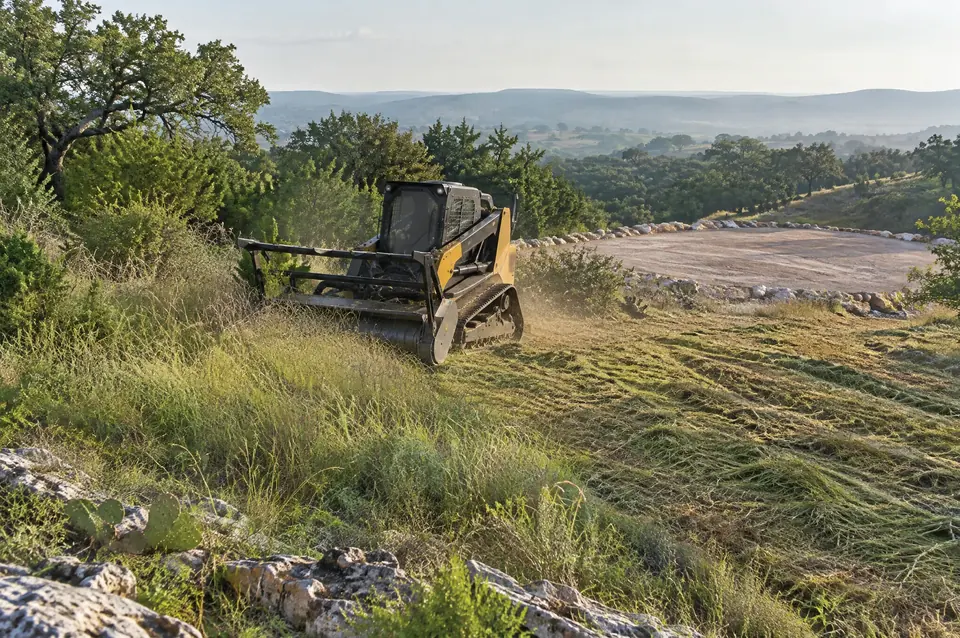
North Texas is part of our service area now, alongside East Texas. Our crew is based in Spring Branch, in the Hill Country, and the machines come to your land. We're working in Henderson County now, with Pittsburg coming up soon and work going in North Texas.
Nearby areas we serve
Five-star Google reviews
John is one of the best in the business. 9 Arrow has cleared over a dozen properties for me, and every project has been handled with exceptional attention to detail.
We exclusively use 9 Arrow for all land clearings, lot lines, and site prep scopes for our Texas projects. They are exceptional, keep up with our overwhelming volume, and deliver a level of quality and responsiveness we haven't seen anyone else rival.
Questions from North Texas landowners
Does 9 Arrow do land clearing in North Texas?
Yes. 9 Arrow Land Service takes land clearing and forestry mulching work in North Texas, and as of October 2026 we have two jobs going there. We are a family-owned company based in Spring Branch, and our machines come to your land. Call (210) 247-8410 to talk through your property.
Can I burn brush after clearing land in the DFW area?
Sometimes, but burning is often restricted. Ten DFW-area counties are in an ozone nonattainment area, where TCEQ allows land-clearing burns only when no practical alternative exists. Counties can also ban outdoor burning during drought for up to 90 days per order. Forestry mulching grinds brush in place, so there is nothing to burn.
Is North Texas cedar different from Hill Country cedar?
Often, yes. Hill Country cedar is mostly Ashe juniper on thin limestone soil. In North Texas you also find eastern redcedar, which does not resprout once top-killed, and redberry juniper, which does. The ground runs from sandy Cross Timbers soil to deep black clay, and soil conditions are part of every estimate.
How is land clearing in North Texas priced?
Land clearing in North Texas is priced after a discovery call and a site visit, not over the phone. Density, tree size and species, topography, access, maneuverability and soil conditions set the scope. Estimates come by the day or by the acre, so you know what you are paying for before work starts.
Is oak wilt a concern for land clearing in North Texas?
Yes. Texas A&M Forest Service lists oak wilt in 76 counties across Central, North and West Texas, and Dallas and Fort Worth have city oak wilt programs. The Forest Service says not to prune or wound oaks from February through June, and to paint any oak wound at any time of year.
Related services
Have land in North Texas?
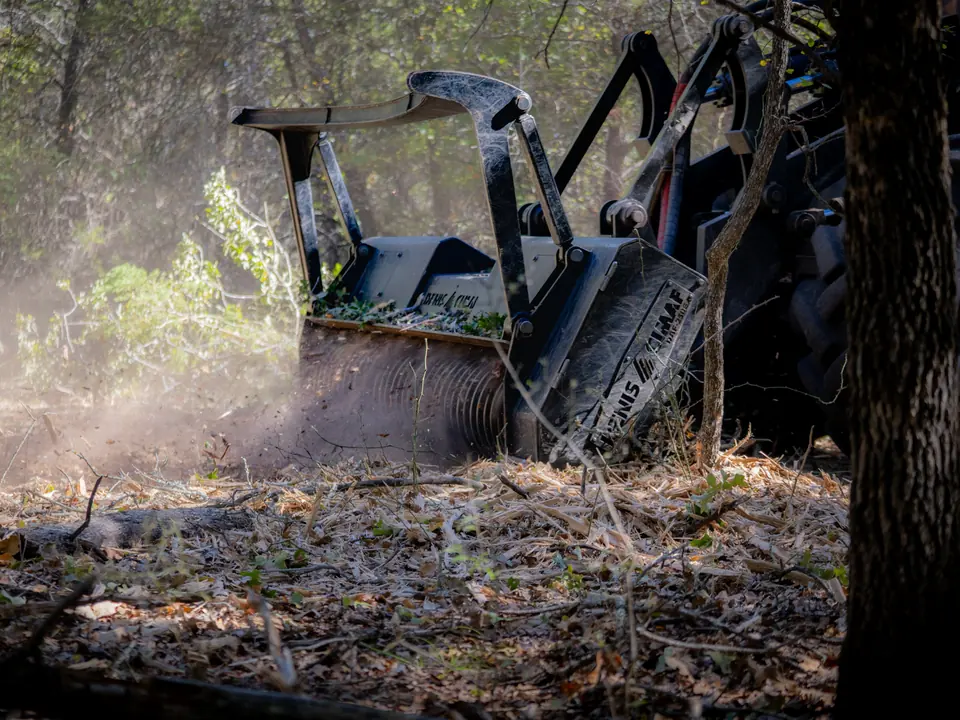
Book a discovery call. We'll talk through the property and your goals, walk it with you, and price the work by the acre or by the day.