
When is the best time to clear land in Texas?
The best time to clear land in Texas is usually late fall into winter, when ground is firm and oaks sit outside the spring oak wilt window. Here is how each season plays out.
When is the best time to clear land in Texas?
The best time to clear land in Texas is usually late fall through January. Winter is typically the driest stretch in Central Texas, so ground is firmer and brush is easier to see through. Work near oaks also stays ahead of the February through June window when Texas A&M Forest Service advises against wounding oaks.
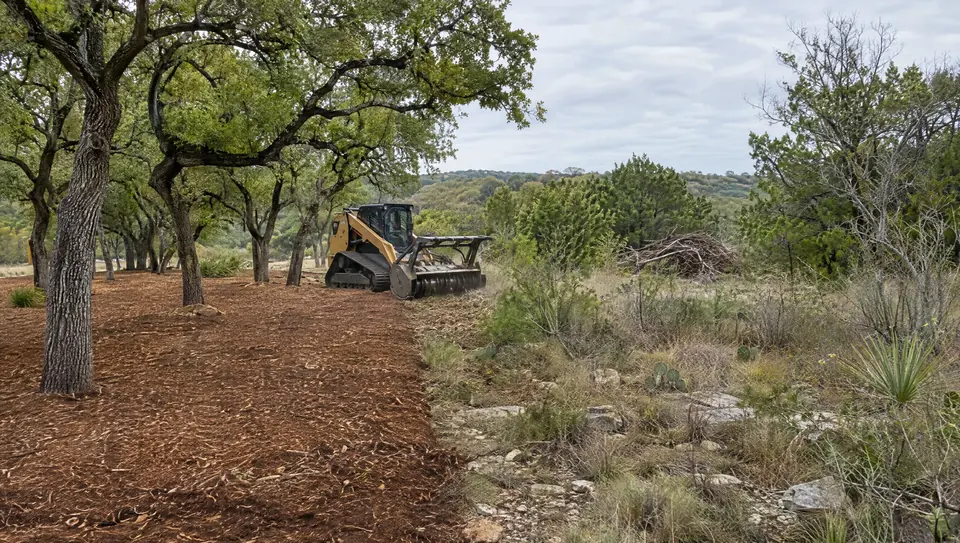
The best time to clear land in Texas is usually late fall through winter. You can clear year-round, and forestry mulching works in every season. The cooler, drier months still make the job cleaner, keep equipment off soft ground and protect the oaks you want to keep.
This guide covers how each season plays out in Central Texas and how to time land clearing in Central Texas around your goals for the property.
Why late fall and winter are the best time to clear land in Texas
Winter is typically the driest stretch of the year in Central Texas. In San Antonio, January and February are usually the driest months, while spring storms and early fall bring the heaviest rain. Dry, firm ground lets machines move without rutting or compacting the soil.
Deciduous brush drops its leaves in winter, which opens sight lines across the property. Bare brush makes it easier to read the shape of the land, mark the trees you want kept, and find old fences and boundaries. Ashe juniper stays green all year, so cedar clearing goes the same in winter as any other season.
Cool weather is also easier on crews and equipment, and it lowers the fire risk that comes with summer work.
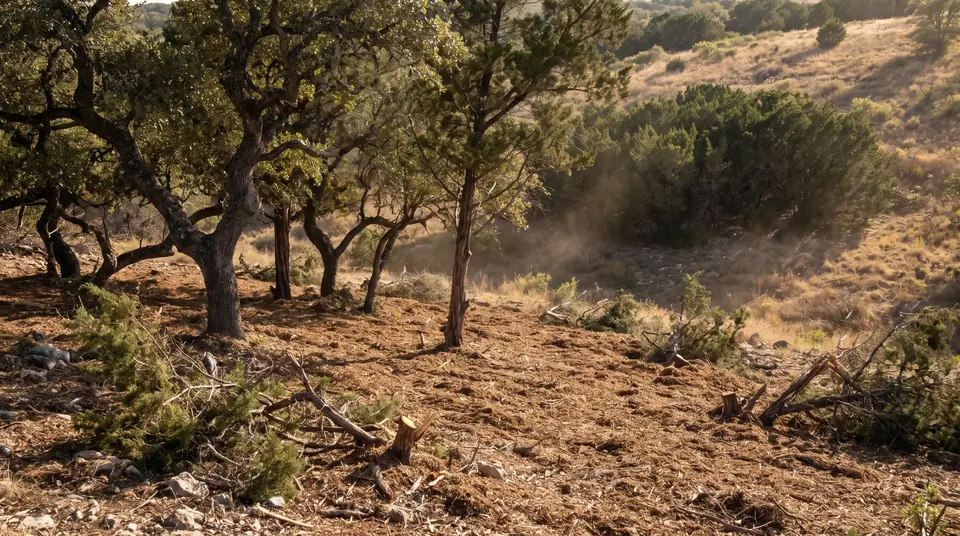
Winter clearing sets up spring. Cleared ground is open and ready when the rain comes, and grass can green up through a light layer of mulch within days after a good rain.
The oak wilt window, February through June
Oak wilt changes the calendar for any property with live oaks or red oaks you want to keep. Texas A&M Forest Service advises avoiding pruning or wounding oaks from February through June, and painting any oak wound immediately, in any season.
Oak wilt moves two ways. Sap beetles carry spores from fungal mats that form under the bark of red oaks killed by the disease. Underground, oak wilt travels through connected root systems, mostly in live oaks, and the Forest Service says that root spread causes most oak wilt deaths in Central Texas. Infected trees cannot be restored.
Timing is a real tool against oak wilt. Clearing around keeper oaks from late fall through January keeps fresh wounds out of the high-risk window. Selective clearing is often the best option for protecting healthy oaks near trees already in decline. The Forest Service also advises against moving firewood, which can carry the disease to new places.
Spring land clearing, with rain and soft ground
Spring storms can soften Central Texas ground, especially clay. Heavy machines on wet soil can leave ruts, and fast spring growth adds green material to every acre.
Spring clearing is still possible. Forestry mulching handles green brush, and a dry stretch can open a good window. Plan around the oak wilt window if keeper oaks are close to the work, and expect a few weather days.
Summer land clearing and fire risk
Summer ground is often dry and firm, which helps production. The tradeoff is heat and fire danger.
Texas A&M Forest Service reports that equipment use and careless debris burning account for half of the wildfires in Texas. Steel striking rock can throw a spark, and dry grass catches fast. The Forest Service advises avoiding equipment work during the hottest, driest part of the day. On Hill Country ground full of limestone, that advice matters for any machine with a cutting head.
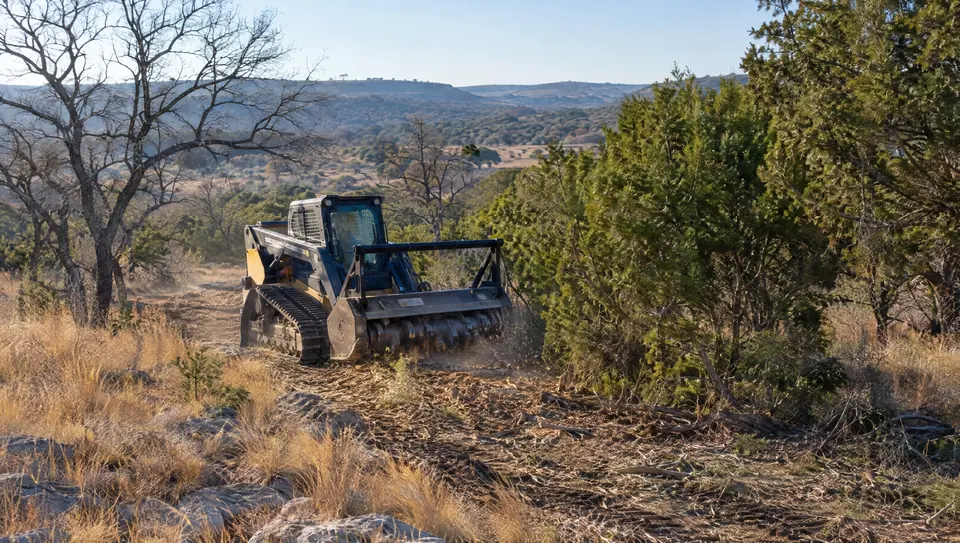
Burn bans also show up in dry stretches, and summer often brings them. A county judge or commissioners court can restrict outdoor burning when fire danger is high, and Texas A&M Forest Service posts a daily statewide burn ban map. Pile-and-burn clearing stalls under a ban. Forestry mulching never builds a burn pile, so the clearing keeps moving. For more on how each method handles burn bans and wet ground, compare forestry mulching vs traditional land clearing.
Fall land clearing, the second rainy season
Early fall can be wet in Central Texas. In San Antonio, September and October are usually the wettest months of the year. Ground can stay soft after big storms, so early fall jobs may need weather days.
As fall turns toward winter, ground firms up and the best clearing window opens. Late fall is a good time to start projects that need to wrap up before spring green-up.
Timing land clearing to your goal
The best time to clear also depends on what you want the land to do.
- Selling land. Clear ahead of listing so grass has time to recover before photos and showings. Our post on whether clearing land increases property value covers what buyers notice.
- Building a home. Clear and grub the house site on dry ground so dozers and excavators work cleanly, and leave time for pad work before the builder arrives.
- Grazing and pasture. Clear before spring so grass gets the benefit of the rain. Our ranch land clearing in Texas work covers pasture reclamation.
- Keeping oaks. Plan oak-adjacent work from late fall through January, outside the February through June window.
- Cedar away from oaks. Ashe juniper can be cleared in any season, so cedar-only work away from oaks can flex around the weather.
Getting your land ready before the clearing window
A little prep before the crew arrives makes any season go smoother.
- Walk the property and flag the oaks, shade trees and other trees you want kept.
- Find your property corners, or have your surveyor mark them, so the boundary is clear.
- Note anything hidden in the brush, such as septic lines, wells, old fences or buried utilities.
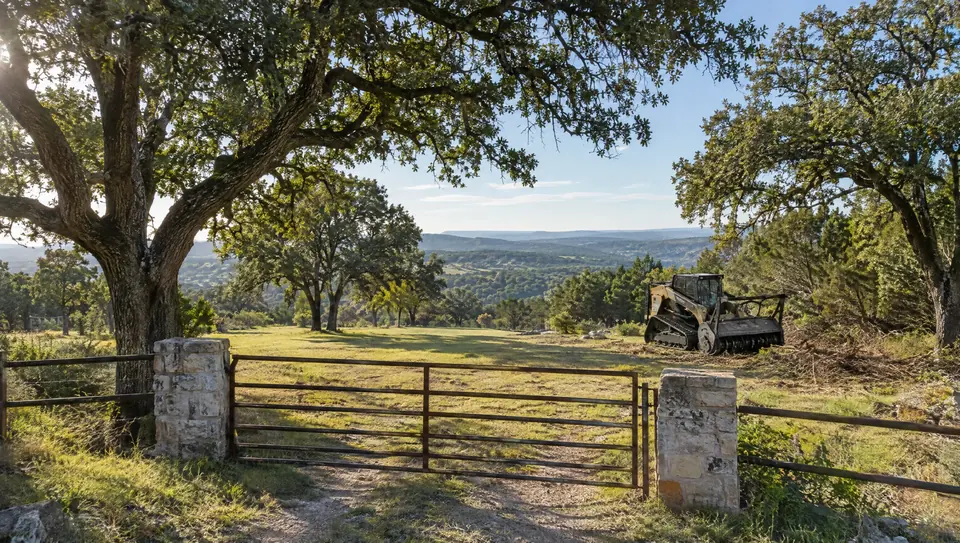
- Check that gates and the path in are wide enough for equipment and a trailer.
- Decide where you want root-free ground for a house pad, barn or driveway, since those spots need grubbing.
- Think about the mulch. It stays on the ground by default, and it can be stockpiled or hauled off if you need open ground sooner.
Plan ahead for the clearing window you want
Weather moves the calendar, so the best plan leaves room for it. Reach out before the window you are aiming for, and we can schedule a discovery call and site visit with time to plan around rain and oaks.
Call (210) 247-8410 to talk through timing for your land.