

Spring Branch cedar removal that keeps your live oaks
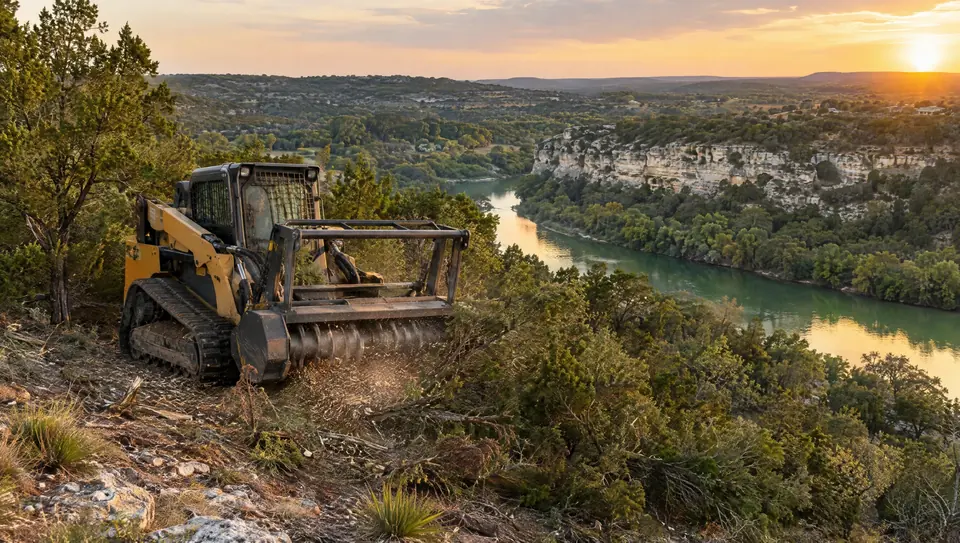
9 Arrow Land Service handles cedar removal in Spring Branch, TX, grinding Ashe juniper in place and leaving the live oaks you want to keep. Spring Branch is our home base.
- Ashe juniper mulched where it stands
- Live oaks kept through selective clearing
- Home base in Spring Branch, along US 281
- No burn piles and no hauling
How is cedar removal done in Spring Branch, TX?
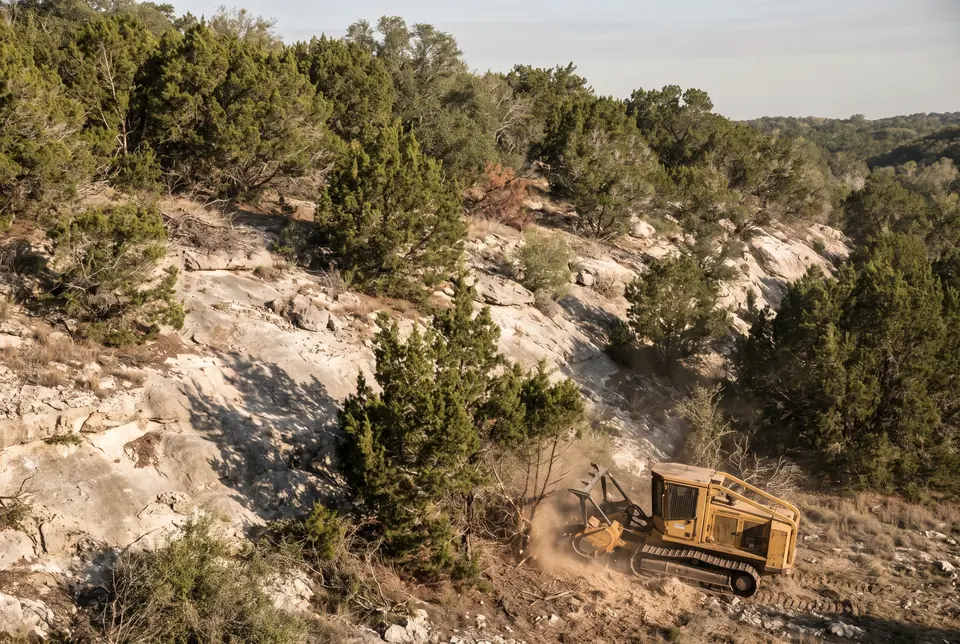
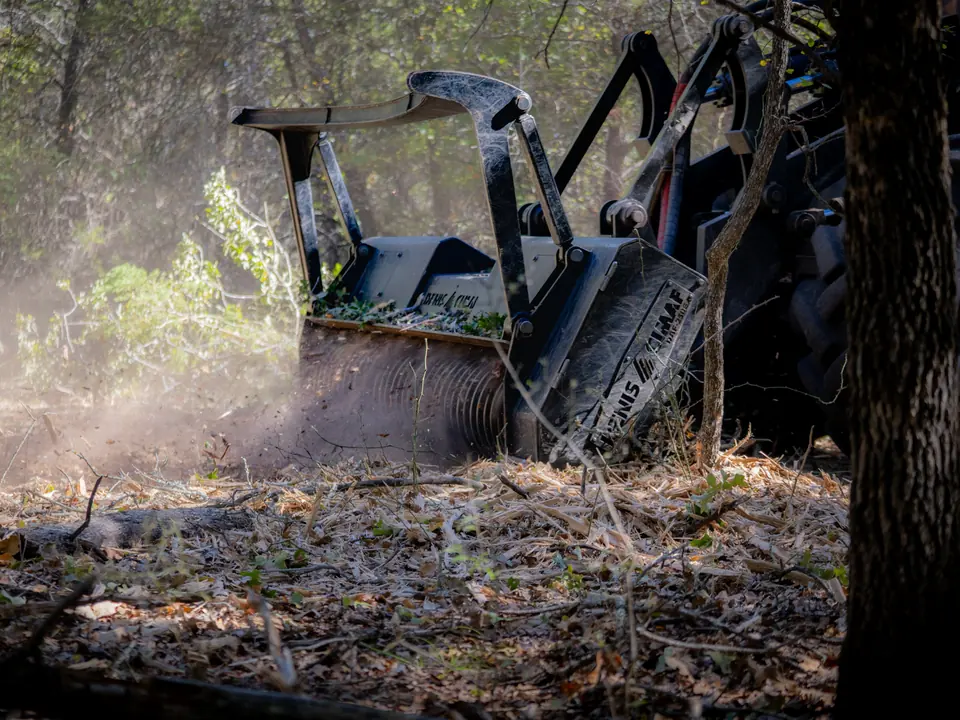
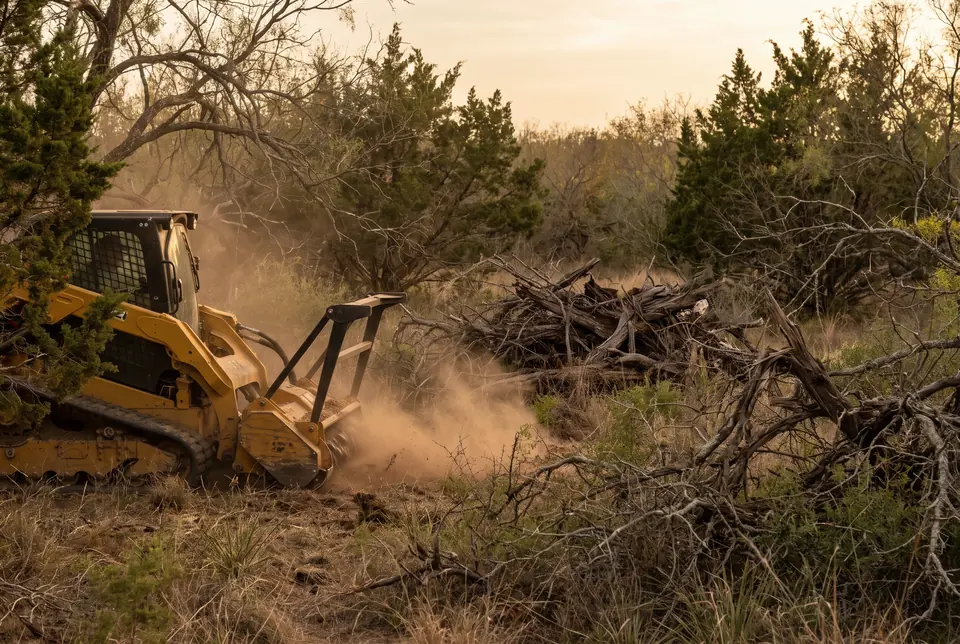
Cedar removal in Spring Branch, TX is done by forestry mulching the Ashe juniper where it stands. The mulcher grinds each cedar into fine mulch, leaves the root ball in the ground, and works around the live oaks you choose to keep. Nothing is piled, burned or hauled, and the soil stays in place.
Ashe juniper along the Guadalupe River
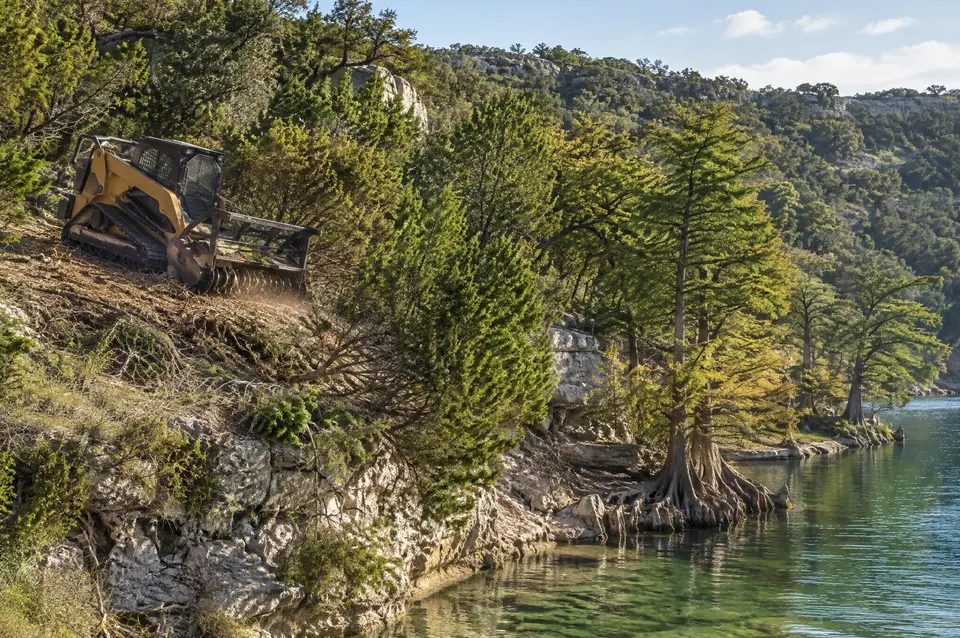
The cedar in Spring Branch is Ashe juniper, a native tree that grows best on shallow, rocky soils over limestone. Spring Branch sits along US 281 in western Comal County, where the land drops toward the Guadalupe River through steep draws. That is exactly the kind of ground Ashe juniper likes.
Left alone, Ashe juniper closes into dense, nearly solid stands called cedar brakes, especially on canyon slopes. Nearby Guadalupe River State Park has its own Ashe juniper woodland along the river. On private land, a cedar brake shades out grass, crowds the oaks, and makes a property hard to walk, see or use.
Know the ground
29.88° N, 98.41° W · Comal County
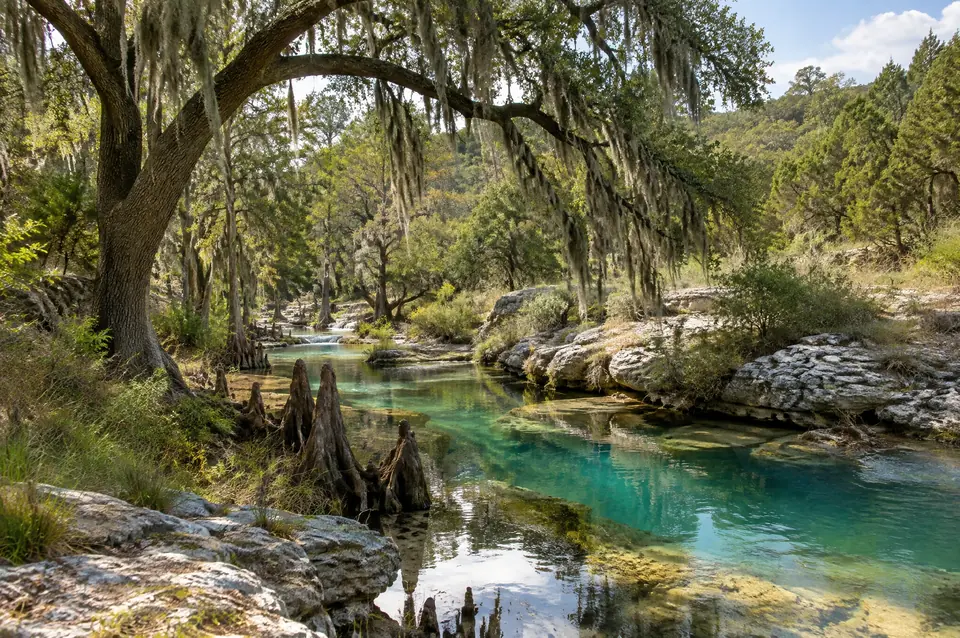
Cedar country along Honey Creek and the Guadalupe
Spring Branch is named for a spring-fed creek, and the cedar story here is tied to the water.
- How cedar spread
- Texas Parks and Wildlife notes overgrazing and fire suppression let juniper spread over former grassland here
- Research nearby
- TPWD runs brush removal and recharge research at Honey Creek State Natural Area
- Mature stands
- Golden-cheeked warblers nest in old-growth juniper and oak woodland, so mature stands get a careful plan
- Oaks
- Oak wilt is confirmed at several Comal County sites; avoid wounding oaks from February through June
- Burning
- Comal County burn bans are common in drought, so cut cedar is ground in place instead of piled
Cedar removal around Spring Branch live oaks
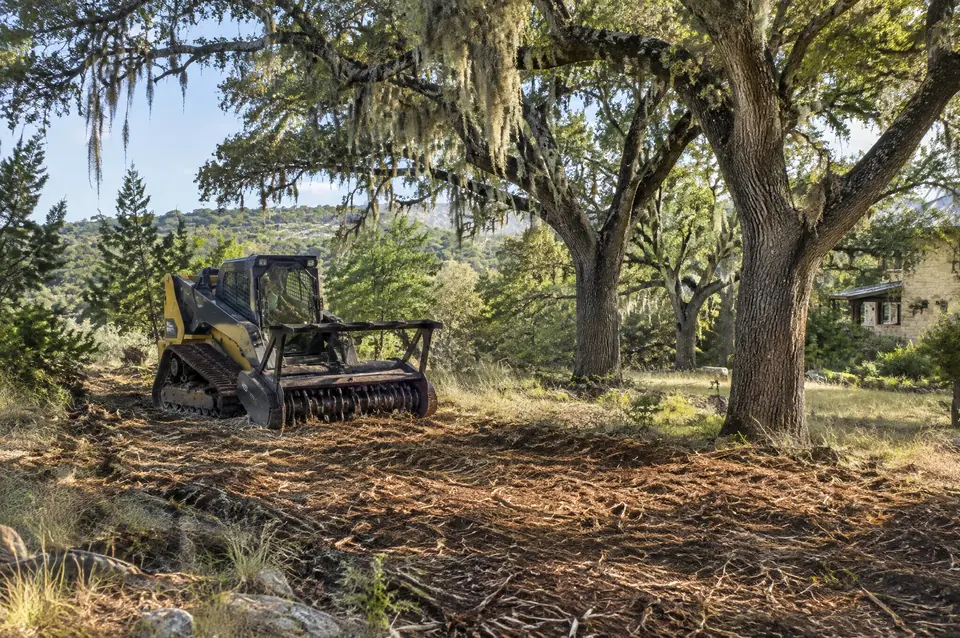
Selective cedar removal takes the Ashe juniper and leaves the live oaks standing with open ground beneath them. You decide which trees stay. The mulcher grinds cedar around the oaks and leaves a fine finish under them.
Oak wilt is common in Central Texas. Oak wilt spreads in defined paths, and an infected tree cannot be restored. When oaks on your Spring Branch land are already declining, selective clearing is often the best option to protect the healthy trees around them.
Oak wilt timing for cedar work near oaks
Texas A&M Forest Service advises against pruning or wounding oak trees from February through June. Those are the months when small sap-feeding beetles carry the oak wilt fungus to fresh wounds. Any new wound on an oak can let the disease in, including bark scraped by equipment.
The same guidance says to paint every oak wound right away, in any season. Red oaks are highly susceptible and can die within a month of infection. Live oaks spread the disease underground through connected roots, an average of 75 feet per year. When Spring Branch cedar grows tight against oaks you plan to keep, talk with us about timing before the work is scheduled.
Why cut Ashe juniper stays down and what comes back
Ashe juniper does not sprout from the base once it is cut below its green branches, so a cedar mulched to the ground stays dead. Mesquite and many hardwoods behave differently and resprout from the stump.
New cedar comes from seed. Birds such as American robins and cedar waxwings eat juniper berries and drop the seeds across open ground, and Ashe juniper seedlings can take hold on nearly any site. Catching those seedlings while they are small keeps cleared Spring Branch land open.
Our cedar removal in Texas page covers the full service, and ranch land clearing covers pasture reclamation once the cedar is gone. For mixed brush and timber, see forestry mulching in Central Texas or forestry mulching in Spring Branch. Kendall County owners can read about cedar removal in Boerne.
Serving Spring Branch from Spring Branch
Spring Branch is in Comal County. Our crew is based in Spring Branch and works across Central Texas and the Hill Country.
Nearby areas we serve
Five-star Google reviews
9 Arrow is an amazing company mostly because they are amazing people! Diligence, honesty, integrity through and through! Talented operators that listen and communicate well.
We exclusively use 9 Arrow for all land clearings, lot lines, and site prep scopes for our Texas projects. They are exceptional, keep up with our overwhelming volume, and deliver a level of quality and responsiveness we haven't seen anyone else rival.
Questions from Spring Branch landowners
Will Ashe juniper grow back after cedar removal in Spring Branch?
Ashe juniper will not regrow from a stump cut below its green branches, so mulched cedar in Spring Branch stays dead. New cedar comes from seed instead. Birds spread juniper berries across open ground, and seedlings can sprout almost anywhere. A follow-up pass every few years catches seedlings while they are still small.
When is the safest time to remove cedar near oaks in Spring Branch?
The safest time to remove cedar near oaks in Spring Branch is outside February through June. Texas A&M Forest Service advises against wounding oaks in those months, when beetles spread the oak wilt fungus. Any oak wound should be painted right away in any season. Cedar work away from oaks is less sensitive to timing.
Is the cedar in Spring Branch really a juniper?
Yes, the cedar in Spring Branch is Ashe juniper, Juniperus ashei, a native juniper that Texans have long called cedar or mountain cedar. Ashe juniper thrives on shallow, rocky limestone soils like the ground around Spring Branch and the Guadalupe River, and it forms dense cedar brakes on slopes when nobody clears it.
What happens to the cedar after removal on my Spring Branch land?
After cedar removal on your Spring Branch land, the cedar is fine mulch spread on the ground where the trees stood. There is no burn pile and nothing to haul. If you want less mulch on the ground, it can be stockpiled or hauled off. A light layer lets grass return within days after rain.
Does removing cedar help the springs and creeks around Spring Branch?
It is still being studied. Texas Parks and Wildlife runs brush removal and recharge research at Honey Creek State Natural Area near Spring Branch. What we see on cleared land is grass returning where cedar stood. We do not promise more water from cedar removal, and we point owners to that research.
Related services
Nearby service areas
All service areasFrom the blog
All guides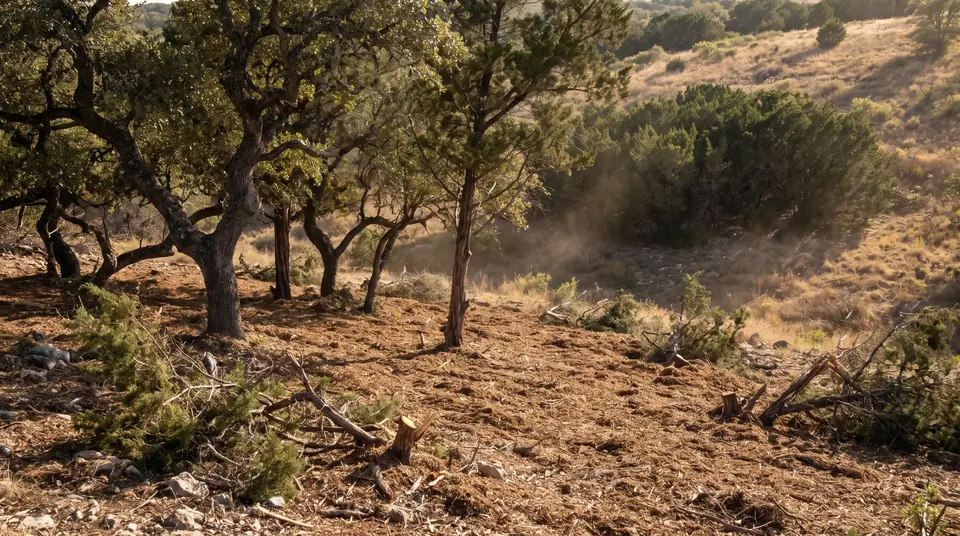
How to clear cedar and keep cedar regrowth in check
Cedar regrowth after clearing usually comes from trees cut too high or from new seedlings. Here is how to clear Ashe juniper low and keep the land open for good.
Read the article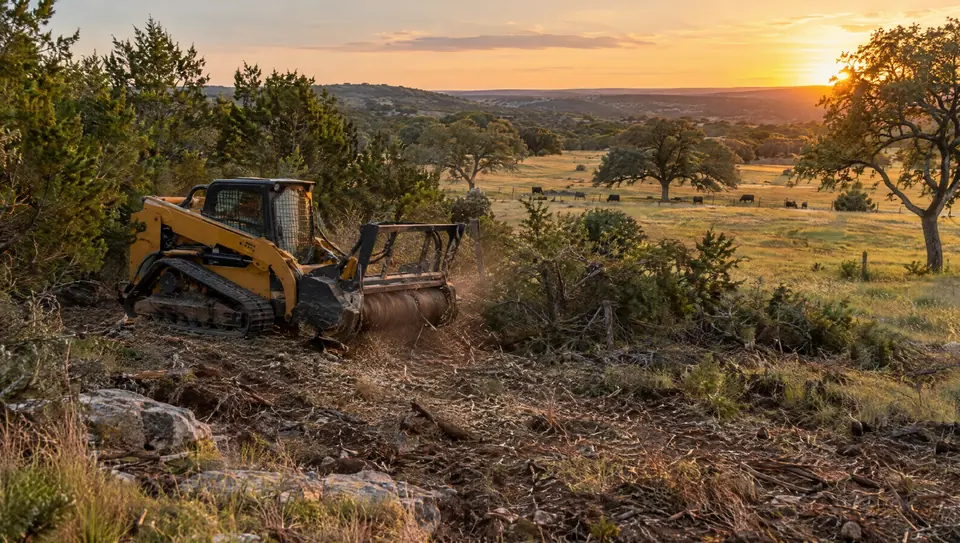
Reclaiming ranch pasture by clearing cedar and mesquite
Clearing cedar and mesquite on a Texas ranch takes two different plans, because cedar dies when cut low and mesquite resprouts. Here is how to reclaim pasture and keep it open.
Read the article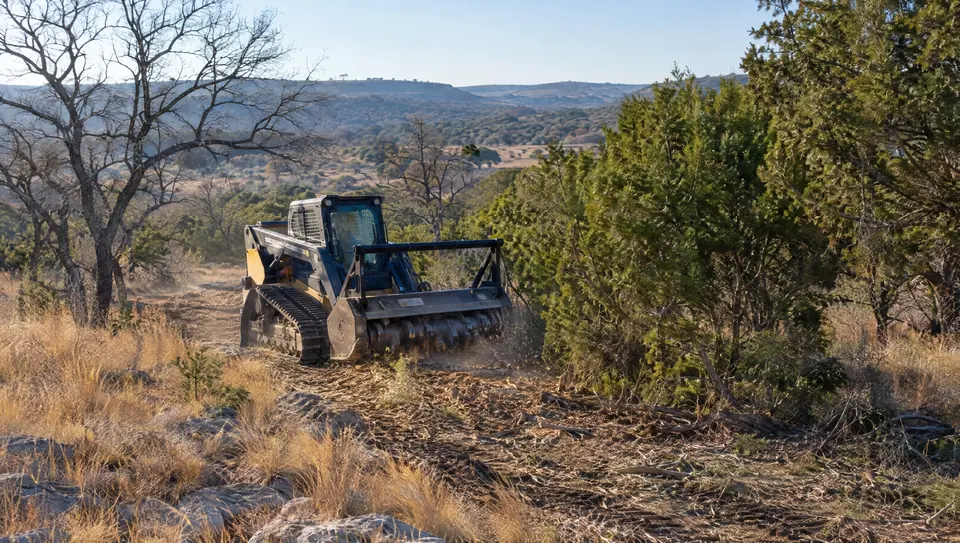
When is the best time to clear land in Texas?
The best time to clear land in Texas is usually late fall into winter, when ground is firm and oaks sit outside the spring oak wilt window. Here is how each season plays out.
Read the articleHave land in Spring Branch?
Book a discovery call. We'll talk through the property and your goals, walk it with you, and price the work by the acre or by the day.