

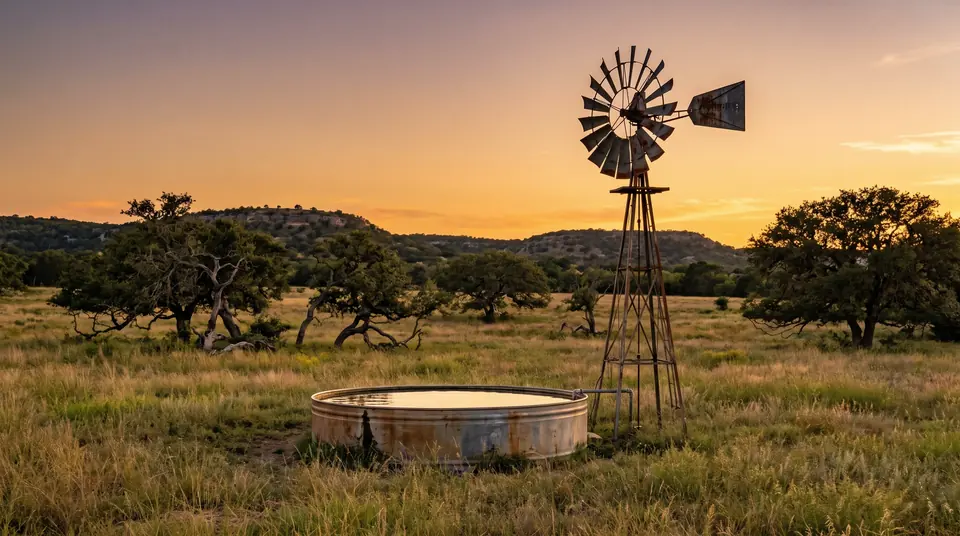
Texas ranch land clearing that gives pasture back to grass
9 Arrow does ranch land clearing in Texas for owners taking pasture back from cedar, mesquite and brush. John Wheelock comes from Texas ranching roots, and we treat your land as if it were our own.
- Grass can green up days after rain
- Soil left intact, root balls in place
- GPS guidance available for fence lines
- Mowing scheduled by season and conditions
What does ranch land clearing involve?
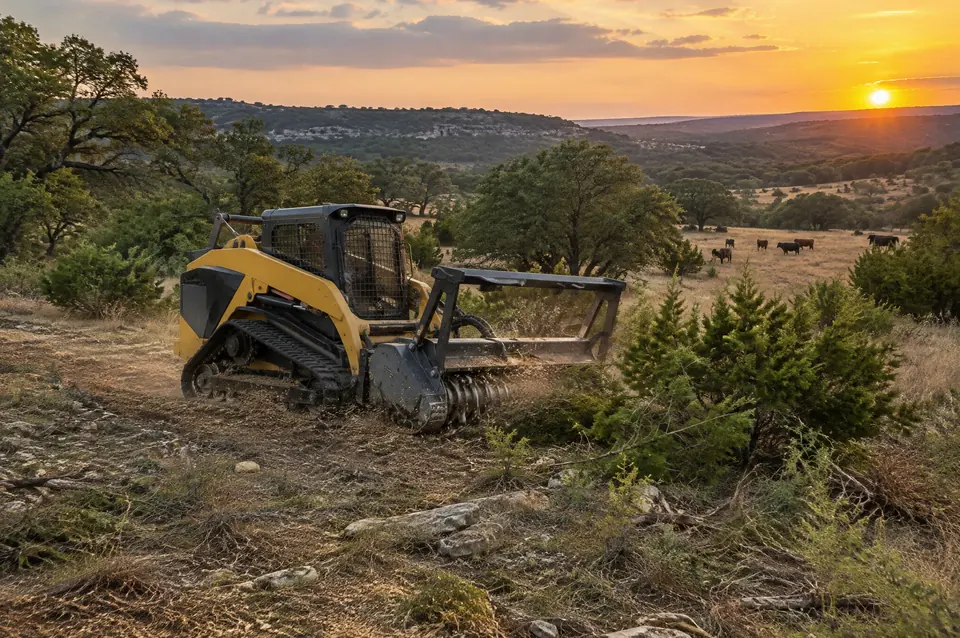
Ranch land clearing involves taking pasture back from cedar, mesquite and brush so grass, livestock and wildlife have room again. 9 Arrow handles ranch land clearing in Texas with mulching machines that grind growth in place, plus fence line clearing and seasonal mowing to keep reclaimed pasture open.
Pasture reclamation from cedar, mesquite and brush
Pasture reclamation starts with the growth that took the grass. On Hill Country ranches that is often Ashe juniper, the tree most Texans call cedar, and our cedar removal in Texas page covers juniper in detail. Mesquite and mixed brush move into open pasture across much of Texas.
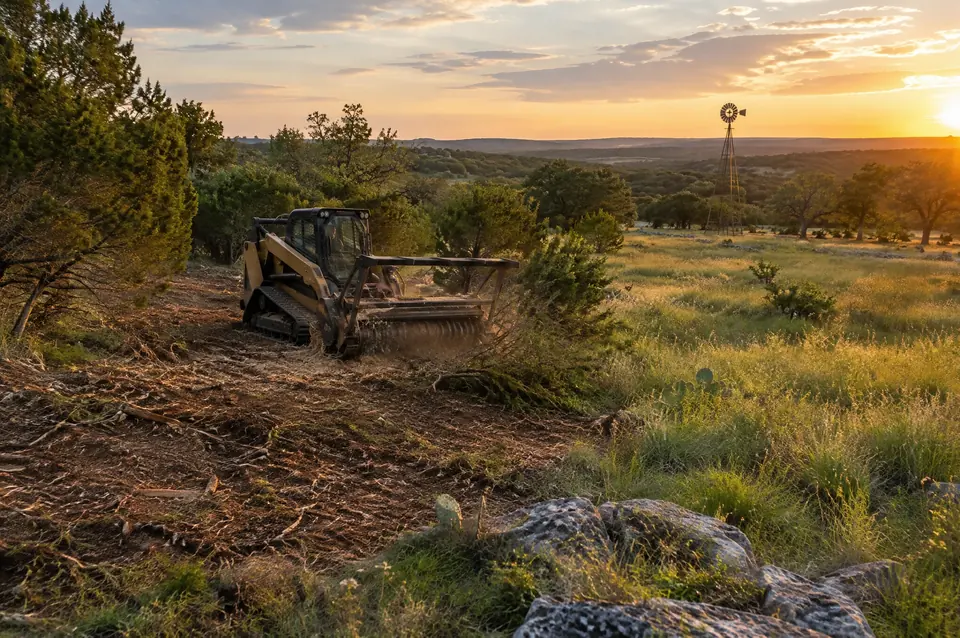
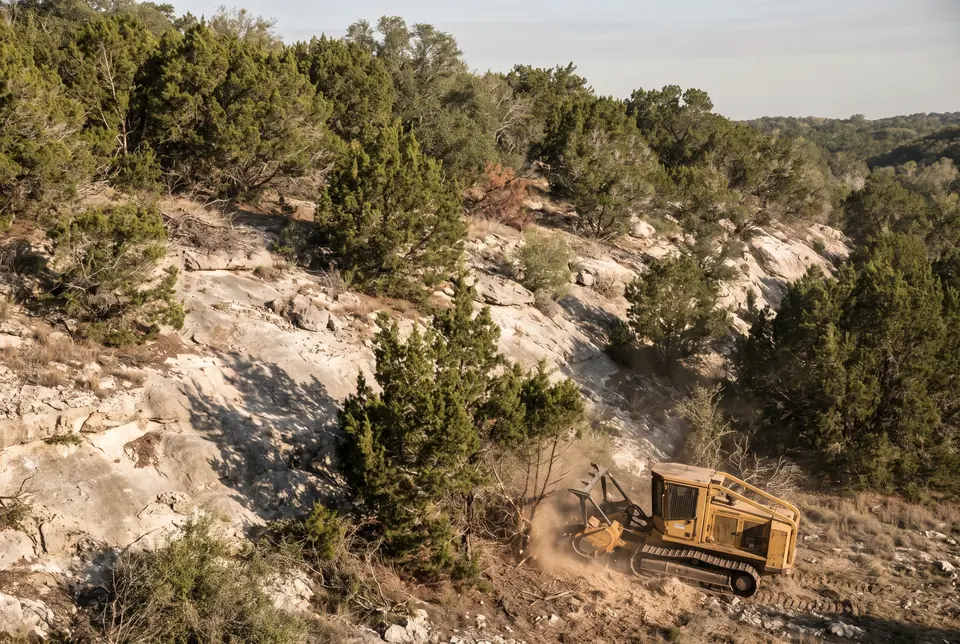
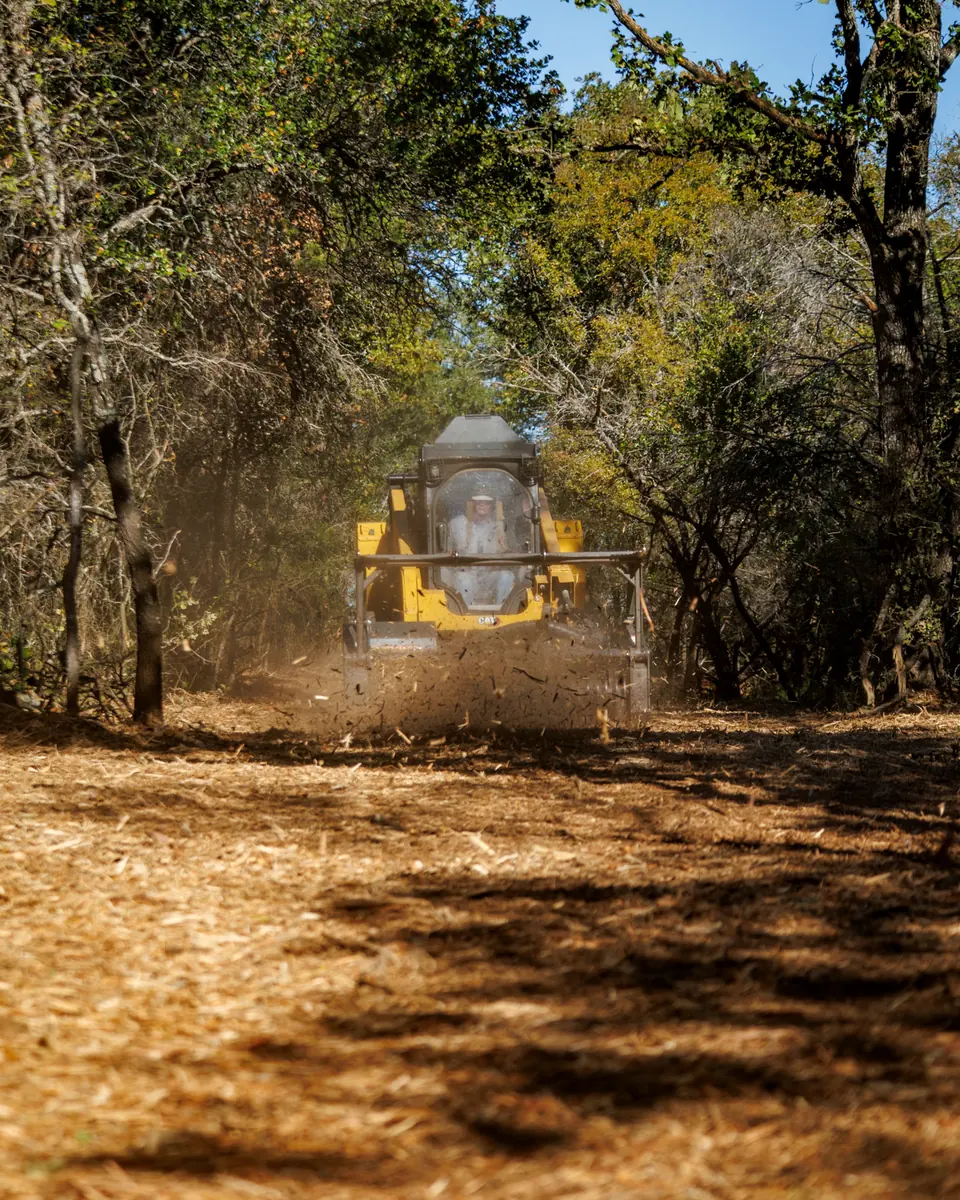
9 Arrow grinds cedar, mesquite and brush in place with mulching machines, with no pushing, piling, hauling or burning. Mulching leaves the soil intact and the root balls in the ground. Dozing disturbs the soil and raises erosion risk, which matters on sloped pasture and along draws.
Large articulated wheel machines bring high horsepower and high production to big pastures. Compact track machines handle slopes, tight spots and uneven ground.
How fast grass returns after ranch land clearing in Texas
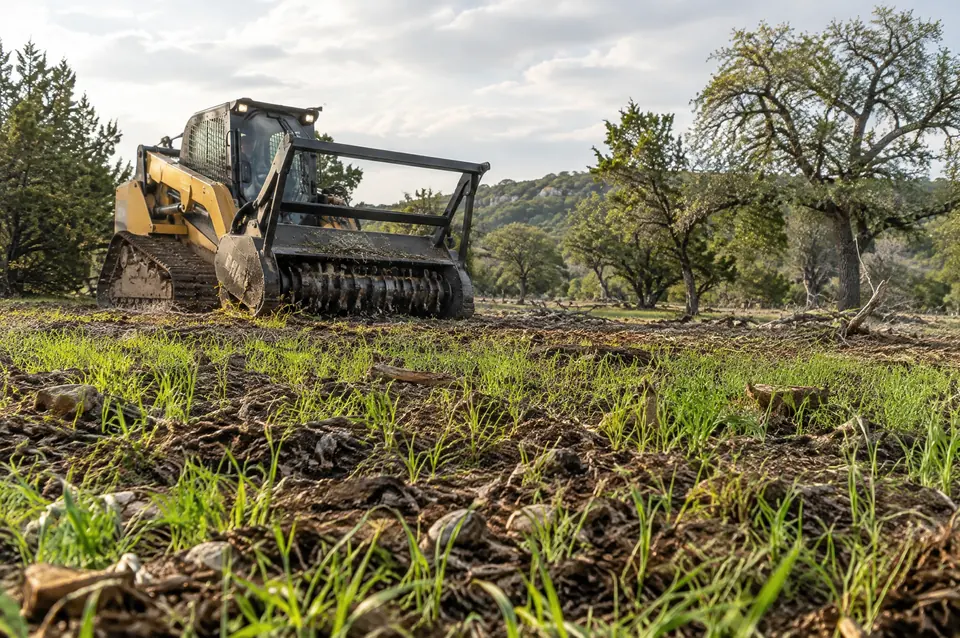
Grass regrowth after ranch land clearing depends on mulch depth and rain. Under a light mulch layer, grass can green up within days after a rain. Where heavy mulch builds up, as deep as 12 inches, grass can take 2 to 3 years to come through.
A fine finish helps pasture recover. 9 Arrow's mulchers leave small material our crew calls toothpicks or hamster chips, and grass regrows faster through a fine finish. Light mulch is the usual goal on grazing ground, since grass comes back soonest there. If heavy mulch would slow your plans, the mulch can be stockpiled or hauled off.
Fence line clearing and ranch access
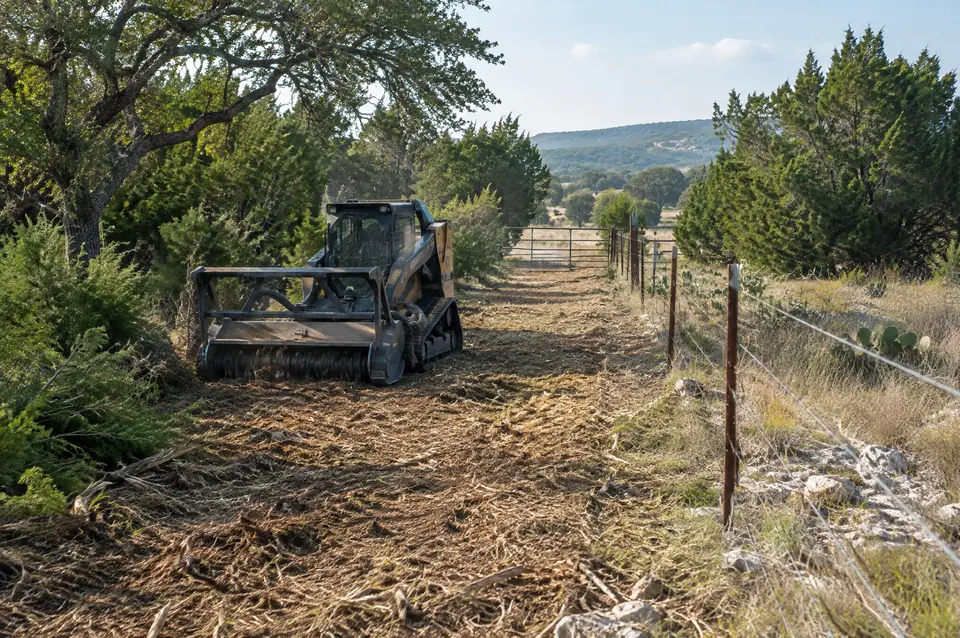
Fence line clearing gives you room to build, repair and check fence, and clean fence lines make it easier to see and move livestock. 9 Arrow clears fence lines with mulching machines, and our mulchers can carry Trimble GPS equipment that follows your licensed surveyor's survey data. See survey line clearing in Texas for how the GPS work runs. 9 Arrow is not a licensed surveyor and does not replace one.
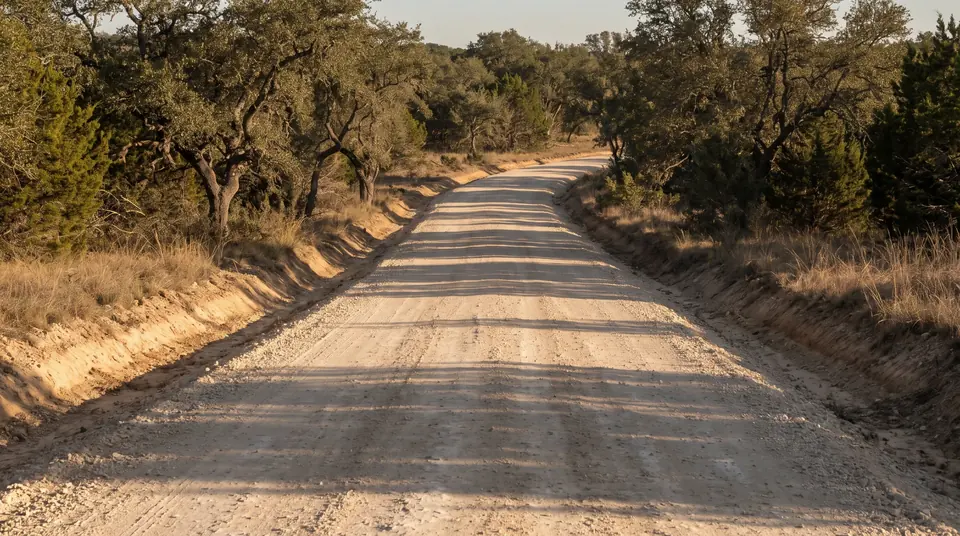
Ranch roads, creek crossings and stock tanks often come next. Access road building in Texas covers ranch roads, culverts and drainage, and existing surface rock can be crushed on site into road base. Our site work and utility installation service covers creek crossings and grading stock tanks.
Keeping reclaimed pasture open
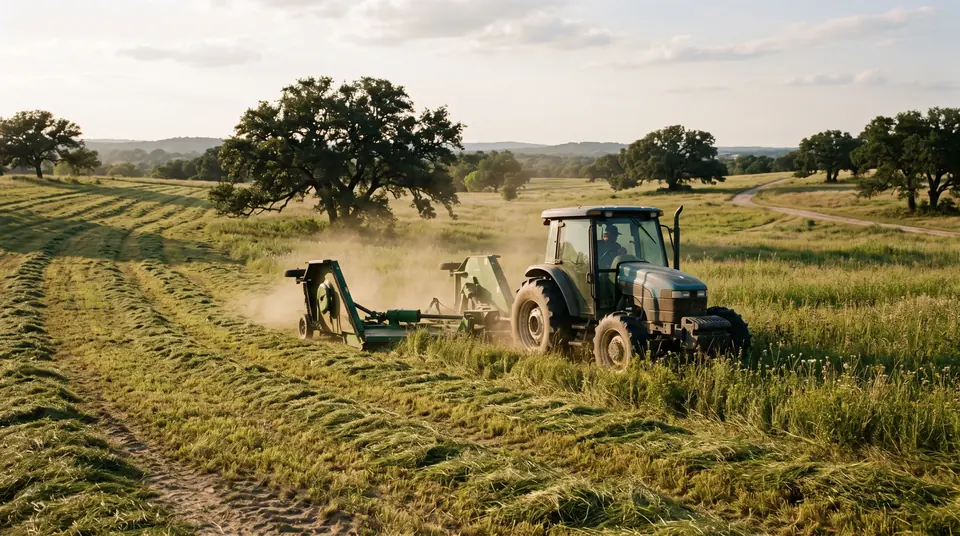
Reclaimed pasture needs upkeep. Mesquite regrows aggressively once the top is removed, and new cedar comes in from seed spread by birds.
9 Arrow mows and shreds rural and ranch properties through grounds maintenance in Central Texas, scheduled by season and conditions, on properties from small acreage to 1,000+ acres. Ranch headquarters get the same care, with weed eating, selective tree trimming with chainsaws, debris cleanup and light demolition of small structures.
"Talented operators that listen and communicate well," wrote Travis Roberson, who runs a land stewardship business, in a Google review.
Planning a pasture clearing job
Every pasture clearing job starts with a discovery call or a site visit. Density, tree size and species, topography, access, maneuverability and soil conditions set the pace, and estimates are shown by the day or by the acre.
Some ranches also carry old bulldozer piles from past clearing. 9 Arrow mulches existing brush piles, even piles as large as a house, instead of burning them. Burning is often prohibited during burn bans, so mulching is the practical choice for old piles in dry seasons.
Five-star Google reviews
9 Arrow is an amazing company mostly because they are amazing people! Diligence, honesty, integrity through and through! Talented operators that listen and communicate well.
We exclusively use 9 Arrow for all land clearings, lot lines, and site prep scopes for our Texas projects. They are exceptional, keep up with our overwhelming volume, and deliver a level of quality and responsiveness we haven't seen anyone else rival.
Common questions
Do you clear mesquite as well as cedar?
Yes. 9 Arrow clears mesquite along with cedar and mixed brush when reclaiming Texas pasture. Mesquite regrows aggressively once the top is removed, so plan on follow-up work. Routine mowing and shredding, scheduled by season and conditions, keeps mesquite regrowth down after the first clearing pass.
How many acres a day can you clear on a ranch?
Ranch clearing pace depends on the machine, the density and the terrain. Large high-horsepower machines clear about 1 to 3 acres a day with reasonable tree coverage, and up to 5 acres in lighter conditions. Smaller machines clear about half an acre to an acre in an 8-hour day.
Can you keep shade trees when clearing pasture?
Yes. Selective clearing takes the cedar, mesquite and brush and leaves the shade trees you want for livestock and wildlife. Drought stress and oak wilt are common in Central Texas, and infected trees cannot be restored, so selective clearing is often the best way to protect healthy trees across a pasture.
Is mulching or bulldozing better for pasture?
Mulching is usually the better fit for pasture because it leaves the soil intact and the root balls in the ground. Bulldozing disturbs the soil and raises erosion risk. Grubbing with dozers and excavators still makes sense where roots must come out completely, such as under a future barn or house foundation.
Related services
Nearby service areas
All service areasFrom the blog
All guides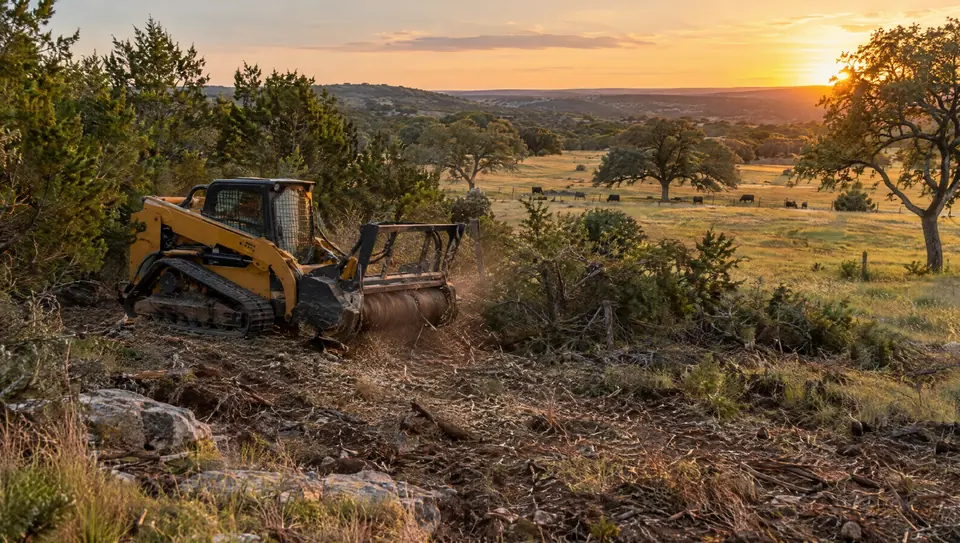
Reclaiming ranch pasture by clearing cedar and mesquite
Clearing cedar and mesquite on a Texas ranch takes two different plans, because cedar dies when cut low and mesquite resprouts. Here is how to reclaim pasture and keep it open.
Read the article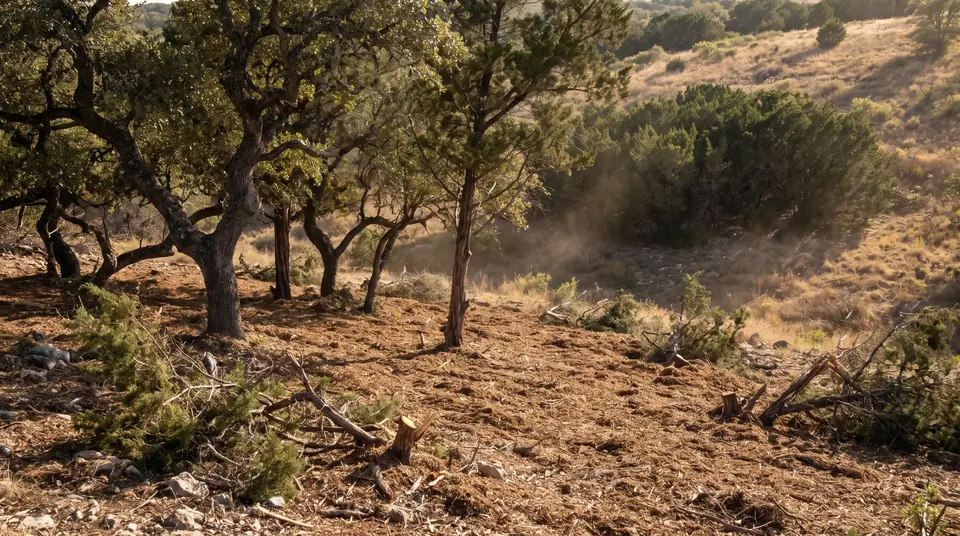
How to clear cedar and keep cedar regrowth in check
Cedar regrowth after clearing usually comes from trees cut too high or from new seedlings. Here is how to clear Ashe juniper low and keep the land open for good.
Read the article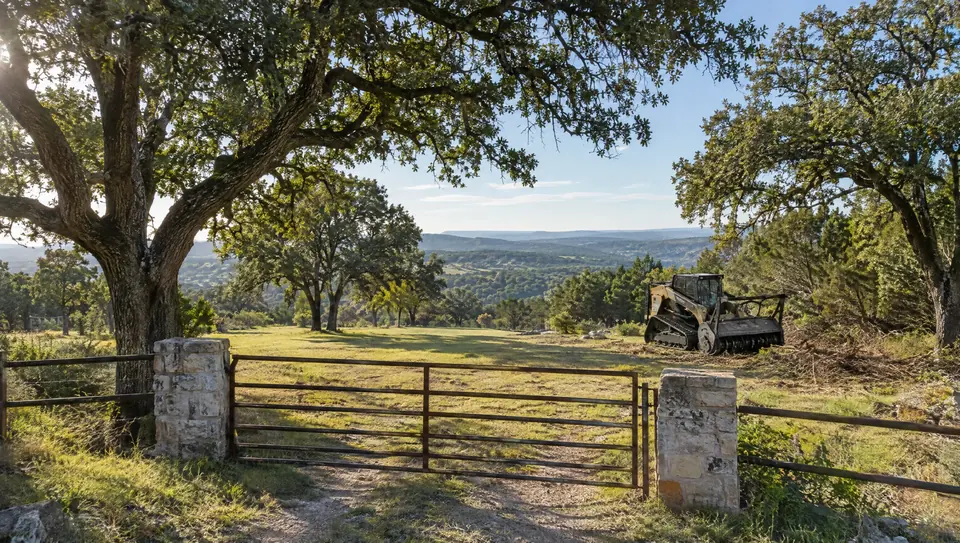
Does clearing land increase property value? What Texas buyers see
Does clearing land increase property value? It can, when clearing turns hidden, unusable acreage into ground buyers can walk, picture and build on. Here is what helps and what hurts.
Read the articleTalk to us about ranch & pasture clearing.
Book a discovery call. We'll talk through the property and your goals, walk it with you, and price the work by the acre or by the day.