
Reclaiming ranch pasture by clearing cedar and mesquite
Clearing cedar and mesquite on a Texas ranch takes two different plans, because cedar dies when cut low and mesquite resprouts. Here is how to reclaim pasture and keep it open.
How do you clear cedar and mesquite on a Texas ranch?
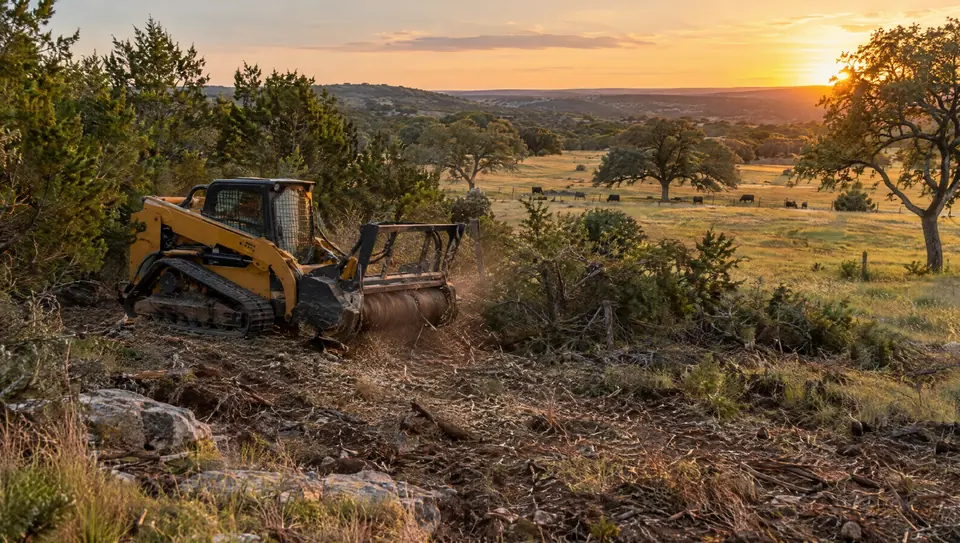
Clearing cedar and mesquite on a Texas ranch takes two approaches. Ashe juniper dies when it is mulched below its lowest green branch. Mesquite resprouts from a bud zone near the base, so lasting control means grubbing out the root crown or planning follow-up work. Selective clearing keeps shade trees while pasture opens back up.
Clearing cedar and mesquite is how a lot of Texas ranches get their grass back. Both species creep across pasture, crowd out forage and make the land harder to work. They respond to clearing in very different ways, though. Ashe juniper dies when it is cut low. Mesquite fights back from the roots. A good plan treats the two differently.
This guide covers how we approach ranch land that has gone to cedar and mesquite, and how to keep it open once it is cleared.
Why clearing cedar and mesquite takes two different plans
Ashe juniper, the Hill Country cedar, is a non-sprouting species. Mulch it below the lowest green branch and the tree is gone. What comes back afterward is new seedlings.
Mesquite is built to survive damage. Young mesquite forms an underground bud zone near the base of the stem, and when the top is cut, burned or shredded, new shoots come up from that zone. Texas A&M research notes that decades of top-kill treatments have turned many stands of few-stemmed mesquite into multi-stemmed resprout thickets.
Mulching cedar and mulching mesquite therefore give two different results. Cedar stays gone. Mesquite comes back unless the bud zone is removed or the regrowth is managed.
How cedar and mesquite take over ranch pasture
Brush encroachment rarely happens overnight. Texas A&M research points to overgrazing and the long absence of natural fire as major reasons juniper spreads. Birds carry cedar berries into open pasture. Cattle and wildlife, including deer, coyotes and feral hogs, eat mesquite beans and spread the seed in their droppings.
As brush thickens, grass loses light and water. Texas A&M research found that dense Ashe juniper canopy and leaf litter catch much of the rain before it reaches the soil, and cedar breaks shade out forage. Pastures that once carried cattle turn into thickets you cannot walk or see through. For more on the cedar side, read how to stop cedar regrowth after clearing.
Clearing cedar on ranch land
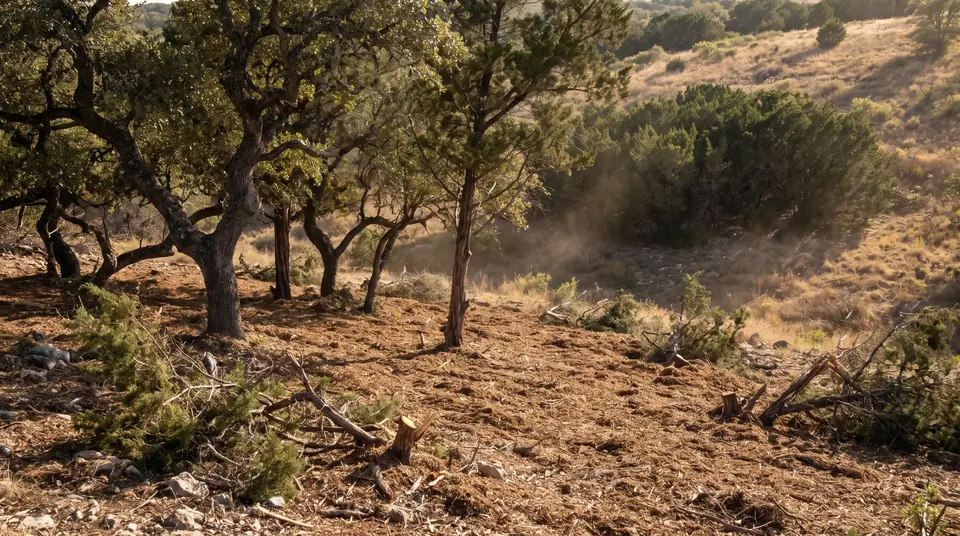
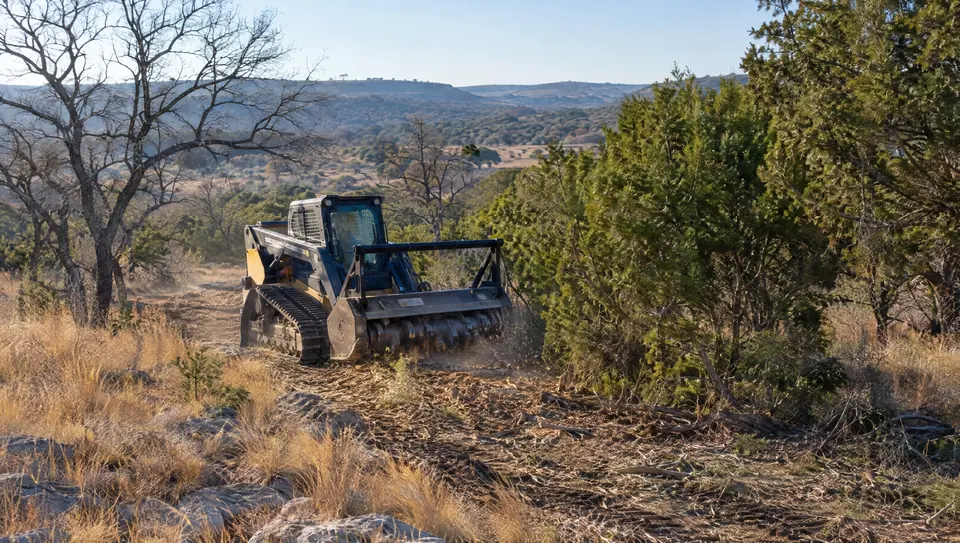
Forestry mulching fits cedar on ranch ground. The mulcher grinds each tree down at the base, takes dense stands in one operation, and leaves the root balls in place to hold the soil. The mulch covers the ground, and there are no burn piles to manage during a burn ban.
Many ranches also carry old bulldozer piles from earlier clearing. We mulch those piles too, even piles as large as a house, and turn them back into usable ground.
Clearing mesquite for lasting results
Mesquite needs a decision up front. Two paths work, and many ranches use both.
Grub the mesquite root crown
Grubbing pulls the tree and its root crown out below the bud zone. Texas A&M AgriLife Extension calls grubbing a long-term control option and warns that leaving any part of the bud zone can let the tree resprout. We grub with bulldozers and excavators, and we prefer to mulch those root balls on site.
Mulch mesquite and manage the regrowth
Mulching mesquite at ground level clears the pasture and keeps the soil intact, but expect resprouts. Mulching works when you plan follow-up from the start, such as periodic shredding to keep sprouts short. Many landowners also talk with Texas A&M AgriLife Extension about treatment options that fit their goals.
A common mix is to grub mesquite in the pastures that matter most and to mulch and manage the rest.
Selective clearing keeps the trees that matter
A cleared pasture does not have to be a bare one. Live oaks and other shade trees give cattle relief in a Texas summer, hold soil along draws and add character to the land. Before work starts, we walk the ranch with you and flag the trees that stay.
Oak wilt is common in Central Texas. Oak wilt spreads in defined paths, and infected trees cannot be restored. Selective clearing is often the best option for protecting the healthy oaks around a problem area, and Texas A&M Forest Service advises avoiding pruning or wounding oaks from February through June.
Timing ranch clearing around grass and oaks
Clearing pasture ahead of spring green-up lets grass take advantage of the rain. Under a light layer of mulch, grass can green up within days after a good rain. Under a heavy layer, up to 12 inches deep, grass can take two to three years to come through, so mulch depth is worth discussing before the work starts.
Firm, dry ground keeps heavy machines from rutting pasture soil, so weather shapes the schedule on big jobs. Work near keeper oaks fits best from late fall through January, outside the February through June oak wilt window.
Planning cedar and mesquite clearing across a ranch
Big ranch projects go better with a plan. Start with the work that pays you back first, then move outward.
- Fence lines first, so you can see and repair boundaries.
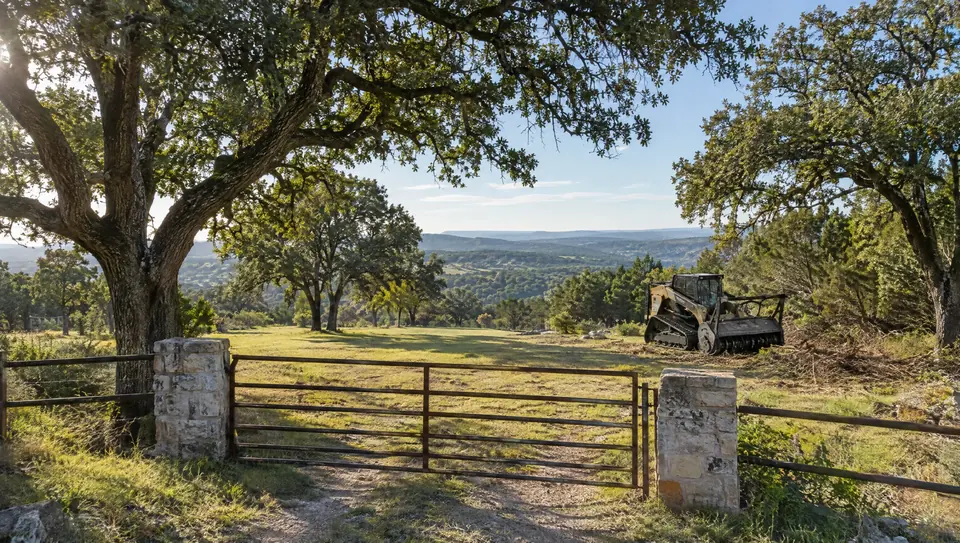
- Ranch roads and gates next, so trucks and equipment can reach every pasture. Our access road building in Texas work can turn existing surface rock into road base on site.
- Water and working areas, such as stock tanks and pens.
- Open pasture last, one pasture at a time, so cattle can rotate while the work moves.
Our ranch land clearing in Texas service covers pasture reclamation from the first fence line to the last pasture.
Keeping ranch pasture open after clearing
Clearing is the big step. Keeping the land open is the long one.
Periodic shredding with a tractor and batwing mower knocks back mesquite sprouts and young cedar before they get established. Ranch and rural properties are scheduled by season and conditions, and our grounds maintenance in Central Texas crew handles that shredding. Walk each pasture at least once a year and deal with new brush while it is small.
Healthy grass helps too. Good grass cover competes with seedlings, and sensible grazing keeps that cover strong. Properly cleared and maintained land is healthier, more valuable and more enjoyable to own. If you are weighing what a cleared ranch is worth, read whether clearing land increases property value.
Get your pasture back
We're lifelong Texans, and we treat your land as if it were our own. Call (210) 247-8410 to set up a discovery call, and we will walk your ranch and lay out a plan for the cedar and the mesquite.
Sources
- Mesquite ecology, Texas Natural Resources Server, Texas A&M
- Grubbing mesquite trees, Texas A&M AgriLife Extension
- Juniper ecology, Texas Natural Resources Server, Texas A&M
- How an increase or reduction in juniper cover alters rangeland hydrology, Texas Natural Resources Server, Texas A&M
- Prevent the spread of oak wilt in Texas, Texas A&M Forest Service