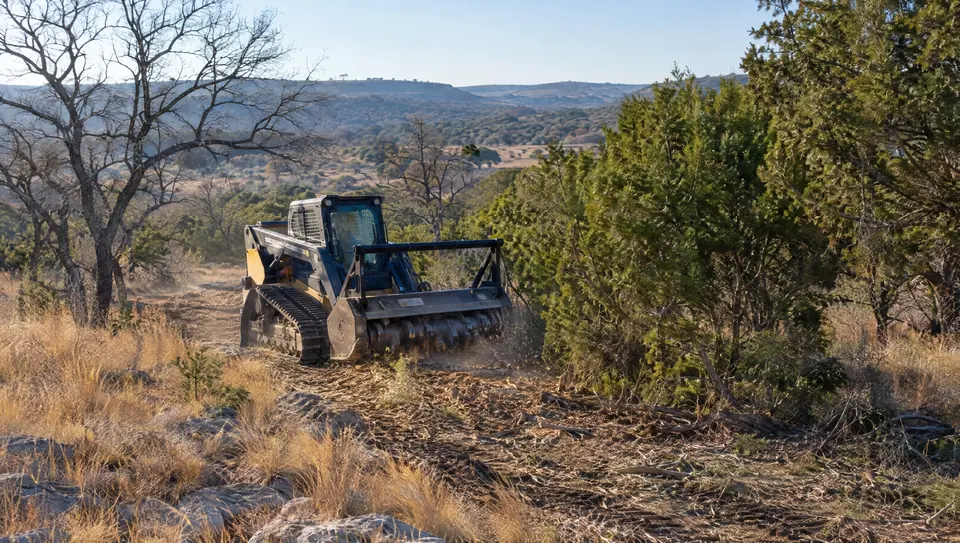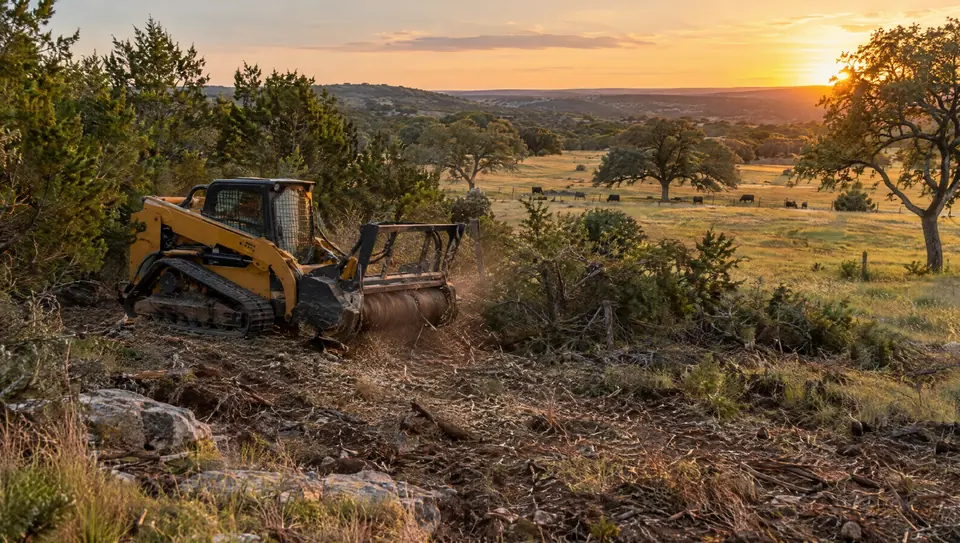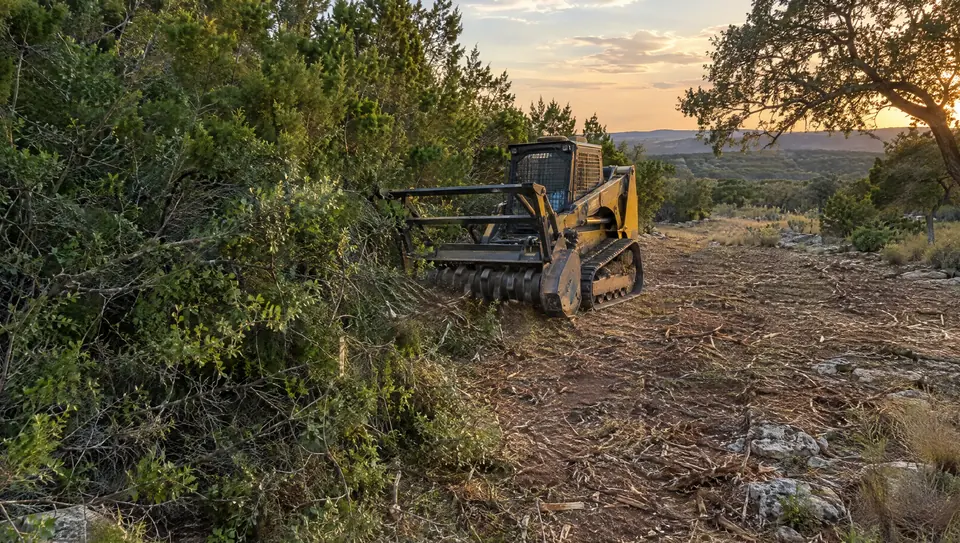

Does clearing land increase property value? What Texas buyers see
Does clearing land increase property value? It can, when clearing turns hidden, unusable acreage into ground buyers can walk, picture and build on. Here is what helps and what hurts.
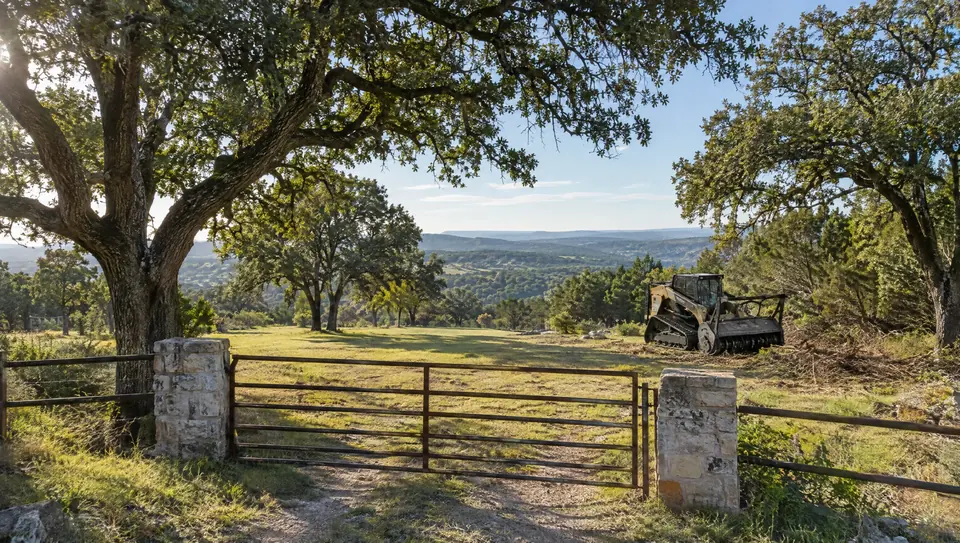
Does clearing land increase property value?
Clearing land can increase property value when it makes acreage usable and lets buyers see what they are paying for. Open ground shows views, terrain, boundaries and building sites that dense brush hides. How much value clearing adds depends on the market, the property and its intended use, so no one can promise a set figure.
Does clearing land increase property value? In many cases it can, because cleared land lets buyers see what they are paying for. A tract buried in cedar and brush hides its views, its terrain and its best building sites. Clear the right parts well, and those features show.
We don't just clear land. We stage property. This guide covers how land clearing in Central Texas can help a property, where clearing can hurt value, and how to plan the work.
What changes when land is cleared
Clearing changes how a property works and how it shows.
- Usable acreage. Brush-choked ground you cannot walk adds little to daily use. Cleared ground can be grazed, hunted, built on or simply enjoyed.
- Visible features. Views, slopes, draws and big trees come out of the brush.
- Building sites. A cleared home site or pad shows a buyer exactly where a house could go.
- Access. Trails and roads let people reach every part of the land.
- Healthier trees. Removing crowding brush and cedar gives keeper trees room.
Owners feel the difference first. Properly cleared and maintained land is healthier, more valuable and more enjoyable to own.
Why buyers respond to cleared land
Buyers struggle to value what they cannot see. On an overgrown tract, a buyer cannot find the boundaries, picture a house site or judge the terrain. That uncertainty tends to show up as hesitation or a cautious offer.
Cleared land answers those questions. A buyer can walk the fence line, stand on the house site and take in the view. Listing photos and drone shots show open ground and good trees instead of a wall of cedar.
One of our Google reviews, from Ashley Cooke, reads, "They cleared our 20 acres in Bulverde where Bulverde Market Day is held and did a great job! A year and a half later the land looks incredible."
Does clearing land increase property value on every tract?
Clearing land does not raise value the same way on every tract. Some buyers want privacy and cover. A hunting property may be worth more with brush left in strips for wildlife, and a wooded home site may sell on its seclusion. Clearing everything can remove the very thing those buyers came for.
The answer is a plan. Decide who the land is for, then clear to show what that buyer wants. Most properties gain from opening the entrance, a building site, a few views and the boundary lines, while keeping the best trees and some natural cover.
Clearing that adds value and clearing that hurts it
Clearing done poorly can take value away from a property. The difference is in the plan and the finish.
Clearing that tends to add value looks like this.
- Keeps the best oaks and shade trees
- Leaves a fine finish that is easy to walk and drive over
- Keeps topsoil and root balls in place on slopes
- Opens views and building sites on purpose
Clearing that tends to hurt value looks like this.
- Wipes out every tree, including the ones buyers want
- Leaves bare, eroding dirt, deep ruts or burn scars
- Leaves debris piles, stubs and splinters behind
Forestry mulching leaves the soil intact and the ground covered, while dozer clearing disturbs soil and raises erosion risk. Our fine finish, the small material we call toothpicks or hamster chips, lets grass return faster. Under a light layer of mulch, grass can green up within days after a rain.
Home sites, access and building readiness
For land that will be built on, clearing removes guesswork for the next owner. A cleared home site, a cut pad and a road to reach it show the property is ready. Our land clearing for a building site work covers home sites, pads and grubbing where foundations go.
Access adds to that picture. A ranch road graded with proper crown and drainage, built on road base crushed from the property's own surface rock, makes every part of the land reachable.
Boundaries matter too. Our survey line clearing in Texas uses Trimble GPS equipment on the mulcher to follow your licensed surveyor's data, so buyers can see property lines on the ground. 9 Arrow is not a licensed surveyor and does not replace one.
Defensible space around homes
Wildfire is part of owning land in the Hill Country. Texas A&M Forest Service describes defensible space as zones around a home, reaching 100 feet out, or up to 200 feet where the property allows. Forest Service guidance includes removing ladder fuels under trees so a ground fire cannot climb into tree crowns, and spacing tree crowns apart.
Mulching brush and cedar near structures is a practical way to reduce that fuel. Forestry mulching does the job without piling and burning, which is often prohibited during burn bans.
Agricultural valuation depends on use
For larger rural tracts, clearing can be one step toward an agricultural valuation. Agricultural open-space appraisal, often called 1-d-1, values land on its agricultural use, which usually means a lower tax bill than market value. Qualification depends on use. Comal Appraisal District, for example, requires land to be used primarily for agriculture at the intensity generally accepted in the area, with that use in at least five of the preceding seven years. Wildlife management valuation requires the land to have qualified for open-space appraisal in the preceding year.
Clearing does not qualify land on its own. Reclaiming cedar-choked pasture for grazing or hay can be part of putting land back into agricultural use. Rules and guidelines vary by appraisal district, so check with yours before you plan around a valuation. Our post on clearing cedar and mesquite on a Texas ranch covers pasture reclamation.
Plan land clearing before you list
If you plan to sell, start with what buyers see first.
- The entrance and driveway
- A likely home site and the view from it
- Boundary and fence lines
- Trails that reach the back of the property
Leave time for grass to recover before listing photos. The best time to clear land in Texas is usually late fall through winter, which sets up green ground once spring rain arrives.
Stage your land for what comes next
Call (210) 247-8410 to talk about what your land could become, and we will walk it with you.
It does not get better.