
Forestry mulching vs traditional land clearing for Texas property
Forestry mulching vs traditional land clearing comes down to what you want left on the ground afterward. Here is how the two methods compare and when to use each one.
Is forestry mulching better than traditional land clearing?
Forestry mulching is usually the better choice when you want brush and trees gone, the soil left intact and no debris to deal with. Traditional land clearing with a bulldozer fits work that needs roots out of the ground, such as foundations and pads. Many Texas projects use both, mulching most acres and grubbing only where needed.
Forestry mulching vs traditional land clearing is the first choice most Texas landowners face when brush takes over. Both methods open up land. They leave it in very different shape. Forestry mulching grinds everything in place and leaves the soil covered. Traditional clearing pushes trees out by the roots and leaves piles and bare ground behind.
9 Arrow does both. Forestry mulching is our core service, and we bring in bulldozers and excavators when roots have to come out. This comparison walks through soil, cleanup, cost structure and tree care, so you can match the method to your land.
What traditional land clearing involves
Traditional land clearing usually means a bulldozer. The dozer pushes trees over, roots and all, and shoves them into piles with the brush. The piles are then burned or loaded and hauled away. After that, the ground often needs another round of work to fill holes, smooth ruts and pick up what is left.
Dozer clearing moves a lot of material and pulls roots in the same motion. The tradeoff is torn-up soil, debris piles and several steps before the land is ready to use.
What forestry mulching involves
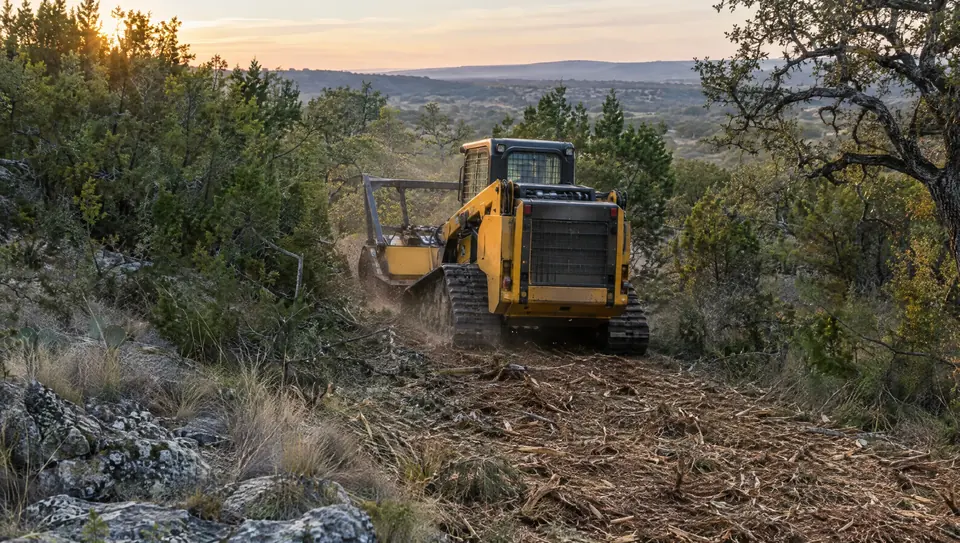
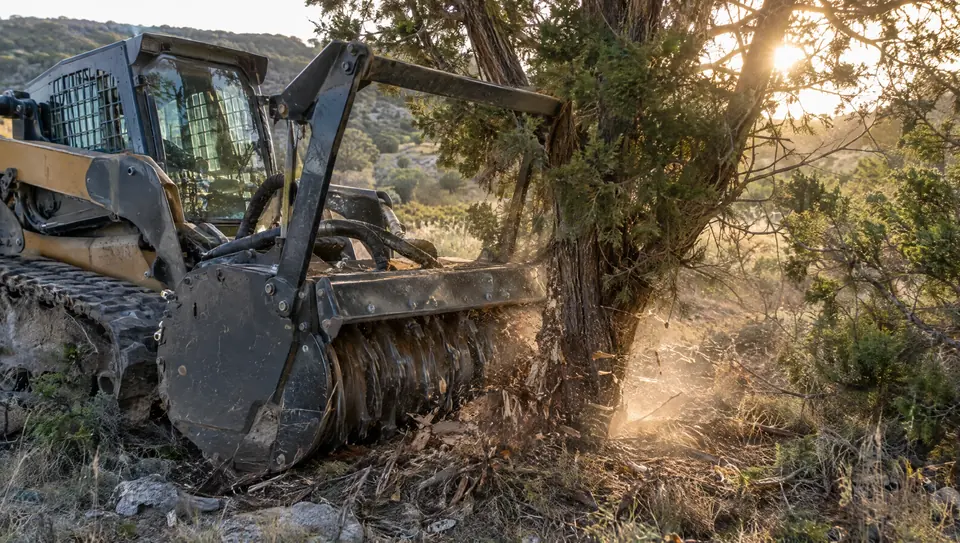
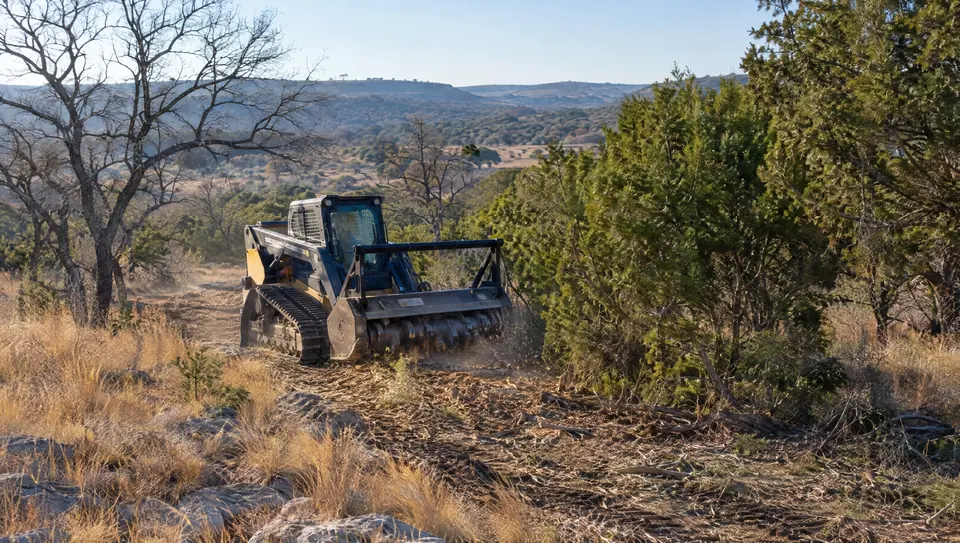
Forestry mulching uses one machine with a spinning, toothed head that grinds trees and brush where they stand. Clearing and cleanup happen together. Root balls stay in the soil, and the mulch stays on the ground as cover. No burn piles. No hauling. No mess.
For the equipment and the finish in detail, read our answer to what is forestry mulching.
Forestry mulching vs traditional land clearing on soil
Soil is the biggest difference between the two methods.
A bulldozer scrapes the surface, rips out roots and leaves bare dirt. On Hill Country ground, where thin soil often sits over limestone, that disturbance raises the risk of erosion every time a hard rain comes through.
Forestry mulching leaves the topsoil and the root balls in place. Roots hold the ground together, and the mulch layer covers it.
No method is perfect on saturated ground. Any heavy machine can rut wet clay, which is why timing matters for both. Our guide to the best time to clear land in Texas covers how the seasons affect ground conditions.
Cleanup, burning and burn bans
Traditional clearing creates piles, and piles have to go somewhere. Burning depends on the weather and the county. In Texas, a county judge or commissioners court can put a burn ban in place when fire danger is high, and Texas A&M Forest Service keeps a daily statewide map of burn bans. A pile that cannot be burned sits on your land until conditions change, or it gets hauled off as added work.
Forestry mulching never builds a burn pile, so burn bans do not hold up the clearing. We also mulch old piles left behind by past dozer work, including piles as large as a house.
Finished ground with each clearing method
Traditional clearing finishes with bare, loosened dirt. Bare ground is easy to grade, which is why dozers suit building pads, but it has no cover until grass or seed takes hold. On a slope, that gap is when erosion does its damage.
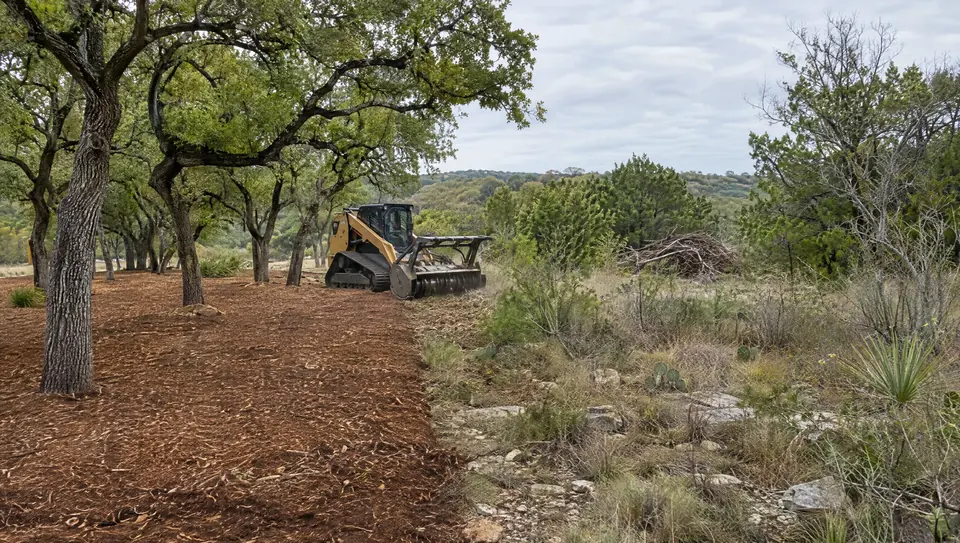
Forestry mulching finishes with a layer of mulch over intact soil. A 9 Arrow fine finish leaves small material, the kind we call toothpicks or hamster chips. Ground finished that fine is easy to drive over and lets grass come back faster. Under a light layer of mulch, grass can green up within days after a rain. Under a heavy layer, up to 12 inches deep, grass can take two to three years to come through. If you need open ground sooner, the mulch can be stockpiled or hauled off.
Cost structure, side by side
The two methods spend money in different places.
Traditional land clearing typically pays for these steps.
- Dozer time to push trees and roots
- Burning the piles, or loading and hauling debris
- Follow-up work to smooth and clean the ground
Forestry mulching typically pays for these steps.
- Mulcher time to grind trees and brush on each acre
- Any grubbing where roots must come out
- Mulch stockpiling or haul-off, if you need it
Forestry mulching folds cleanup into the clearing, which removes separate hauling and burning steps. Whether mulching comes out lower on your tract depends on density, terrain and what you need the ground to do afterward. The fair comparison is the full cost to finished, usable ground. Our breakdown of forestry mulching cost per acre shows how we estimate by the day or by the acre.
Keeping the trees you want
Forestry mulching is selective by nature. The operator can work between trees, take out cedar and brush, and leave oaks and shade trees standing. Pushing trees with a dozer is harder to control near keepers, and the roots of nearby trees can be torn in the process.
Tree health is a real concern in Central Texas. Oak wilt spreads in defined paths, and infected trees cannot be restored. Texas A&M Forest Service advises avoiding pruning or wounding oaks from February through June and painting any oak wound immediately. Selective clearing is often the best option for protecting the healthy oaks around a problem area.
When traditional land clearing still makes sense
Some ground needs roots and soil moved. Traditional methods fit work like the following.
- Building pads and foundations that need root-free ground
- Stock tanks, ponds and other earthwork
- Road and driveway subgrade
- Spots where large stumps have to come out
On those jobs, the best answer is often a combination. We mulch the bulk of the acreage, then grub only where needed with bulldozers and excavators. We prefer to mulch those root balls on site instead of piling them. Our land clearing for a building site work follows that pattern on home sites and pads.
Choose the clearing method by the result you want
Start with what the land needs to do next. If you want walkable, grazeable or buildable ground with healthy soil and the best trees kept, start with forestry mulching. If a slab is going in, plan to grub that footprint and mulch everything around it.
Call (210) 247-8410 to talk through your property, or see what our forestry mulching in Central Texas service covers.