
How rock crushing for land development fits a Hill Country subdivision
On-site rock crushing can supply base for construction roads and lot access on a development tract. Here is where it fits the schedule, what street specs demand and which rules apply.
How is rock crushing used in land development?
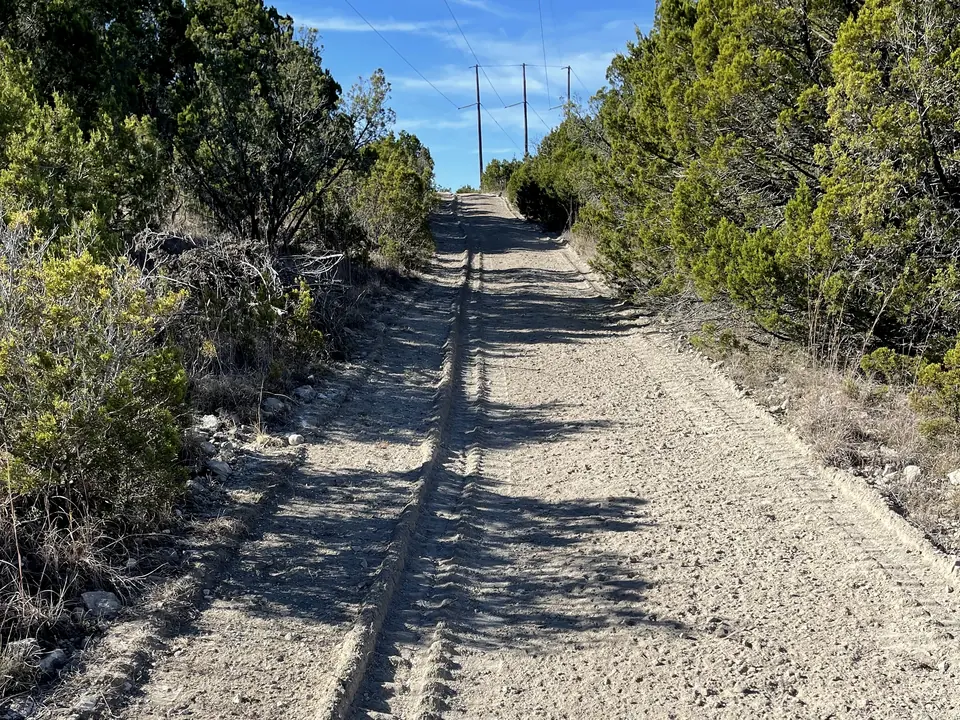
Rock crushing for land development turns surface rock on the tract into base for construction roads and lot access, which cuts imported material and delivery waits. Streets a county or city will accept still follow the engineer's sealed plans and the local spec, so on-site rock should go under them only after certified lab tests show it complies.
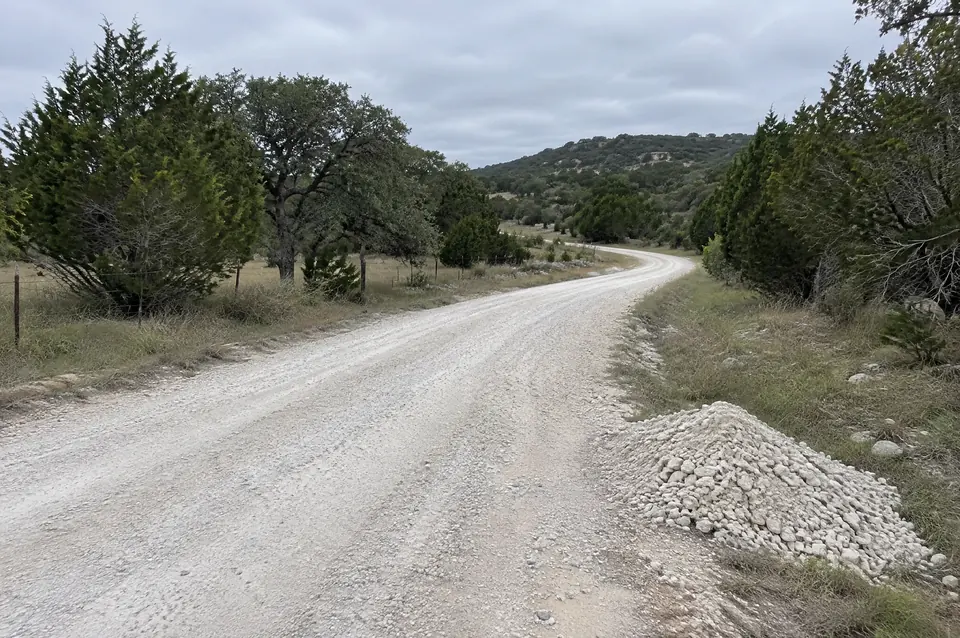
Rock crushing for land development turns the surface rock in a tract's street corridors and lots into base material on site. On Hill Country tracts, the rock in the way of streets and lots can become the base under construction roads, haul routes and lot access. That is where our on-site rock crushing for development tracts fits a project.
The catch is standards. The owner sets the bar for a construction road, but a street the county or city will accept has to meet the engineer's plans and the local spec. This guide covers where crushing fits the schedule, what local street rules require, and which stormwater and Edwards Aquifer rules come with the work.
Where does rock crushing for land development fit in the schedule?
Rock crushing for land development fits the schedule after the street corridors are cleared and roughed in, and before base goes down on construction roads and lot access. On a development tract, the work runs in this order:
- Survey and plans. Your licensed surveyor sets the lines, and your engineer designs the streets and drainage.
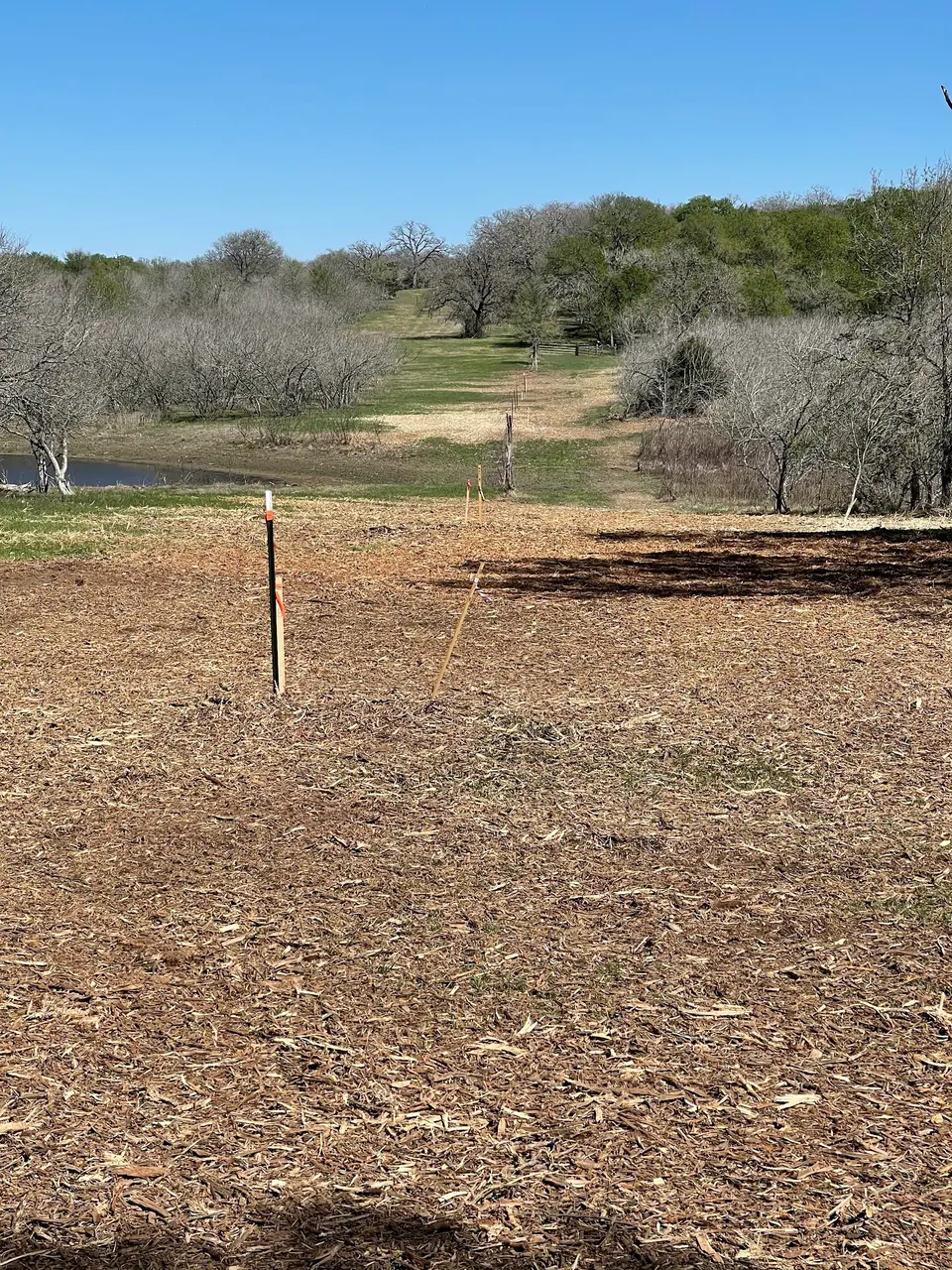
- GPS line clearing. 9 Arrow mounts Trimble receivers on its forestry mulchers, loads the surveyor's CAD files and clears subdivision street corridors and lot lines to the certified data in real time. That reduces or eliminates survey-crew pre-staking. Our GPS survey line clearing page covers the method. We are not surveyors and do not replace yours.
- Rough grading. Rough grading and leveling bring the corridors toward grade.
- Crushing. Surface rock in the corridors is processed into a fine, compactible road base on site.
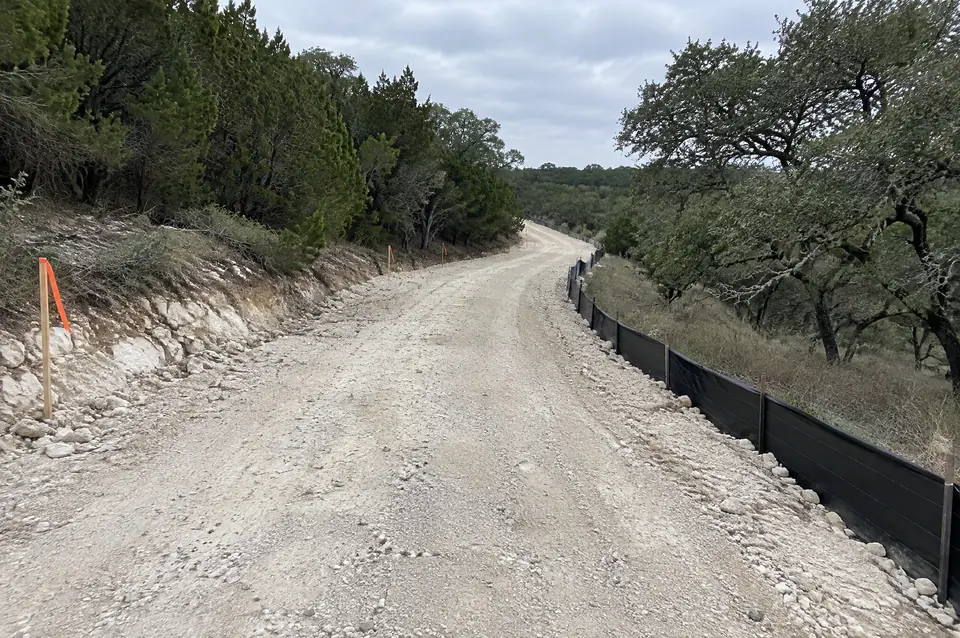
- Construction roads and lot access. Crushed base goes into roads graded with crown, drainage and culverts where water crosses, built to carry heavy equipment and truck traffic.
- Engineered streets. Streets the county will accept are built to the engineer's plans, with base tested and approved before paving.
Zach C., a developer, wrote this in a 5-star Google review: "We exclusively use 9 Arrow for all land clearings, lot lines, and site prep scopes for our Texas projects. They are exceptional, keep up with our overwhelming volume, and deliver a level of quality and responsiveness we haven't seen anyone else rival."
Which development roads can use on-site crushed rock?
On-site crushed rock fits construction roads, haul routes and private lot access first, because the owner and engineer set those standards. Streets a county or city will accept are different. The local spec and the engineer's plans govern them, and Comal County's subdivision rules require engineer-sealed construction plans for roads.
| Road on the tract | Who sets the standard | Where on-site crushed rock fits |
|---|---|---|
| Construction and haul roads | Owner and site plan | Base for heavy equipment and truck traffic during the build |
| Lot drives and private access | Owner and engineer | Crushed base graded with crown and drainage |
| Streets for county or city acceptance | Engineer's sealed plans and the local spec | Only where certified lab tests show the material meets the spec |
We do not claim that rock crushed on a tract meets any TxDOT, county or city specification. The lab results and the engineer decide where it can go.
What do Comal County subdivision rules require for street base?
Subdivision rules in Comal County require a named base material, a minimum compacted thickness, a density target, lab test reports and written approval before paving. Two published sets of rules show the detail: the Comal County Subdivision Regulations, adopted September 3, 2020, and the City of Spring Branch Subdivision Regulations.
| Requirement | Comal County | City of Spring Branch |
|---|---|---|
| Base material | TxDOT Item 247 | Texas Highway Department Item 248 (crushed stone); caliche prohibited |
| Minimum compacted base | 8 in arterial; 6 in collector and secondary; 10 in industrial | 10 in arterial; 8 in collector and secondary |
| Placement | At least two courses, 95% modified Proctor | At least two courses, 95% modified Proctor |
| Subgrade | At least 90% of maximum dry density | At least 90% of maximum dry density |
| Lab testing | One test per 500 cubic yards, at least one per project | One test per 500 cubic yards, at least one per project |
| Sign-off | County Engineer approves subgrade and base in writing | City Engineer approves subgrade and base in writing |
Spring Branch also limits its crushed stone to a Los Angeles abrasion of 40 or less. Both sets of rules call for test reports from a certified testing laboratory showing the base complies, so on-site rock is not street base until a lab says so. Published rules get revised, so confirm the current version with the county or city before design.
How does on-site crushing cut imported material on a development?
On-site crushing cuts imported material on a development by turning rock already in the corridors into base. Processing existing surface rock eliminates imported material, reduces project cost and speeds completion, since nobody waits on deliveries. Our side-by-side on crushing your own rock vs hauling in road base runs the truckload math for a mile of road.
Construction traffic gets the benefit first. We grade every road with proper crown and drainage and build it to support heavy equipment and truck traffic, so lot access stays usable through changing weather while the build goes on. Our crew works from Spring Branch and pairs this road work with land clearing across Comal County and the Hill Country.
Depth matters when plans call for a thick section. Skid-steer crushing heads are rated to about 4 to 6 inches deep (Farm Equipment; FAE), shallower than the 6 to 10 inches of compacted base those street rules require. 9 Arrow runs a large, dedicated rock crushing machine built to work far deeper than the skid-steer attachments most crews use. As far as we know, no other crew in the Hill Country runs one. Depth adds processed rock, not a shortcut: both rule sets still call for base placed in at least two courses.
Which stormwater and Edwards Aquifer rules apply to development crushing?
Development crushing falls under the same soil-disturbance rules as the rest of the site work, and on a subdivision TCEQ looks at the whole plan, not one crew's piece.
- Construction stormwater. TCEQ's general permit, TXR150000, covers construction that disturbs an acre or more, or less as part of a larger common plan of development or sale. Sites disturbing 5 or more acres are large construction activities, and the current permit expires March 5, 2028 (TCEQ).
- What counts as a common plan. TCEQ says an activity is part of a larger common plan when it is completed in separate stages, in separate phases, or in combination with other construction, as identified by documents such as plats, contracts and marketing plans (TCEQ).
- Survey stakes can count. A 2020 TCEQ Edwards Aquifer program memo, citing EPA guidance, lists "physical demarcation (including boundary signs, lot stakes, surveyor markings, etc.)" among the signs of a common plan (TCEQ memo).
- Edwards Aquifer zones. On the recharge zone, TCEQ requires a Water Pollution Abatement Plan for regulated activities such as building roads and excavation (TCEQ). On the contributing zone, the rules apply at 5 or more acres, or less as part of a larger common plan that could cumulatively disturb 5 or more (30 TAC 213.21). The rules exclude "clearing of vegetation without soil disturbance" (30 TAC 213.3), which is where forestry mulching sits. Crushing and grading break ground.
This is general information, not legal advice. Confirm your project with the TCEQ regional office and your engineer, and see our guide to road building permits in Texas for 811, floodplain and dust rules.
Plan the rock work with the site plan
Bring the plat and engineering plans to a site visit, and we will show where on-site rock can carry construction traffic and lot access. See our on-site rock crushing service for developers and how we work with land developers across Central Texas.
Sources
- Subdivision Regulations (adopted September 3, 2020), Comal County Engineer's Office
- Spring Branch Subdivision Regulations, City of Spring Branch
- Stone crushers for skid steers data sheet (US), FAE Group
- Loftness Stone Ax stone crusher, Farm Equipment
- Stormwater permits for construction sites (TXR150000), Texas Commission on Environmental Quality
- What is a "common plan of development"?, Texas Commission on Environmental Quality
- Stormwater discharges from construction activities: am I regulated?, Texas Commission on Environmental Quality
- Defining "larger common plan of development or sale" (October 22, 2020), TCEQ Edwards Aquifer Protection Program
- Water Pollution Abatement Plan, Texas Commission on Environmental Quality
- 30 TAC 213.21, Contributing zone applicability, Justia
- 30 TAC 213.3, Edwards Aquifer definitions, Cornell Legal Information Institute