
How to remove rocks from a pasture when limestone sits inches down
Rock pickers, hauling, burying and crushing all move pasture rock. On Hill Country soil only inches deep, here is what each does to the ground and how grass comes back.
How do you remove rocks from a pasture?
You remove rocks from a pasture by raking loose stone into windrows and lifting it with a rock picker, hauling it off, burying it, or crushing it in place. On Hill Country soils like Eckrant, where limestone sits 4 to 20 inches down, each method also disturbs thin soil, so plan grass cover before the work starts.
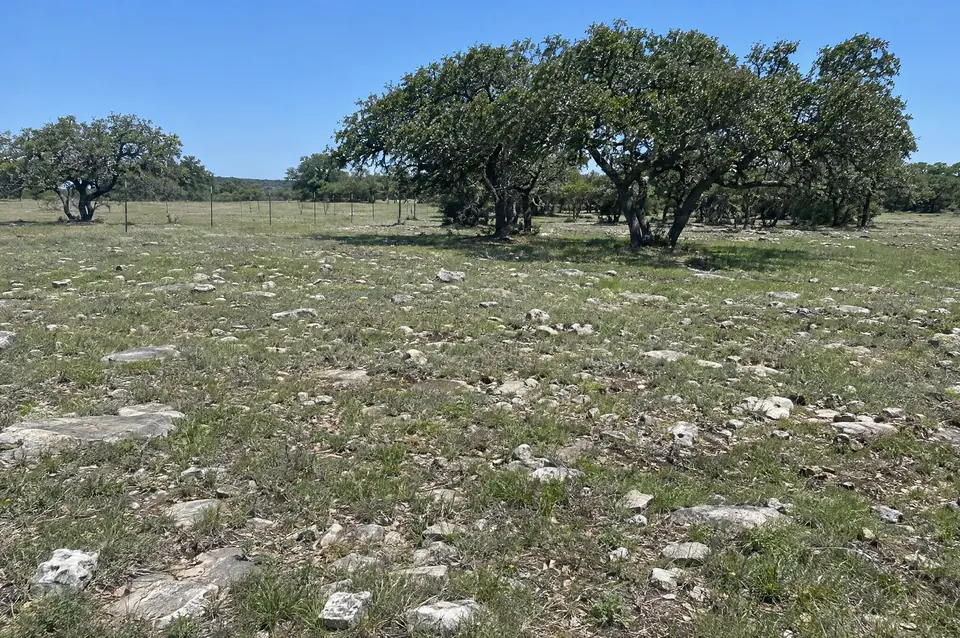
Knowing how to remove rocks from a pasture starts with knowing how deep the rock goes. On most Hill Country uplands, the stone on top is the first layer of a soil that is part rock all the way down to limestone. You can rake and pick it, haul it off, bury it or crush it, and every one of those methods also works the thin soil your grass depends on.
Our part of this is on-site rock crushing in Central Texas: we process existing surface rock on site into a fine, compactible road base. This guide lays out every option honestly, including the ones we do not offer, so you can choose the right one for your pasture.
Why are Hill Country pastures so rocky?
Hill Country pastures are rocky because many upland soils are thin, stony clay over limestone, with rock mixed through the whole soil, not just lying on top. USDA soil series and ecological site descriptions show how much:
| Soil or site | Depth to bedrock | Rock in and on the soil |
|---|---|---|
| Eckrant series, "very cobbly clay" | 4 to 20 in | Surface fragments 3 to 50 percent |
| Comfort series, "very stony clay" | 10 to 20 in | Surface rock fragments 0 to 90 percent |
| Low Stony Hill site, eastern Edwards Plateau | 4 to 20 in | Limestone gravel, cobbles and stones make up 35 to 70 percent of the soil by volume |
The last row is the one that matters for rock removal. When a third or more of the soil itself is rock, lifting the surface stone uncovers the stone just below it. The Eckrant series is described as mainly rangeland and wildlife habitat, which is the same ground ranchers graze.
Rock also changes how livestock use a pasture. The NRCS Low Stony Hill description reports GPS studies showing that "cattle will avoid a site once it contains about 30 percent surface rocks," and that slopes above 11 percent are generally less accessible to cattle, while sheep and goats can use slopes up to 45 percent.
How to remove rocks from a pasture: the four options
The ways to remove rocks from a pasture come down to four, and each one leaves the ground in a different state:
| Method | Where the rock ends up | What it does to thin soil |
|---|---|---|
| Rake and pick | Windrowed, lifted into a hopper, dumped in a pile | Works the surface; loose soil drops back, bare patches remain |
| Haul off | Trucked off the property | Same surface work as picking, plus loader and truck traffic |
| Bury | In a pit, under a cover of soil | Needs a hole in soil that may be inches deep over bedrock |
| Crush in place | Stays in the ground as smaller pieces | Mixes crushed stone into the root zone |
None of the four makes the soil any deeper. Each trades rock on the surface for some amount of bare or disturbed ground, which is why the plan for grass matters as much as the plan for rock.
How do rock rakes and rock pickers work?
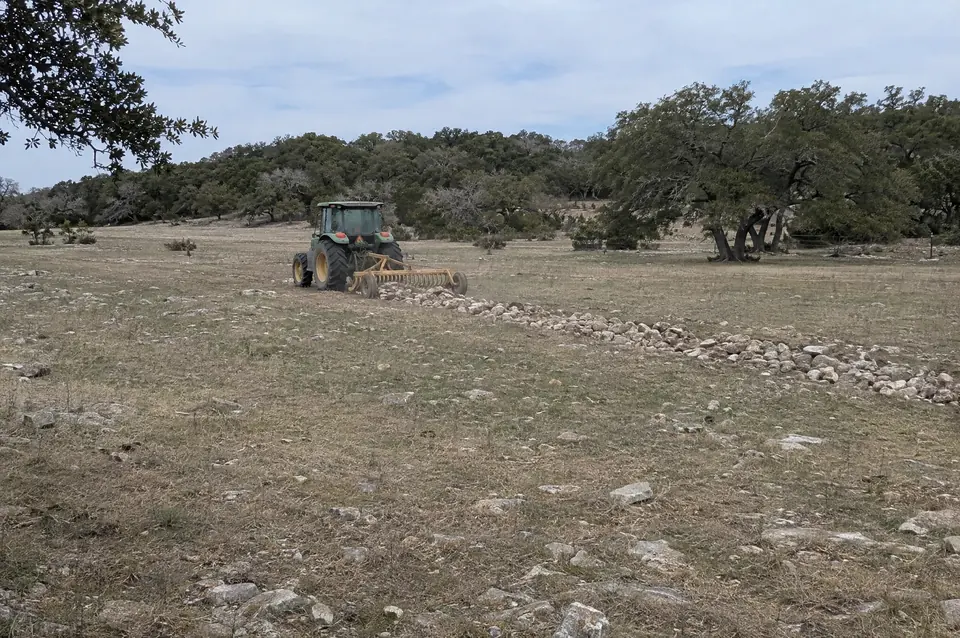
Rock rakes and rock pickers work as a pair: the rake gathers scattered stone into rows, and the picker lifts it. Equipment maker Degelman says "moving randomly distributed rocks into windrows allows for convenient picking" (Degelman RR1500 rock rake). Its pickers use a paddle that lifts and spins each stone onto a grill, and the grill and paddle teeth drop the dirt back onto the field.
Published ratings show what these machines are built for:
- The Degelman Signature 7250 picks rocks from 2 to 24 inches, holds 3 cubic yards, works a 15-foot-2-inch width and is rated for 70 to 220 hp tractors.
- The larger Degelman Rock King picks rocks from 2 to 28 inches, works an 18-foot-6-inch width and needs at least 200 hp.
- The RR1500 rock rake is 14 feet wide and needs at least 75 hp.
These are wide, tractor-pulled implements, and three limits show up on Hill Country pasture. Stones larger than the rating need another approach. Rock runs through the soil, so lifting the surface layer exposes the next one. And every pass leaves some bare ground between grass plants, which NRCS calls the soil "most susceptible to erosion" (Rangeland Soil Quality: Water Erosion, 2024).
Is it better to haul pasture rock off or bury it?
Hauling pasture rock off removes it for good, while burying keeps it on the property, and on thin Hill Country soil burying is usually the harder job. Hauling adds a loader and trucks to the picking work, and the rock leaves along with any future use for it.
Burying needs a hole deep enough to hold the rock under a cover of soil. On Eckrant soils, with bedrock 4 to 20 inches down, that hole is a rock excavation, not a dirt pit, and the soil that covers the rock has to come from somewhere else in the pasture. Deep digging also falls under Texas' underground facility damage prevention law, which counts mechanized digging that disturbs soil "to a depth of 16 or more inches" as excavation (Tex. Util. Code §251.002). Call 811 before any burial pit goes in.
There is a third choice for picked rock: put it where rock is useful. If the ranch needs a road or a pad, the stone in the pasture may be the raw material for it.
Can pasture rock be crushed in place?
Pasture rock can be crushed in place with tractor-driven stone crushers, but the rock stays in the ground as smaller pieces. Equipment maker FAE lists its tractor stone crushers on its agricultural reclamation page, "for crushing stones, rocks and slabs, even deep underground" (FAE). That is a maker's description. We have not found Texas research on how pasture grass responds to in-place crushing on Hill Country soils, so we do not promise a pasture result.
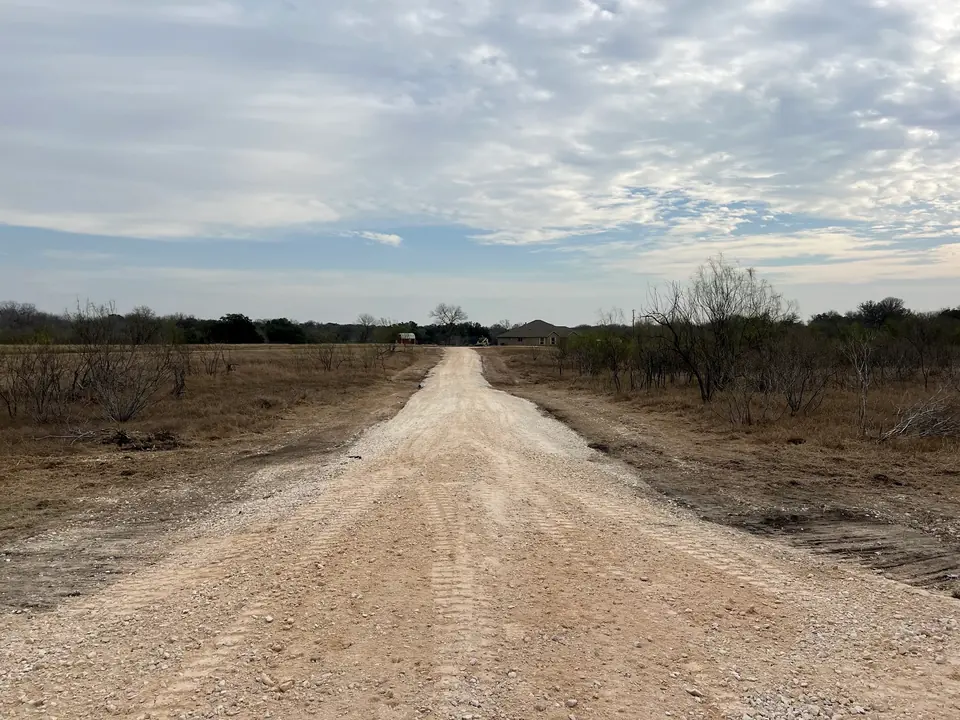
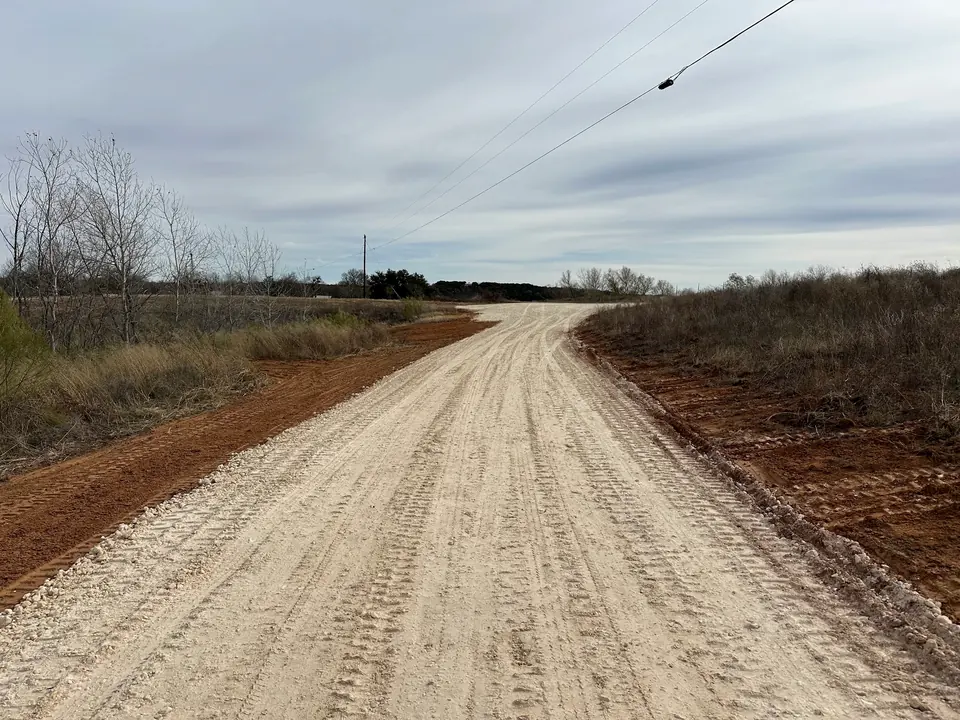
Our work is different. 9 Arrow processes existing surface rock on site into a fine, compactible road base, using crushing heads and attachments that break rock down to a fine, consistent grade. That base is made to compact into a road, which is a different job from growing grass. On a ranch, it becomes the base for ranch roads graded with a proper crown and drainage, and our site crews install and fine-grade pad sites. 9 Arrow runs a large, dedicated rock crushing machine built to work far deeper than the skid-steer attachments most crews use. As far as we know, no other crew in the Hill Country runs one. Our guide to on-site rock crushing walks through a job, and our guide on how to build a ranch road shows where the base goes.
Crushing, burying and grading break ground, so they can bring rules that grazing does not. The Edwards Aquifer rules exclude agricultural activities and "clearing of vegetation without soil disturbance" from regulated activity (30 TAC §213.3), but the rule text does not say whether rock work in a pasture counts as agriculture. On the recharge zone, TCEQ requires a water pollution abatement plan for any regulated activity, and construction that disturbs an acre or more of soil can fall under the TXR150000 stormwater permit. Confirm with TCEQ before work starts. This is general information, not legal advice.
How do you get grass back after removing pasture rock?
Grass comes back after rock removal when the disturbed ground gets plant or litter cover quickly and any seeding goes into a good seedbed. NRCS says soils with rock fragments on the surface "are protected from the impact of raindrops," and that bare soil between plants is most susceptible to erosion. Taking surface rock away removes some of that protection, so the soil needs cover in its place. NRCS advises landowners to maintain or increase the cover of plants or litter on the soil.
If seeding is part of the plan, Texas A&M AgriLife Extension's guide to reseeding natives in South Texas lays out seedbed rules. The seedbed "should be firm and not cloddy or powdery," rocky or steep terrain affects the methods, costs and likelihood of success, and "It is better to delay planting than to plant on a second-rate seedbed" (ERM-004). AgriLife's publication on seeding rangeland (E-117) states the risk plainly: "Range seeding is risky; deciding whether and how to seed can be difficult."
On the Low Stony Hill site, NRCS names little bluestem, Indiangrass and sideoats grama among the key grazing plants. Talk with your county AgriLife Extension agent or local NRCS office about seed and timing before any rock work starts, so the grass plan is ready when the ground is.
Put pasture rock to work
A walk of the pasture shows how deep the rock runs and whether it belongs in a road. See how our on-site rock crushing service turns existing surface rock into road base on ranches across Comal County and the Hill Country.
Sources
- Official Soil Series Descriptions, USDA Natural Resources Conservation Service: Eckrant, Comfort
- Low Stony Hill 29-35 PZ ecological site description (R081CY360TX, 2023), USDA Natural Resources Conservation Service
- RR1500 rock rake, Degelman
- Signature 7250 rock picker, Degelman
- Rock King rock picker, Degelman
- Rangeland Soil Quality: Water Erosion (April 2024), USDA Natural Resources Conservation Service
- Texas Utilities Code §251.002, Definitions, Texas Public Law
- Agricultural reclamation, FAE Group
- 30 TAC §213.3, Edwards Aquifer definitions, Cornell Legal Information Institute
- Water Pollution Abatement Plan, Texas Commission on Environmental Quality
- Stormwater permits for construction sites (TXR150000), Texas Commission on Environmental Quality
- Reseeding Natives in South Texas: Site Preparation (ERM-004), Texas A&M AgriLife Extension Service
- Rangeland Risk Management for Texans: Seeding Rangeland (E-117), Texas A&M AgriLife Extension Service