
Mulching vs burning brush: which way should you clear Texas land?
Mulching vs burning brush comes down to fire, smoke and timing. Here is what TCEQ rules and county burn bans require, and how mulching clears piles with no flame.
Is it better to mulch or burn brush in Texas?
Mulching is better than burning brush for most Texas land, because it grinds brush in place with no fire, no smoke and no wait on county burn bans. Burning is legal on many rural tracts under TCEQ rules, but only on site, in daylight, within wind limits and away from neighbors, and a burn ban can stop it.
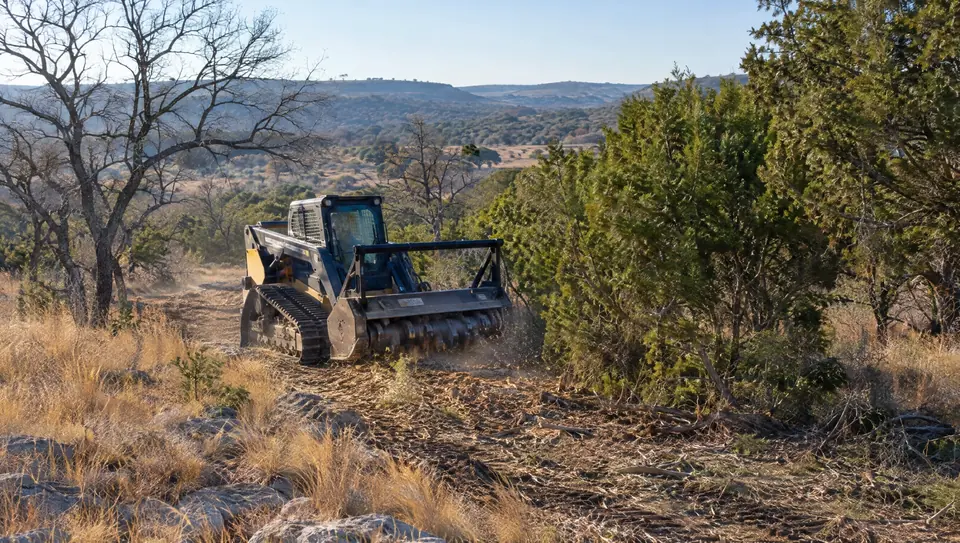
Mulching vs burning brush is a choice between grinding brush where it lies and setting it on fire. Mulching turns standing brush and old piles into ground cover with no flame, no smoke and no burn ban to wait out. Burning can be legal on rural Texas land, but TCEQ rules, county burn bans and wildfire risk put hard limits on when and where it happens.
We are a family crew out of Spring Branch, and brush removal in Central Texas is one of the services we run. Here is what the burn rules actually say, and how the two approaches compare on the ground.
Is it legal to burn brush in Texas?
Burning brush in Texas is legal only under specific exceptions to a statewide ban. The TCEQ outdoor burning rule starts with "No person may cause, suffer, allow, or permit any outdoor burning" in the state, then lists the exceptions, according to TCEQ's guide Outdoor Burning in Texas (RG-049).
The main exception for landowners covers plant growth. In most attainment counties, trees, brush and other plant growth may be burned on the property where it grew, by the owner or someone the owner authorizes. City ordinances can still ban burning inside city limits.
Nonattainment counties are stricter. There, land clearing debris may be burned only when no practical alternative to burning exists. TCEQ's San Antonio attainment status page lists Bexar County as a serious ozone nonattainment area, a classification effective July 22, 2024. TCEQ treats an attainment county the same way when part of a city in it extends into a bordering nonattainment county, so check your county's status with your TCEQ regional office.
One rule applies everywhere. Land clearing debris may be burned only at the site where it was cleared, and TCEQ says you may not move it to burn somewhere else.
Rules vary by county and city, so check for a burn ban and confirm with your county and TCEQ regional office before you light a pile. This is general information, not legal advice.
What rules apply when you burn a brush pile?
A brush pile burn in Texas has to follow TCEQ rule 111.219, which sets limits on time, wind, distance and attendance.
- Start no earlier than one hour after sunrise, and finish the same day by one hour before sunset.
- Do not start if forecast wind is under 6 mph or over 23 mph.
- Burn downwind of, or at least 300 feet from, neighboring structures with sensitive receptors, unless the neighbor approves in writing.
- Keep a responsible person with the fire while it is actively burning.
- Never burn tires, plastics, treated lumber, electrical insulation or heavy oils.
Texas A&M AgriLife Extension's guide to on-site brush pile burning adds practical advice beyond the rule. It suggests holding off when wind tops 15 mph, aiming for relative humidity of 40 percent or higher, and skipping any day with a red flag warning. The guide also notes that following the rules does not excuse a burner from the consequences of a fire, and it advises confirming liability insurance before you light a pile.
How do county burn bans work in Texas?
A county burn ban in Texas is an order from the commissioners court that restricts or prohibits outdoor burning in the unincorporated county. The Texas A&M Forest Service burn ban page explains that a county judge or commissioners court can put one in place when drought conditions exist, and it posts a statewide burn ban map.
Under Local Government Code Section 352.081, the Forest Service determines drought using the Keetch-Byram Drought Index or a similar index. A ban order can run no longer than 90 days, though a new order can follow it. Knowingly breaking a ban is a Class C misdemeanor.
Comal County shows how that plays out. Comal County Order No. 534, from November 2024, prohibited all outdoor burning in the unincorporated county apart from a short list of exceptions, set a fine of up to $500 and expired on the 90th day unless lifted sooner.
A pile waiting on a ban can wait through a whole dry season. Our guide to the best time to clear land in Texas covers how burn bans fit into the clearing calendar.
Mulching vs burning brush, side by side
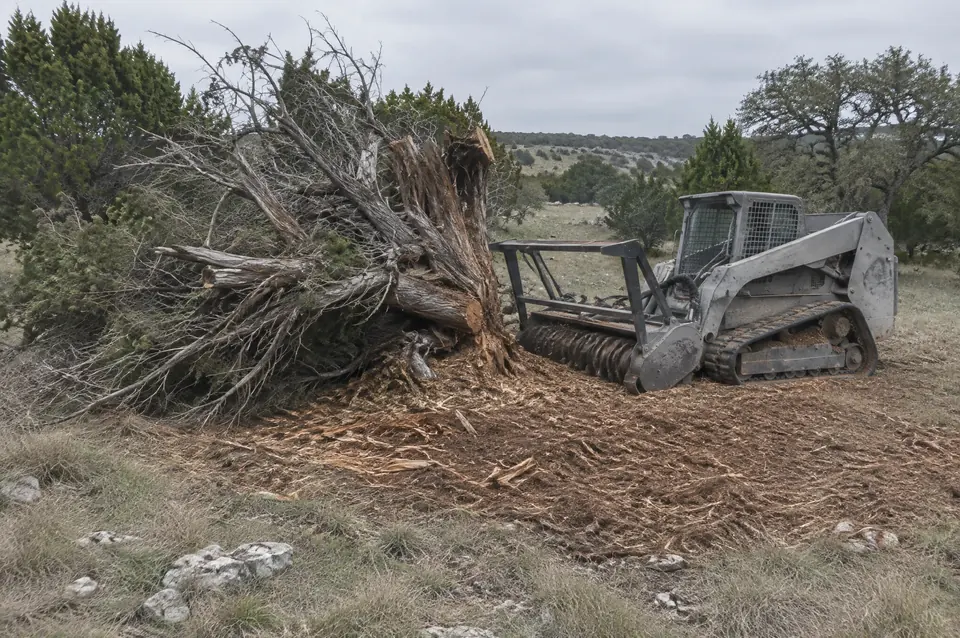
Mulching and burning both get rid of brush, but they leave very different results, risks and schedules.
| Mulching brush | Burning brush | |
|---|---|---|
| Prep work | None, the mulcher grinds brush standing | Brush must be cut or pushed into piles first |
| Fire and smoke | None | Open flame and smoke you answer for |
| Weather limits | Wet ground can slow machines | Wind, humidity, daylight and red flag days |
| County burn bans | No effect | Burning stops until the ban ends |
| Where it can happen | Anywhere the machine can reach | Only where the brush was cleared |
| What is left | Mulch that covers the soil | Ash and a bare burn spot |
| Old dozer piles | Ground in place, even very large ones | Burned under the same rules |
Burning can still fit a landowner who has the time, the equipment to control a fire and a legal burn window. Mulching fits when the brush needs to be gone on a schedule, in any season.
How big is the wildfire risk from burning brush?
Burning brush carries real wildfire risk in Texas. The Texas A&M Forest Service said in a December 2025 warning, "Careless debris burning is the leading cause of wildfires in Texas." The same release says about 90 percent of Texas wildfires are caused by people and their activities. The Forest Service's equipment use guidance adds that equipment use and careless debris burning together account for 50 percent of Texas wildfires.
Mulching takes the open flame out of the job, but no machine is risk free. The Forest Service notes that equipment blades hitting a rock can spark a wildfire, and it advises keeping a fire extinguisher on heavy equipment. Careful crews watch heat, wind and dry grass on every summer job.
What happens to old dozer piles if you do not burn them?
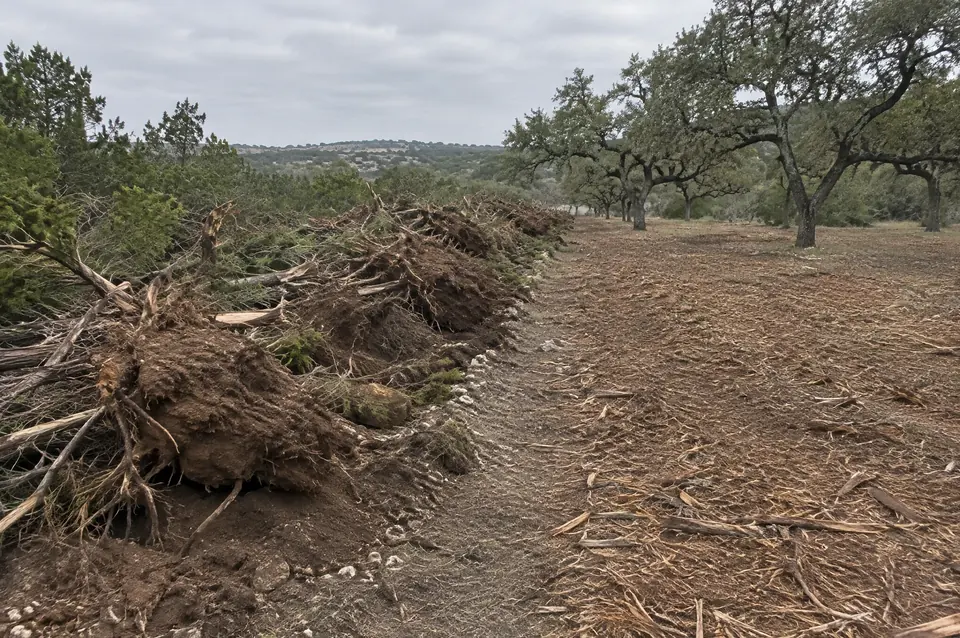
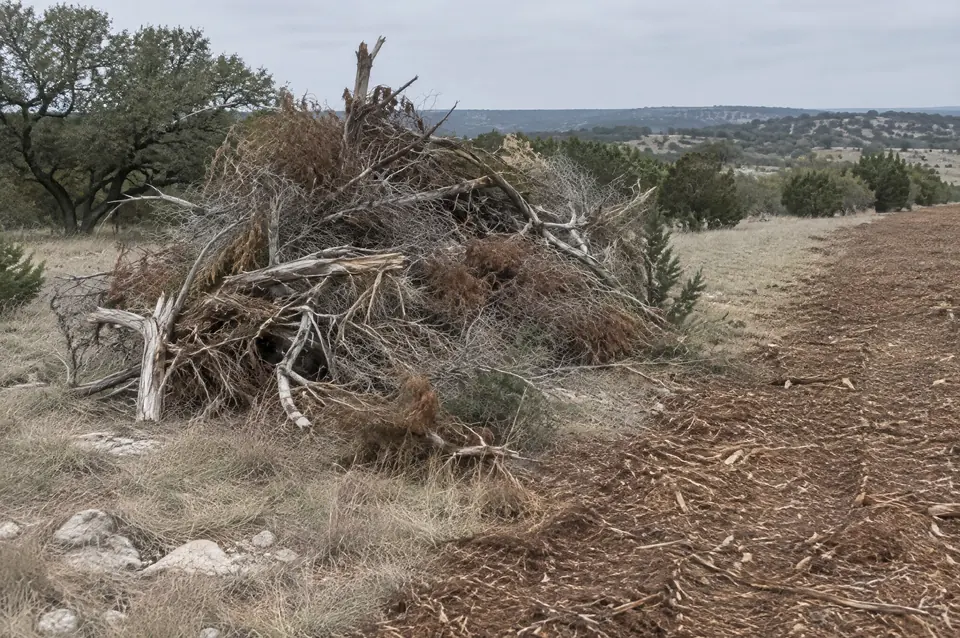
Old dozer piles can be mulched in place instead of burned. We grind existing brush piles, including old bulldozer piles as large as a house, and the mulch can be spread as ground cover, stockpiled or hauled off. That finishes a pile that may have sat through years of burn bans.
Keeping a few piles can make sense too. The Texas A&M Forest Service's Central Texas brush management guide notes that some brush debris can serve as bird and reptile cover or slow water on slopes. Pick the piles you want to keep, and grind the rest.
For how those piles get made in the first place, see our breakdown of forestry mulching vs bulldozing. We work burn-ban country across land clearing in Comal County and the rest of the Hill Country.
Clear the brush without the burn
If brush piles are waiting on a burn ban, or you would rather skip the smoke and the rules, our brush removal and brush pile mulching service clears them on site. No burn piles. No hauling. No mess.
Sources
- Outdoor Burning in Texas (RG-049), TCEQ
- San Antonio: Current Attainment Status, TCEQ
- On-Site Brush Pile Burning in Texas (ERM-052), Texas A&M AgriLife Extension
- Burn Bans and Information, Texas A&M Forest Service
- Local Government Code Chapter 352, Subchapter D (Section 352.081), Dallas County
- Order No. 534, Burn Ban, Comal County, November 2024
- Warm, dry holiday weather elevates wildfire risk across Texas, Texas A&M Forest Service, December 22, 2025
- Equipment Use, Texas A&M Forest Service
- Central Texas: Brush Management, Texas A&M Forest Service