
Is forestry mulching worth it for your Texas land? An honest look
Is forestry mulching worth it? For most brushy Texas land, yes. Here is what you get, when it is the wrong tool, and how to judge value without a price list.
Is forestry mulching worth it?
Forestry mulching is worth it when you want brush and cedar gone, the soil left in place and nothing left to burn or haul. One machine clears and cleans up in a single pass and leaves usable ground. Forestry mulching is the wrong tool where roots must come out, such as under a foundation.
Is forestry mulching worth it? For most brushy Texas land, yes. Forestry mulching clears and cleans up in one pass, leaves the soil and root balls in place, and leaves nothing to burn, haul or wait on. It is not the right tool for every job, and an honest answer includes where it falls short.
We have built our business on forestry mulching services in Central Texas since John Wheelock first picked up the work on a land development project in 2014. Here is what you get for the money, where another method fits better, and how to judge value without a price list.
What do you get with forestry mulching?
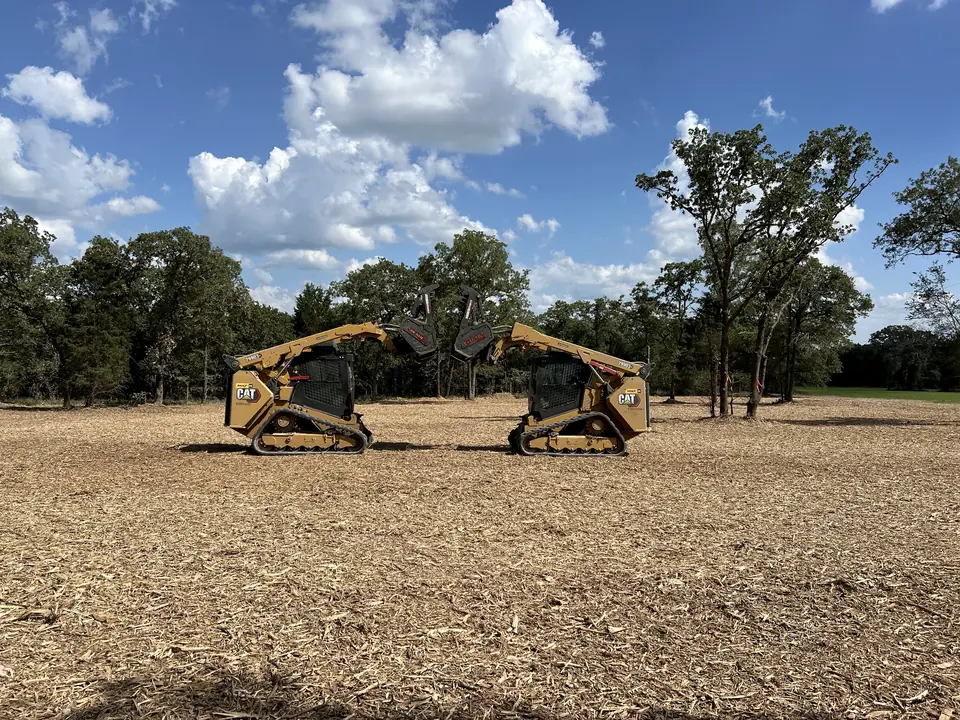
Forestry mulching gives you cleared, usable ground in a single step. One machine grinds standing trees and brush into mulch, so there is no second crew piling, burning or hauling. Here is what that buys you.
- One pass, no cleanup. Clearing and cleanup happen together. No burn piles. No hauling. No mess.
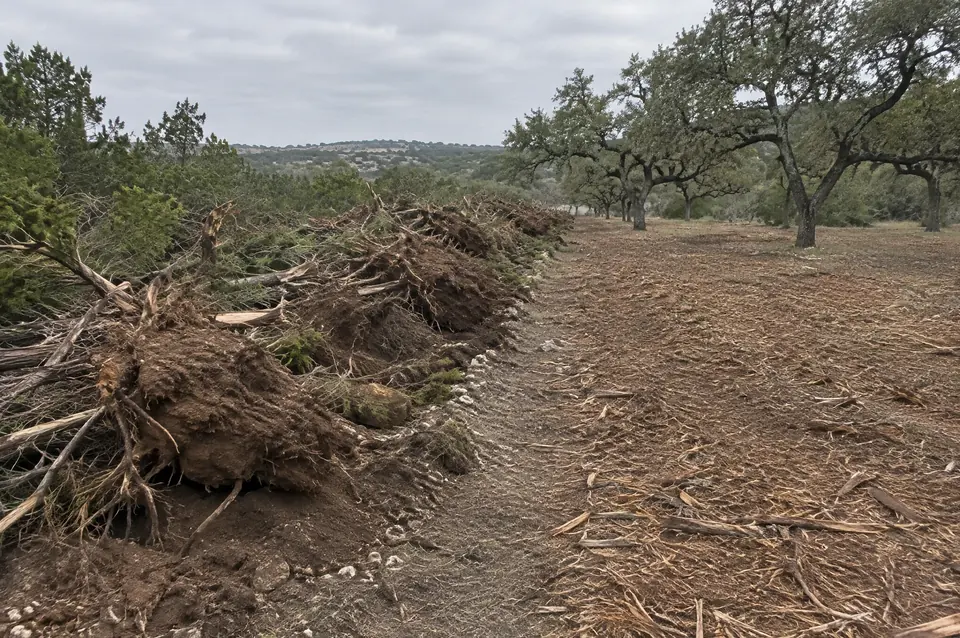
- Soil and roots left in place. Root balls stay in the ground and hold the soil.
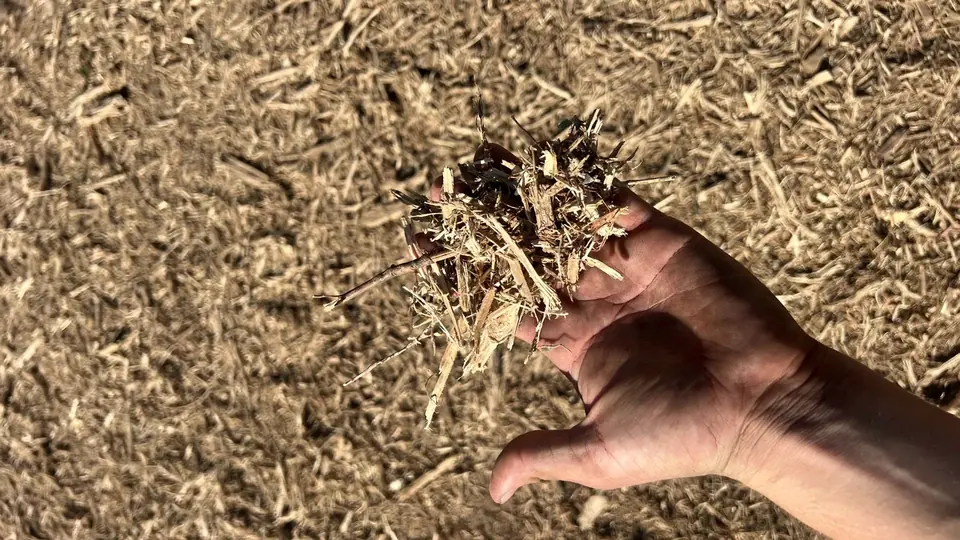
- A fine finish. Our fine finish leaves small material we call toothpicks or hamster chips, easy to walk and drive over.
- Keeper trees saved. The operator works around flagged oaks and shade trees.
- No tree size limit. Our machines handle light regrowth, large hardwoods and old brush piles as large as a house.
- Steady production. Our large, high-horsepower machines clear about one to three acres a day in reasonable tree cover, and compact track machines about half an acre to one acre.
- No burn ban delays. Nothing is burned, so county burn bans do not stop the work.
The value is in what you do not have to do afterward. Grass comes back on its own schedule too. Under a light layer of mulch, grass can green up within days after a good rain. We believe properly cleared and maintained land is healthier, more valuable and more enjoyable to own, and forestry mulching is the most direct way we know to get there.
Does forestry mulching protect the soil?
Forestry mulching protects the soil better than clearing methods that scrape or pile, because the ground stays covered and the roots stay put. The USDA NRCS Brush Management practice standard (Code 314) tells planners to choose "the least amount of soil disturbance" when erosion potential is high. The Texas A&M Forest Service's Central Texas brush management guide is blunter: "Keep soil disturbance to a minimum!" Hill Country soil gives you little margin. The Eckrant soil, an extensive series on the Edwards Plateau, reaches limestone bedrock at 4 to 20 inches, according to its USDA official soil series description.
Research on shredded juniper backs up the value of leaving the residue on the ground. In a 2010 rainfall simulation study in a Utah juniper woodland, bare patches covered with shredded residue yielded 38.6 grams of sediment per square meter, against 313 grams on uncovered bare patches. Covered patches also took in water faster, at 81.9 versus 26.7 millimeters per hour (Cline and others, Rangeland Ecology and Management). The same study found machine tracks cut infiltration on wet grass patches, and the authors called the results site and scale dependent. Timing work around wet ground still matters.
Texas rules recognize the difference too. TCEQ's Edwards Aquifer rules exclude "clearing of vegetation without soil disturbance" from regulated activity (30 TAC 213.3). Confirm how that applies to your parcel with TCEQ before work starts. This is general information, not legal advice.
Does cedar stay gone after forestry mulching?
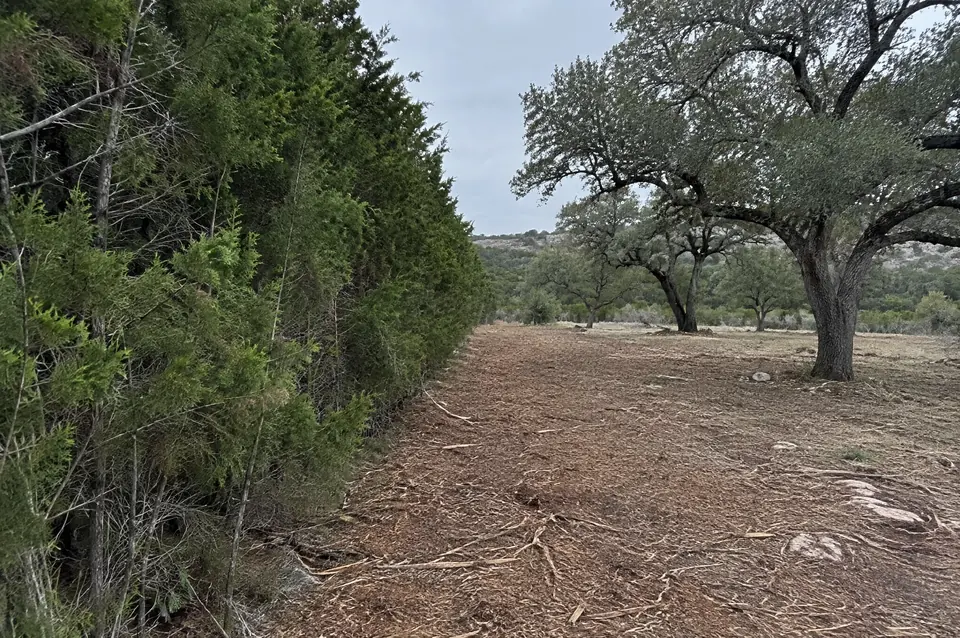
Ashe juniper, the Hill Country cedar, stays gone after forestry mulching when the machine takes off every green limb. The Texas A&M Forest Service says equipment "can simply remove all green limbs and the brush will die." That is a big reason mulching cedar delivers so much value. Walk the land each year and catch any new cedar while it is small.
Resprouting brush is a different story. The Forest Service calls grubbing the preferred way to kill mesquite and redberry juniper. Texas A&M AgriLife Extension's Mesquite Ecology and Management explains why: mesquite survives top removal, so "cutting off the top often does not control mesquite." The guide lists shredding among treatments that only top-kill mesquite, and the regrowth comes back with many stems that need treating again. Mulching mesquite still opens the land and protects the soil, but plan follow-up work or grub the trees that matter most. Periodic shredding with tractor and batwing equipment keeps mesquite sprouts short between bigger treatments.
Cedar is where forestry mulching pays off most cleanly. Our cedar removal in Texas work is built around taking cedar out for good, down to the last green limb.
Is forestry mulching worth it on every job?
Forestry mulching is not worth it on every job, because some work needs something a mulcher does not do. Be honest about these cases.
- Foundations and pads. A slab needs root-free ground, so the footprint gets grubbed with bulldozers and excavators.
- Light grass and weeds. Tall grass and light brush may only need mowing with agricultural equipment.
- Bare ground right away. A heavy mulch layer, up to 12 inches deep, can take grass two to three years to push through. If you need open soil sooner, plan to stockpile or haul the mulch.
- Mesquite you want gone for good. Grubbing below the bud zone lasts longer than mulching the top.
- Brush you want to keep for wildlife. The Forest Service notes some brush debris can serve as bird and reptile cover or slow water on slopes, so not every pile needs grinding.
Most properties mix methods. We mulch the bulk of the acreage and grub only where roots have to come out. For the full side-by-side, read our comparison of forestry mulching vs bulldozing.
How do you judge forestry mulching value without a price list?
Judge forestry mulching value by the full cost to finished, usable ground, not by the price to knock brush down. A cheaper clearing method can hand you a pile, a burn ban delay or a second cleanup bill. Compare the steps each method leaves on your plate.
| Step | Forestry mulching | Pile-and-burn clearing |
|---|---|---|
| Cutting or pushing brush | Included | Included |
| Piling debris | Not needed | Required |
| Burning or hauling piles | Not needed | Required, under TCEQ rules |
| Waiting on burn bans | Never | Up to 90 days per county order |
| Cleanup and smoothing | Part of the finish | Often a separate step |
| Bare soil to stabilize | Little, soil stays covered | Where roots and piles were |
Under Local Government Code Section 352.081, a county burn ban order can run up to 90 days, and a new order can take effect when it expires. The Texas A&M Forest Service also names careless debris burning as the leading cause of Texas wildfires (December 2025). Those costs are real even when they never show up on an invoice.
We do not publish a price list. Every 9 Arrow estimate is shown by the day or by the acre after a discovery call and, when needed, a site visit. Our breakdown of forestry mulching cost per acre shows what sets that number. After we cleared her 20 acres in Bulverde, Ashley Cooke wrote in a Google review, "A year and a half later the land looks incredible."
See whether forestry mulching fits your land
The surest way to know is to walk the property together. Start with a discovery call about forestry mulching for Texas land, whether your acreage is in Spring Branch or anywhere we cover with forestry mulching in the Texas Hill Country.
Sources
- Conservation Practice Standard: Brush Management, Code 314, USDA NRCS
- Central Texas: Brush Management, Texas A&M Forest Service
- Eckrant Series, Official Soil Series Description, USDA NRCS
- Hydrologic Response to Mechanical Shredding in a Juniper Woodland, Cline, Roundy, Pierson, Kormos and Williams, Rangeland Ecology and Management, 2010
- 30 TAC 213.3, Edwards Aquifer definitions, Cornell Legal Information Institute
- Mesquite Ecology and Management (2018), Robert K. Lyons and Barron S. Rector, Texas A&M AgriLife Extension
- Local Government Code Chapter 352, Subchapter D (Section 352.081), Dallas County
- Warm, dry holiday weather elevates wildfire risk across Texas, Texas A&M Forest Service, December 22, 2025