
How to fix a muddy driveway so it stays firm after the rain
A muddy driveway is a water problem before it is a rock problem. Here is the order of work that fixes it for good, on Blackland clay or Hill Country rock.
How do you fix a muddy driveway?
You fix a muddy driveway by fixing the water first: restore the crown, cut down edge berms, and open ditches and culverts so water leaves the drive. Then dig soft spots out to firm ground, lay geotextile over weak clay where it fits, and rebuild with crushed rock base compacted in layers.
How to fix a muddy driveway comes down to order: get the water off and away first, then fix the ground under the rock. A drive turns to mud when water sits on it or soaks into a weak subgrade, and fresh gravel on top changes neither one. Drainage, dug-out soft spots and a compacted crushed rock base are the same steps behind our driveway and access road building in Central Texas.
Here is why driveways go soft, how your soil changes the fix, and the order of work that holds.
Why does a driveway turn to mud?
A driveway turns to mud when water has nowhere to go and the soil under the rock is too weak to carry a wet load. The USDA Forest Service low-volume roads field guide puts it bluntly: "Three of the most important aspects of road design are drainage, drainage, and drainage!"
Most muddy drives show one or more of these causes:
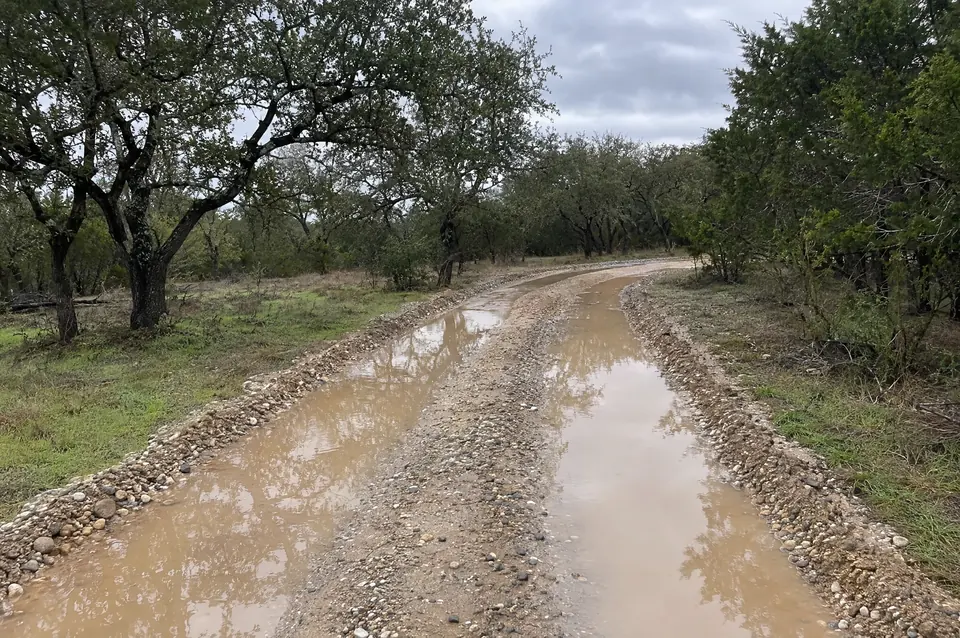
- No crown. A flat or dished surface holds puddles in the wheel paths, and every tire works that water down into the base.
- Edge berms. Loose gravel graded to the sides builds a ridge. The FHWA Gravel Roads Construction and Maintenance Guide (2015) says a high shoulder "restricts the surface water from draining into the designed ditch". On level ground, that water "collects at the shoulder line and seeps into the subgrade".
- Weak subgrade. The Texas NRCS access road standard names "silts, organics, and clays" as soils with weak bearing capacity (NRCS Texas Conservation Practice Standard 560, 2021). FHWA notes that a road over very poor subgrade support ruts and potholes very quickly.
- Topsoil left under the rock. Gravel spread over grass and roots sits on a soft, organic layer. The Forest Service field guide lists burying organic debris in the road prism among the practices to avoid.
Is your driveway on Blackland clay or Hill Country rock?
Your driveway's soil decides how deep the fix goes. Blackland clay takes in water very slowly once it is wet, while most Hill Country soil is a thin layer over limestone, so firm ground may be only inches down.
The Blackland Prairie runs from north of Dallas south to San Antonio, and its signature soil, Houston Black, covers about 1.5 million acres, according to the Texas Water Development Board. The USDA soil description for Houston Black lists 40 to 60 percent clay, "very slowly permeable" soil and high shrink-swell potential. It adds that water enters the soil "very slowly when it is moist." A drive on that clay needs water kept off it from above, and often a fabric layer and thicker base.
Up on the Edwards Plateau, the ground flips. The Eckrant series, mapped across the central and eastern plateau, sits 4 to 20 inches over hard limestone bedrock and carries 5 to 50 percent cobbles. On that ground, look first for water pooling in a low spot or for soil left in the roadbed.
A test hole at the worst soft spot shows which ground you have.
How do you get water off a muddy driveway?
You get water off a muddy driveway by shaping the surface to shed water to both edges and giving that water a ditch or outlet to leave by. Drainage comes before new rock. FHWA warns that "Standing water anywhere in the roadway will cause the surface to soften and fail."
- Crown. The Texas NRCS standard gives cross slopes of 2 to 6 percent for unpaved surfaces. On a 12-foot drive, a 4 percent crown puts the center about 3 inches above the edges, by our arithmetic.
- Berms. Cut down the ridge of loose gravel along each edge so water can reach the ditch.
- Ditches. The NRCS standard says to "Provide ditches, as needed, to move water away from the road."
- Outlets. Texas forestry best management practices turn ditch water out at a 30 to 45 degree angle and say wing ditches should not feed directly into gullies or channels (Texas A&M Forest Service, 2017).
- Culverts. The NRCS standard calls for a culvert, bridge, ford or surface cross drain at every natural drainageway. Where your drive crosses a public road ditch, ask the county road department or TxDOT office that maintains the road what pipe and permit it requires. This is general information, not legal advice.
Drainage solutions, erosion control and culvert installation are part of our road building work. For a new drive from scratch, see our guide on how to build a gravel driveway.
How do you fix soft spots in a driveway?
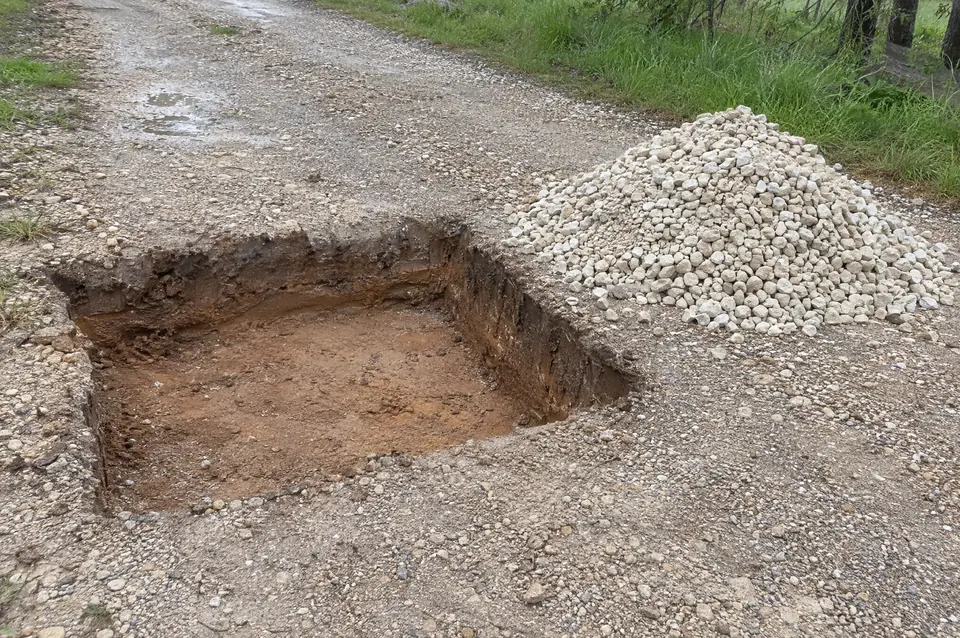
You fix a soft spot in a driveway by digging out the weak, wet soil and replacing it with clean rock that drains, not by filling the rut on top. The FHWA guide says that for weak subgrades "there are only two solutions": excavate and remove the weak, wet soil, or bring in material to raise the road. Of that new material, the guide says: "One thing is critical: it must be clean and drainable."
For local wet spots on lightly used roads, the Forest Service field guide calls for at least 10 to 30 cm (about 4 to 12 inches) of coarse graded rock, ideally separated from the wet soil by geotextile or gravel.
A soft spot repair goes in this order:
- Dig until the bottom is firm, and square up the edges.
- If water seeps in from the side, give it an outlet before backfilling.
- Backfill with clean, angular rock in layers, compacting each one.
- Tie the patch into the crown and ditch so water runs past it.
Our dozers and excavation equipment work in rocky terrain and difficult soil and dig up to about 4 feet deep.
When does a driveway need geotextile fabric?
A driveway needs geotextile fabric when the subgrade is soft clay, silt or organic soil that would otherwise push up into new rock. The Texas NRCS access road standard calls for a geotextile "specifically designed for road stabilization applications" under the surfacing on soils with weak bearing capacity. FHWA's rule of thumb is a Class 2 geosynthetic for most gravel road subgrade repair and stabilization.
Installation basics from the FHWA guide:
- Shape the subgrade first, then lay the fabric flat on it.
- Overlap rolls by at least 18 inches where more than one width is needed.
- "Do not allow equipment to drive directly on the fabric."
- Place at least 6 inches of rock in the first layer over the fabric.
Fabric is a fix for weak ground, not a substitute for drainage. On Hill Country land where limestone sits a few inches down, digging to rock may leave nothing soft to separate.
How do you rebuild a muddy driveway with crushed rock?
You rebuild a muddy driveway with crushed rock by placing base in layers, compacting each layer, and finishing the top with a crown. Comal County's subdivision regulations (2020) require base on new subdivision roads to be placed and compacted in at least two courses, to 95 percent modified Proctor density. Those rules are written for subdivision roads, not private drives, but the method carries over.
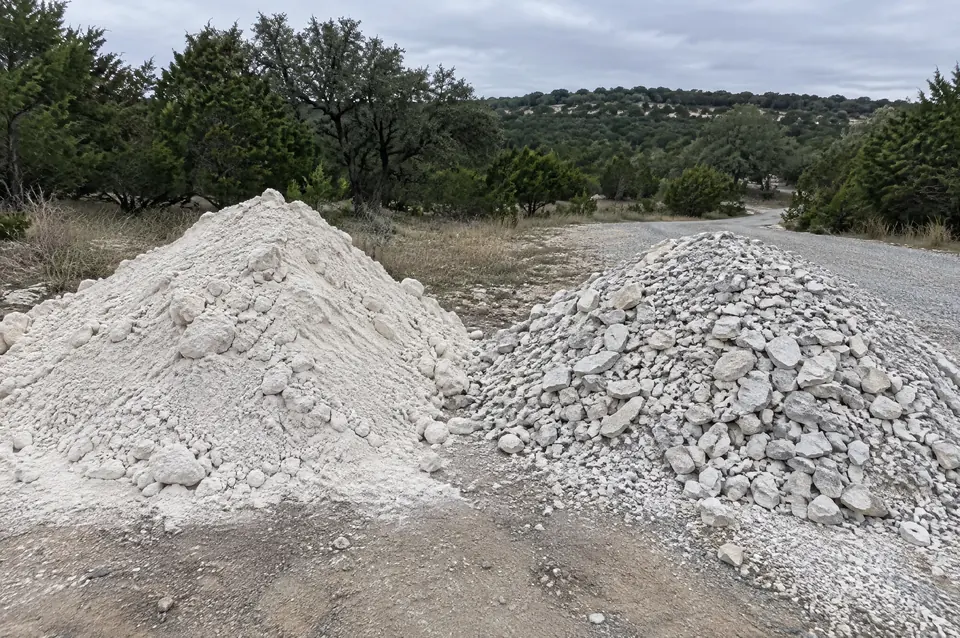
Angular rock is the right material. FHWA says broken stone embeds into a gravel surface much better than rounded stone, and that fractured stone "resists movement under loads better".
On Hill Country ground, that rock may already be on your land. Our on-site rock crushing processes existing surface rock into a fine, compactible road base, so where the rock is there, a muddy drive can be rebuilt without imported material. 9 Arrow runs a large, dedicated rock crushing machine built to work far deeper than the skid-steer attachments most crews use. As far as we know, no other crew in the Hill Country runs one. If your drive was built with caliche that gets muddy when wet, our comparison of caliche vs crushed limestone explains why.
Texas forestry guidelines add: "If possible, restrict traffic on roads during wet conditions." Keep loaded trucks off the rebuilt drive until the base dries.
How to fix a muddy driveway for good instead of patching it
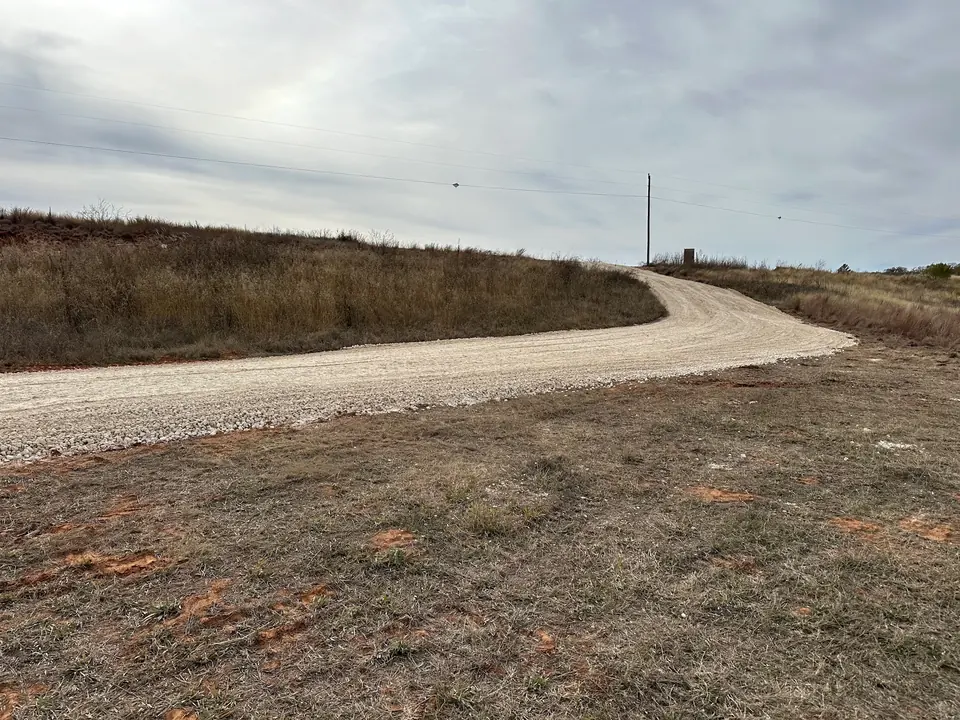
To fix a muddy driveway for good, treat the water and the ground under the rock, not just the surface a quick patch touches. FHWA says that once potholes become severe, the gravel needs to be cut out and relayed to correct the problem.
| Symptom | Quick patch | Real fix |
|---|---|---|
| Puddles in the wheel paths | Shovel gravel into the low spots | Restore a 2 to 6 percent crown and cut down edge berms |
| Severe potholes | Fill the holes | Cut out and relay the gravel, then compact it |
| Soft spot that pumps under trucks | Dump rock on top | Dig out weak soil and backfill with clean, drainable rock |
| Ruts after every rain on clay | Blade the ruts smooth | Fix drainage, add geotextile, rebuild base in compacted layers |
| Water running across the drive | Add rock where it crosses | Set a culvert, dip or cross drain at the drainageway |
Get your driveway fixed for good
A site walk shows where the water goes, how deep the soft ground runs and whether your own rock can rebuild the base. See how our driveway and access road building handles drainage, grading and culverts, from Spring Branch to New Braunfels.
Sources
- Low-Volume Roads Engineering Best Management Practices Field Guide, USDA Forest Service
- Gravel Roads Construction and Maintenance Guide (2015), Federal Highway Administration
- Access Road, Conservation Practice Standard 560 (October 2021), USDA Natural Resources Conservation Service, Texas
- Houston Black, Texas state soil, Texas Water Development Board
- Houston Black series, Official Soil Series Description, USDA Natural Resources Conservation Service
- Eckrant series, Official Soil Series Description, USDA Natural Resources Conservation Service
- Texas Forestry Best Management Practices handbook (2017), Texas A&M Forest Service
- Subdivision Regulations (adopted September 3, 2020), Comal County Engineer's Office