
Food plot land clearing: where to put Hill Country plots and how to prep the ground
Hill Country food plots live or die on soil depth and rain. Here is how to pick the spot, size the plot, clear it and get the mulch out of the way before planting.
How do you clear land for a food plot in the Hill Country?
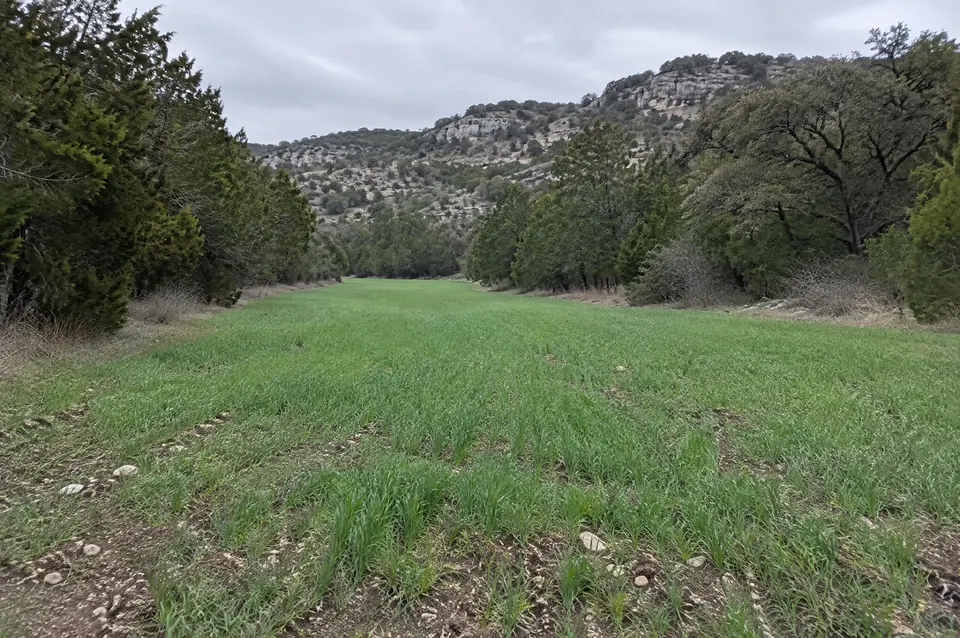
Clearing land for a food plot in the Hill Country starts with choosing the deepest, most level soil near deer cover. The brush and cedar come down, heavy mulch is thinned or moved, and the ground is disked into a firm, weed-free seedbed. Texas wildlife biologists say 1% to 5% of a ranch in plots is usually enough.
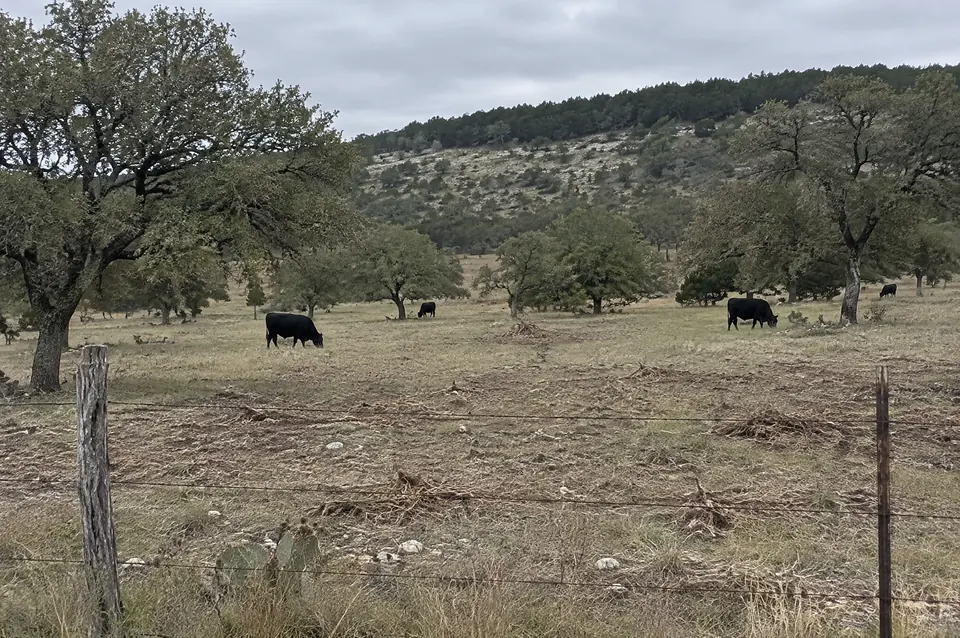
Food plot land clearing in the Hill Country starts with the dirt, not the machine. Pick the deepest, most level ground near deer cover, then clear it and build a seedbed. Much of the upland ground here holds only 4 to 20 inches of soil over limestone, and a plot planted in the wrong spot fails no matter how clean the clearing.
This guide covers where plots fit on Hill Country land, how big to make them, and how to get from cedar thicket to seedbed. Clearing is the part our land clearing in Central Texas handles. Seed and planting come after.
Where should a food plot go on Hill Country land?
A food plot should go on the deepest, most level soil you have, close to cover deer already use. Soil depth is the first filter. NRCS soil descriptions for common Hill Country upland soils, such as Eckrant and Comfort, put limestone within about 4 to 20 inches of the surface. Other soils run deeper, from 20 to 40 inches in the Rumple series on low hills to over 40 inches in Krum clay on stream terraces.
Rain is the second filter. Texas Parks and Wildlife Department puts average annual rainfall on the Edwards Plateau at 15 to 34 inches and notes its soils are usually shallow over limestone. Retired TPWD biologist Jim Dillard's guide to food plots in Central Texas warns that a lack of timely rainfall or soil moisture can sink plot establishment, and that drought is a regular part of the region.
Good food plot sites usually share these traits:
- Deeper soil in a valley, draw bottom or old field, not on a rocky ridge.
- Gentle ground. Dillard advises against cultivating slopes or soils prone to erosion.
- Nearby cover. Plots "should be located near cover used by deer."
- An old field, if you have one. A food plot guide by Dillard and fellow biologist Gary Homerstad, posted by Texas A&M AgriLife Extension, says to look first for existing or previously cultivated fields, because clearing new locations "is expensive and may be cost prohibitive."
That last point is honest advice, and we agree with it. Clear new ground for a plot only when the old fields are gone or in the wrong place.
How big should a deer food plot be?
A deer food plot in Central Texas usually runs from 1 acre to 5 to 10 acres or more, depending on deer numbers and how much browse the ranch already grows. The two biologist guides and TPWD's planning guidelines line up like this:
| Guidance | Plot size | Share of the ranch |
|---|---|---|
| TPWD food plots for Central Texas (Dillard) | 1 acre to 5 to 10 acres or more | Up to 10% |
| Food plot guide (Dillard and Homerstad) | Minimum of 5 acres, long and narrow | 1% to 5% usually sufficient |
| TPWD Edwards Plateau wildlife planning guidelines | Based on the target species | 2% to 5% for white-tailed deer, at least 1% in seasonal plots |
The last row matters for landowners with wildlife management valuation, where supplemental food is one of the seven qualifying practices. Our guide to land clearing and the Texas ag exemption covers how that valuation works. Confirm the details with your county appraisal district. This is general information, not tax or legal advice.
Size also depends on the habitat around the plot. Dillard is direct: "Food plots should never be planted as a substitute for natural forage." A ranch with good native browse needs less plot acreage than a ranch with none. A long, narrow plot along a brush edge keeps more of its acreage close to cover.
Plan for cattle, too. TPWD's planning guidelines say livestock should generally be kept out of small food plots, and Dillard notes that fencing to exclude livestock is often necessary. Build the fence into the plot layout before the clearing starts.
How does food plot land clearing work?
Food plot land clearing works in two layers: taking woody growth down to the ground, then dealing with what is left below it. Forestry mulching grinds cedar and brush where they stand, with no burn piles, and leaves root balls in the soil to hold it. That works well for plot edges and for plots you plan to drill or broadcast into.
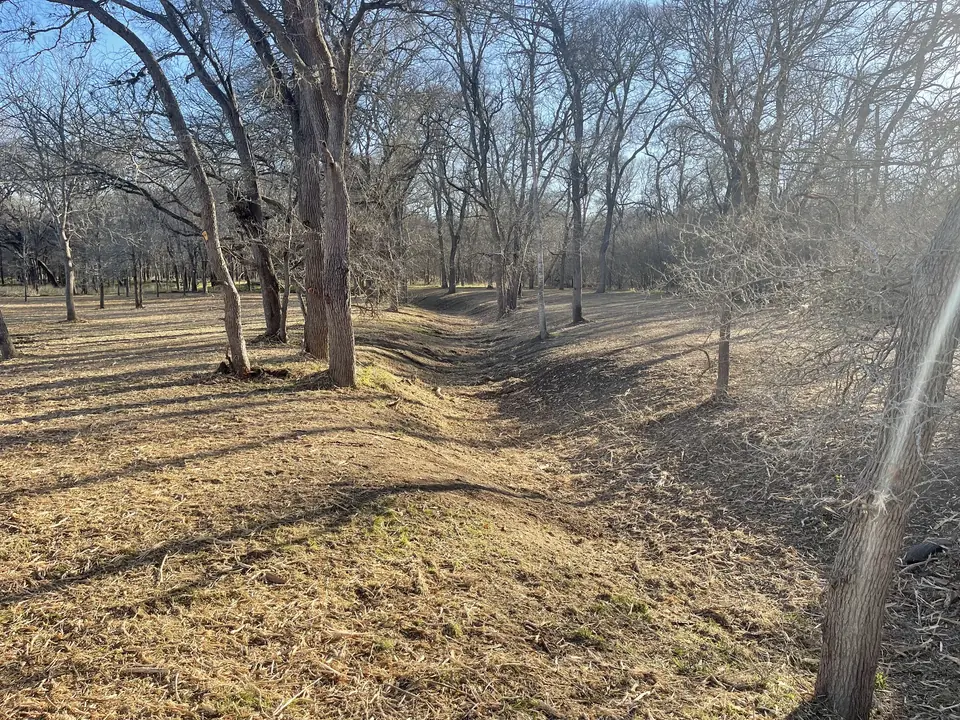
Plots you plan to disk or plow need more. Dillard recommends "an initial deep plowing" on land not formerly cultivated, and roots fight a plow. Where a clean, tillable seedbed is the goal, root balls can be grubbed out with dozers or excavators and then mulched on site.
Clearing a plot is also a chance to shape the cover around it:
- Leave strips of brush and oak between plots as travel lanes and screening.
- Do not over-clear. TPWD's Edwards Plateau guidelines suggest clearing 50% or less of the brush when deer are a goal.
- Mind the oaks. Texas A&M Forest Service advises avoiding pruning or wounding oaks from February through June because of oak wilt.
- Flag the oaks, shade trees and edges you want kept before the work starts.
What should you do with the mulch before planting?
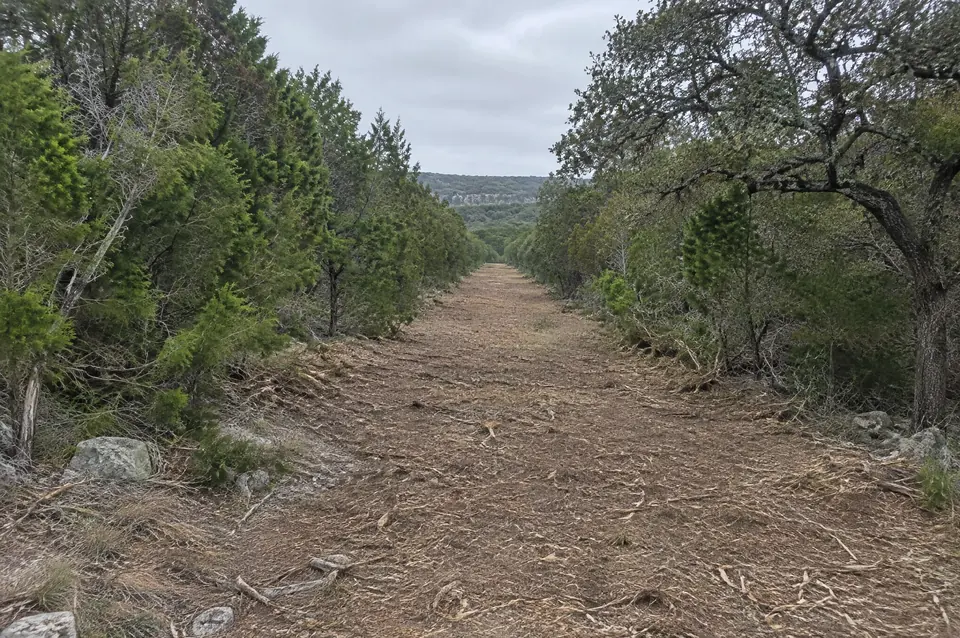
Mulch should be thinned, moved or planned around before planting, because a food plot seedbed needs soil, not wood. The Dillard and Homerstad guide says the seedbed "should be well cultivated, weed free, firm, moist, and fertilized." A heavy mulch layer works against every part of that.
Wood worked into soil also competes for nitrogen. Oregon State University Extension notes that wood chips mixed into soil have a greater tendency to tie up nitrogen than chips left on top. On a food plot, that is one more reason to soil test first. TPWD's Central Texas guide says, "A soil test should be made prior to planting a food plot."
Practical options for the mulch:
- Clear to a fine finish with a light layer that a disk can work in, then soil test and fertilize.
- Stockpile heavier mulch along the plot edges, where it protects the soil under the brush line.
- Haul mulch off where you need open ground fast.
Mulch depth also sets the clock on ground cover. Under a light layer of mulch, grass can green up within days after a rain. Under a heavy layer, up to 12 inches deep, recovery can take 2 to 3 years. Plan plot clearing for a light finish, and talk through mulch depth before the work starts.
When should you clear land for a fall food plot?
Clear land for a fall food plot well before late summer, so the ground is ready to disk ahead of planting. Dillard's Central Texas guide says fall planting of cool-season annuals such as oats, wheat, rye and ryegrass should happen during September and October. The Dillard and Homerstad guide calls for lightly disking cool-season plots 30 to 45 days before planting. Dillard's TPWD guide puts warm-season plots of millets, sorghums and legumes after April 15.
A workable Hill Country calendar for a new fall plot:
- Late fall through January, the winter before. Clear new plot ground on firm footing and outside the February through June oak wilt window.
- Summer. Soil test, then thin, spread or move the mulch.
- Late summer. Disk lightly 30 to 45 days before planting.
- September and October. Plant cool-season forage once soil moisture allows.
Winter clearing also leaves time for a grubbed plot to settle. Our post on the best time to clear land in Texas covers how weather and oaks shape the schedule.
Get your food plots cleared
Pick your spots, flag your keepers and let us open the ground. Our land clearing in Central Texas and forestry mulching across the Texas Hill Country turn cedar thickets into plot-ready ground with no burn piles.
Sources
- Eckrant series, USDA Natural Resources Conservation Service
- Comfort series, USDA Natural Resources Conservation Service
- Rumple series, USDA Natural Resources Conservation Service
- Krum series, USDA Natural Resources Conservation Service
- Texas ecoregions, Texas Parks and Wildlife Department
- Appendix N: Food Plots for White-tailed Deer in Central Texas (2010), Jim Dillard, Texas Parks and Wildlife Department
- Food Plots for White-tailed Deer, Jim Dillard and Gary Homerstad, posted by Texas A&M AgriLife Extension
- Comprehensive Wildlife Management Planning Guidelines for the Edwards Plateau and Cross Timbers and Prairies (2010), Texas Parks and Wildlife Department
- Prevent the spread of oak wilt in Texas (February 2025), Texas A&M Forest Service
- Wood chips for mulch? (2013, reviewed 2024), Oregon State University Extension Service