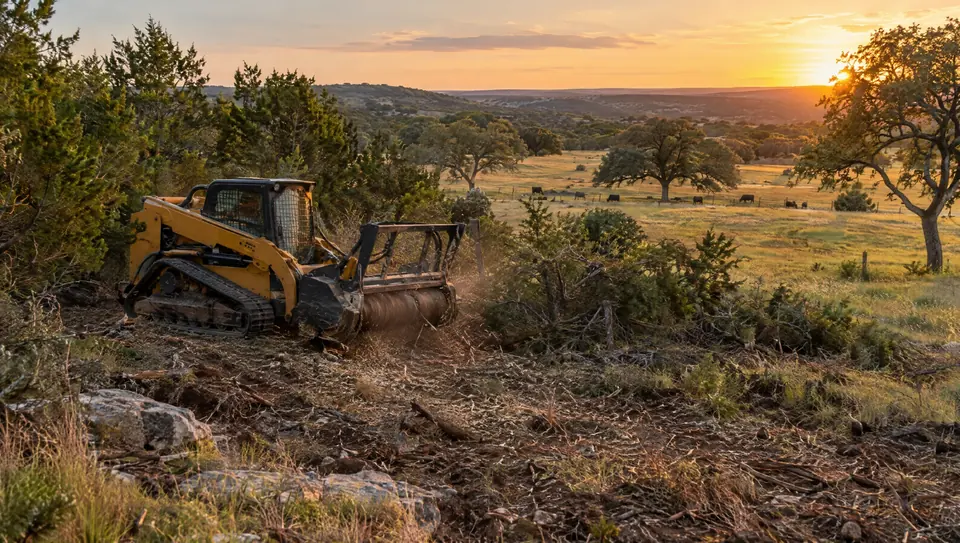

How land clearing fits a Texas ag exemption, and where it stops
Clearing brush can help land meet Texas ag valuation standards, but clearing alone never qualifies. Here is how appraisal districts look at brush, resting and wildlife use.
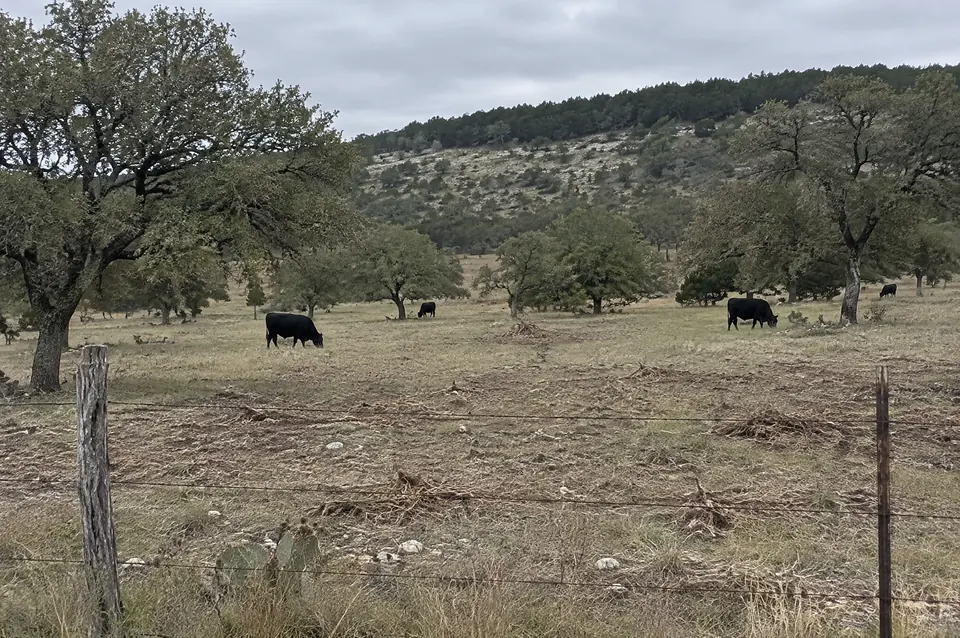
Does land clearing help with an ag exemption in Texas?
Land clearing helps with an ag exemption in Texas only when it supports real agricultural use, such as grazing, hay or a wildlife management plan. Clearing alone never qualifies land. Appraisal districts look for current use at the intensity typical for the area and use in at least five of the preceding seven years.
Land clearing can help an ag exemption in Texas, but only as part of putting land to real agricultural use. Clearing cedar out of a pasture so cattle can graze it, or managing brush under a wildlife plan, is the kind of work appraisal districts look for. Clearing by itself qualifies nothing.
This guide covers how the rules work, how brush affects the standards in places like Comal County, and how to plan ranch land clearing in Texas without putting your valuation at risk. It is general information, not tax or legal advice. Your county appraisal district has the final say.
Does land clearing help an ag exemption in Texas?
Land clearing helps an ag exemption in Texas only by supporting a qualifying use, because the "exemption" is not an exemption at all. It is a special appraisal, usually called 1-d-1 or open-space appraisal, that values land on its capacity to produce agricultural products instead of its market value. The Texas Comptroller lists the core tests:
- The land must be "currently devoted principally to agricultural use."
- The use must meet the degree of intensity generally accepted in the area.
- The land must have been in agricultural or timber use for at least five of the past seven years.
Land clearing is not on that list, and clearing alone never qualifies a tract. Land clearing matters because of what it makes possible. A pasture choked with cedar cannot carry the livestock a district expects. Clearing the brush, and then actually grazing, haying or managing wildlife on that ground, is what builds a qualifying use.
The Comptroller's Manual for the Appraisal of Agricultural Land is blunt about the standard: the law "does not state what degree of intensity qualifies a particular type of land." Each chief appraiser sets intensity standards from local agricultural practice. That is why every plan starts with your own appraisal district.
How does brush affect degree of intensity in Comal County?
Brush cover changes how many acres a Comal County pasture needs to meet the local livestock standard. The Comal Appraisal District open space guidelines require at least 3 animal units for open space valuation, with one animal unit equal to 1,000 pounds of live weight. The district ties its recommended acreage to pasture condition:
| Comal AD pasture class | How the district describes brush | Recommended acres for 3 animal units |
|---|---|---|
| Improved pasture | Limited invasive brush, under 25% canopy | 5 |
| Good native pasture | Less than half covered with invasive brush | 15 |
| Average native pasture | More than half covered with invasive brush | 25 |
The district names cedar, huisache, mesquite and cactus as the invasive brush it means. A pasture that is mostly cedar sits in the average native class. Opening that pasture to less than half brush cover moves it toward the good native class, where the same livestock need fewer recommended acres.
Brush shows up in the hay standards too. Comal Appraisal District lists brush control among the standard hay production practices, alongside tillage, fertilizing, cutting, baling and hauling. Dry crop land in the district's guidelines carries less than 10% invasive brush.
The district still judges actual use, stocking and management, so treat the table as a guide, not a promise. Other districts publish their own numbers. Landowners in Kendall, Blanco or Bexar County should pull their own district's current guidelines before planning around them.
Can you clear brush without losing your ag valuation?
You may be able to clear brush without losing your ag valuation if the work fits your district's rules on resting land, so confirm with your district before work starts. Comal Appraisal District lists "Improvements to land such as terracing, brush control" as an example of resting. The district requires written notice for each year the property will be rested, filed by the April 30 application deadline. A property may not be rested for more than 2 years in a 7-year period, except under a governor's drought proclamation.
A few habits keep a clearing project on the right side of those rules:
- Call your appraisal district before work starts and ask how it treats brush control on your tract.
- File any resting notice on time, in writing.
- Clear in phases, one pasture at a time, so livestock keep rotating through the rest of the place.
- Keep records of dates, acres cleared, photos and invoices.
Phasing also keeps the ranch working. Fence lines and access usually come first, then pastures in order. Our post on clearing cedar and mesquite on a Texas ranch lays out that sequence, including why mesquite needs a different plan than cedar.
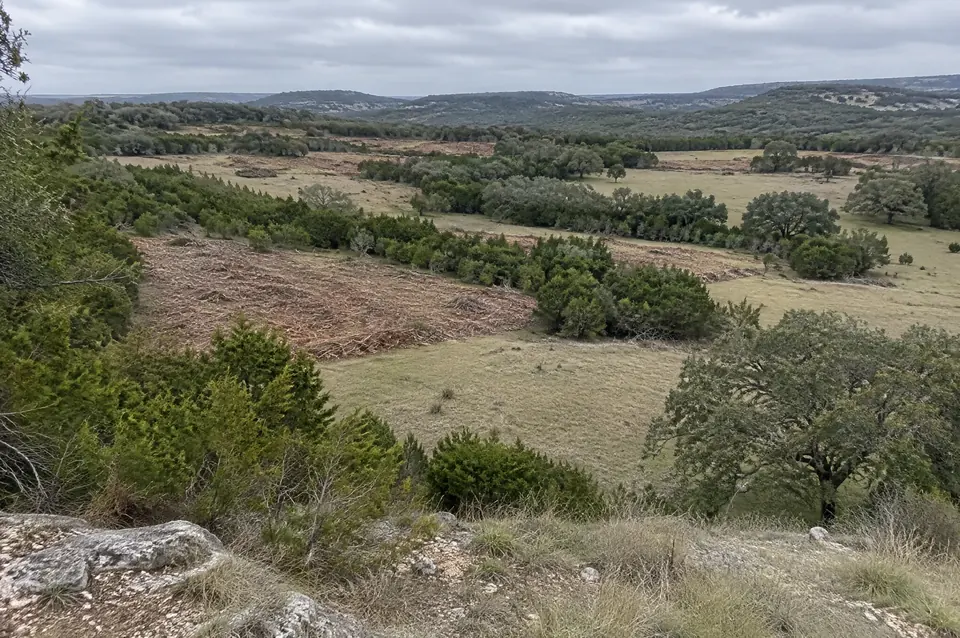
Does brush management count for wildlife management valuation?
Brush management counts toward wildlife management valuation as habitat control, one of seven practices in the Texas Tax Code. Texas Parks and Wildlife Department explains that wildlife management use means actively using the land through at least three of these practices:
- Habitat control
- Erosion control
- Predator control
- Providing supplemental water
- Providing supplemental food
- Providing shelters
- Making census counts
Wildlife management keeps an existing valuation; it does not start one. The land must already be appraised as qualified open-space land when the wildlife use begins, and the owner must file a wildlife management plan with the appraisal district.
For the Hill Country, TPWD's wildlife management planning guidelines for the Edwards Plateau say brush management should "annually affect a minimum of 10% of the total area designated in the plan," or 10 acres a year, whichever is smaller. The same guidelines warn against overdoing it. Clearing all the brush may suit cattle, but if deer are a goal, "you may only want to clear 50% or less." TPWD also stresses travel corridors that link sections of brush.
Selective forestry mulching fits that kind of plan, because the operator can take cedar in blocks or strips and leave oaks and cover. Not every brush pile has to go, either. The same TPWD guidelines list brush piles built for birds, reptiles and small mammals under supplemental shelter, so a few well-placed piles can serve the plan while the rest are mulched. Food plots fall under supplemental food, covered in our guide to food plot land clearing.
What happens if cleared land changes use?
Cleared land that changes to a non-agricultural use can trigger a rollback tax. The Comptroller says the rollback is due for each of the previous three years the land got the lower appraisal. It equals the difference between taxes paid on the agricultural value and taxes that would have been paid on market value. House Bill 3833, effective in 2021, removed the interest that used to be added to 1-d-1 rollbacks, so interest now applies only if the tax becomes delinquent.
That matters when clearing is one step in a bigger plan. Clearing a pasture for grazing keeps the land in agricultural use. Clearing and cutting a pad for a new home, a subdivision street or a commercial site usually starts a change of use on that ground. Talk with the appraisal district before the dozers arrive, not after.
Switching from grazing to wildlife management is a different case. The Comptroller treats wildlife management as an agricultural use when the land was already qualified open-space land, so that switch is not a move to a non-agricultural use. Confirm the switch with your appraisal district before you make it.
Plan your ranch clearing around your valuation
Start with a call to your appraisal district, then plan the work around the use you will actually run. Our ranch and pasture clearing in Texas is built to put land back to work, and jobs across Comal County start with a walk of the property.
Sources
- Agricultural and timber land appraisal, Texas Comptroller of Public Accounts
- Manual for the Appraisal of Agricultural Land (October 2024), Texas Comptroller of Public Accounts, posted by Comal Appraisal District
- Open Space Guidelines and Standards, Comal Appraisal District
- Wildlife management valuation legal summary, Texas Parks and Wildlife Department
- Comprehensive Wildlife Management Planning Guidelines for the Edwards Plateau and Cross Timbers and Prairies (2010), Texas Parks and Wildlife Department
- Bill analysis, H.B. 3833 (87th Legislature), Texas Legislature