
Do you need a permit to clear land in Texas?
Many rural clearing jobs in Texas need no permit, but city tree rules, aquifer zones, burn bans, warbler habitat and floodplains can change that. Here is how to check your land.
Do you need a permit to clear land in Texas?
Many rural land clearing jobs in Texas need no permit, because the state has no general permit for brush and tree clearing. Permits can apply inside cities with tree ordinances such as San Antonio and Boerne, on Edwards Aquifer land when clearing disturbs soil, in warbler habitat, in floodplains, and under HOA or deed rules.
Many rural jobs need no permit to clear land in Texas, because the state has no general permit for brush and tree clearing. Permits come into play inside cities with tree ordinances, on Edwards Aquifer land when clearing disturbs soil, in endangered warbler habitat, in floodplains and under HOA or deed rules.
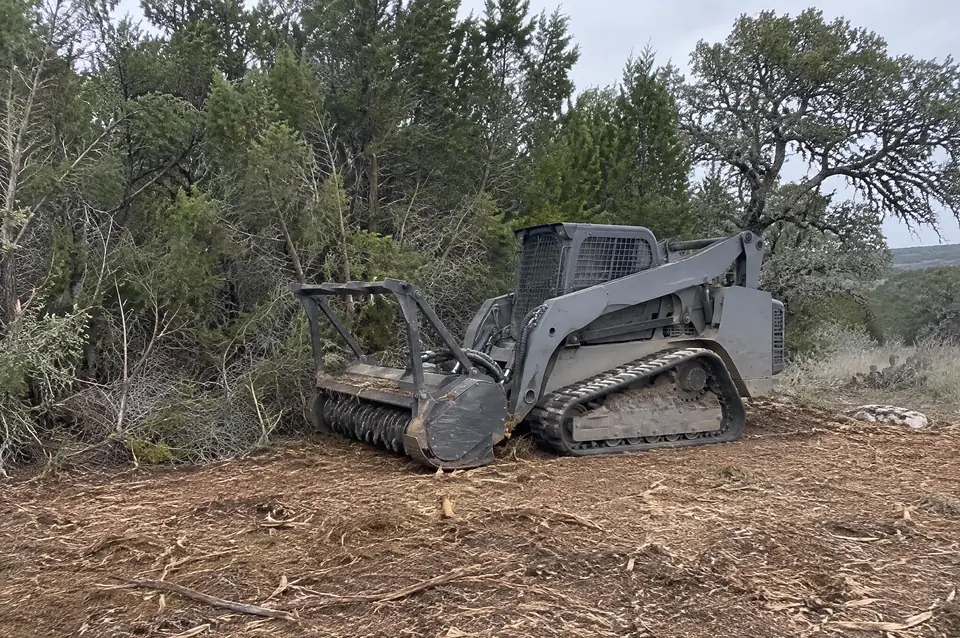
The method matters as much as the place. Land clearing in Central Texas with forestry mulching grinds brush in place without burning it or moving soil, and that difference shows up in several of the rules below. Here is what can apply and who to ask. This is a summary, not legal advice.
Is there a state permit to clear land in Texas?
There is no general state permit to clear land in Texas. Instead, a handful of separate rules can apply, and counties have little say over tree cutting. A Senate Research Center analysis noted in 2009 that county governments "are limited in their ability to regulate the cutting of certain types of trees" (SB 2553 bill analysis).
Whether a rule touches your clearing job depends on four things:
- Where the land sits: inside a city or its extraterritorial jurisdiction (ETJ), over the Edwards Aquifer, or in a mapped flood zone.
- How the land gets cleared: mulched in place, grubbed and graded, or piled and burned.
- What lives there: mature Ashe juniper and oak woodland can be habitat for an endangered songbird.
- What you agreed to: HOA covenants, deed restrictions and easements.
A rural tract outside any city's reach, cleared by mulching, may need no permit at all, but check each item below against your land. A lot inside city limits, a development site or a tract on the recharge zone is a different story. The sections below walk through each one.
Do city tree ordinances apply to land clearing?
City tree ordinances apply to land clearing inside many Texas cities, and San Antonio's reaches past the city limits. The city's tree ordinance fact sheet says a tree permit or affidavit is needed "before starting any clearing vegetation, construction or tree removal" on private property in the city limits and the ETJ, which extends about 5 miles out. Significant trees start at 6 inches in diameter, or 10 inches for Ashe juniper, mesquite and huisache. Heritage trees start at 24 inches. Our San Antonio land clearing page covers work in that area.
Boerne keeps its tree rules in its Unified Development Code and has removed its major exemptions. The city sorts trees into Standard (8 to 11.9 inches), Legacy (12 to 23.9 inches) and Heritage (24 inches and up), measured 4.5 feet up. "Every tree in our protected classes of trees is in play" on any project in the city, Boerne environmental program manager Ryan Bass told the Boerne Star in January 2024.
State law sets some limits on cities. Under Local Government Code §212.905, a city may not prohibit removal of, or charge a fee for, a tree that is dead, diseased or an imminent hazard. That limit does not apply within five miles of an active military base. Confirm with your city before cutting, since each ordinance has its own details.
Does the Edwards Aquifer rule apply to land clearing?
The Edwards Aquifer rule applies to land clearing only when the clearing disturbs soil, because TCEQ excludes "clearing of vegetation without soil disturbance" from regulated activity (30 TAC 213.3). The rule covers parts of eight counties, including Bexar, Comal and Hays (30 TAC 213.21).
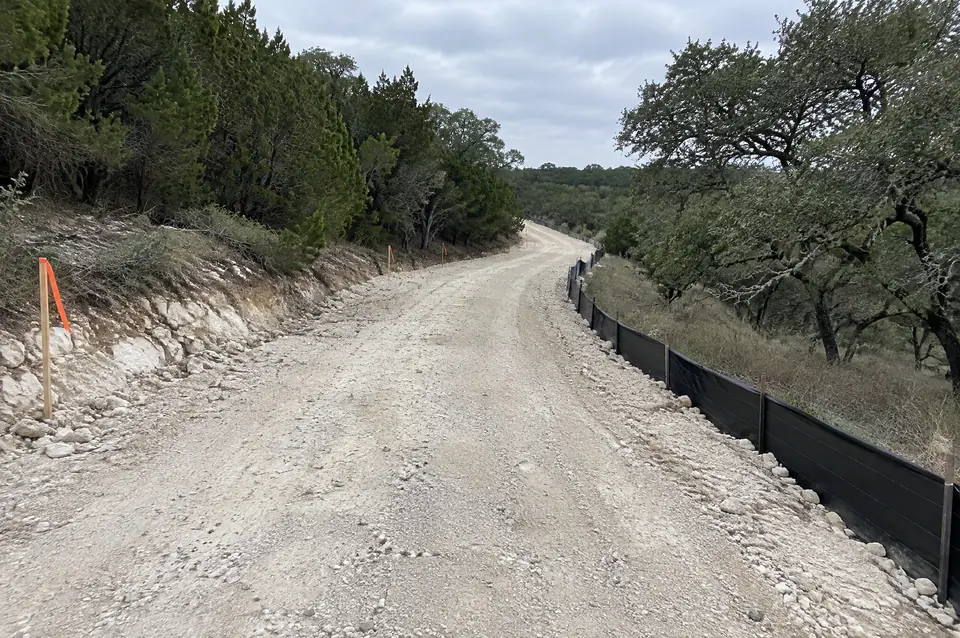
Forestry mulching grinds trees and brush where they stand and leaves root balls and soil in place. Grubbing roots, grading pads and building roads do disturb soil. On the recharge zone, TCEQ requires an approved Water Pollution Abatement Plan before "clearing, excavation, or any other activities" that alter a site's topography, geology or recharge, with no minimum acreage (TCEQ WPAP). On the contributing zone, a plan applies at 5 or more disturbed acres. Confirm your parcel with the TCEQ regional office before work starts.
Stormwater is a separate rule. TCEQ's construction stormwater permit, TXR150000, applies when construction disturbs one acre or more, and the 2023 permit lists clearing, grading and excavating as soil disturbance activities. The permit sets aside some agricultural work, such as clearing and cultivating ground for crops, but do not assume a clearing job qualifies. Confirm with TCEQ before work starts. Our guide to road building permits in Texas covers the soil-disturbing side in more depth.
Can you burn brush from land clearing in Texas?
You can burn land-clearing brush in much of Texas, but state rules and county burn bans limit when and where. TCEQ's outdoor burning rule lets the owner burn plant growth from land-clearing operations when the material came only from that property, subject to conditions and to local bans on burning inside city limits (30 TAC 111.209). In counties that are part of a nonattainment area, or that contain part of a city extending into one, the rule adds that burning is allowed only when no practical alternative exists.
County burn bans can stop burning outright. Under Local Government Code §352.081, a commissioners court can prohibit or restrict outdoor burning in unincorporated areas during drought, as determined by the Texas A&M Forest Service, for up to 90 days per order. Knowingly violating a ban is a Class C misdemeanor. Check your county's current burn ban status before burning anything.
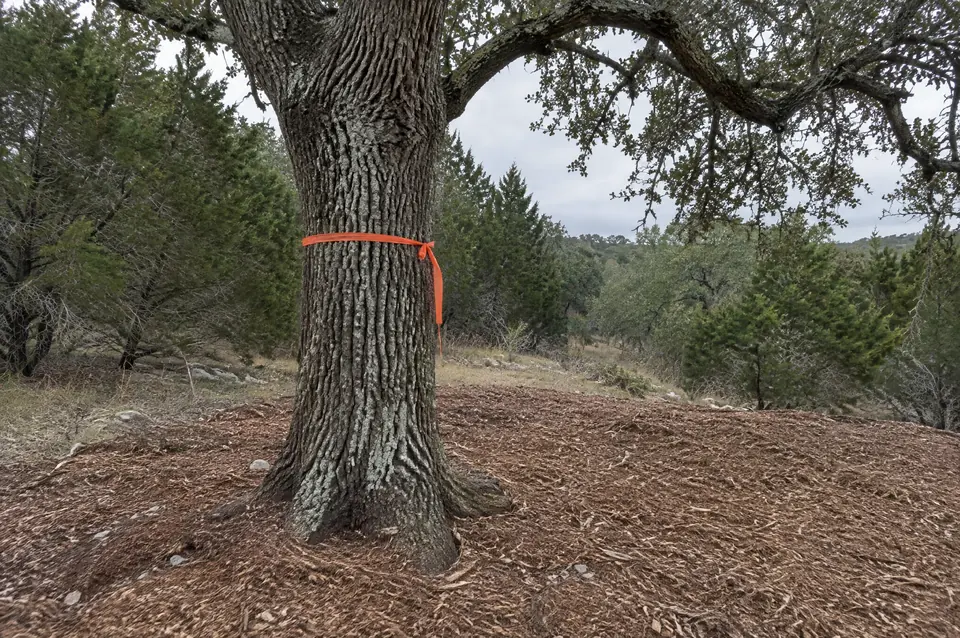
Forestry mulching avoids the question. Brush is ground into mulch on site, so there is no pile to light. No burn piles. No hauling. No mess. Our post on mulching vs burning brush compares the two in detail.
Does golden-cheeked warbler habitat limit land clearing?
Golden-cheeked warbler habitat can limit land clearing, because the bird is still listed as endangered and nests only in Central Texas woodlands. The warbler has been on the endangered list since 1990 and breeds only in "Central Texas' ashe juniper and oak woodlands," the Texas Tribune reported in June 2026. USFWS recommended downlisting it to threatened in January 2025, but its five-year review FAQ says the bird is still listed as endangered and any change takes separate rulemaking.
The warbler needs bark from mature Ashe junipers to nest. A USFWS screening key uses a breeding season of March 1 through August 31. For projects that would remove or degrade oak-juniper woodland, or that sit within 300 feet of it and run during the breeding season, the key recommends bird surveys before any disturbance. An absence result counts only for the survey year.
USFWS describes the habitat as mature oak and juniper woodland. If your land holds stands of tall, old cedar mixed with oaks, or you are not sure, contact the USFWS Austin Ecological Services office before clearing.
What else can require approval before clearing land?
Floodplains, private covenants, easements and deep digging can each require approval before clearing land:
- Floodplains. Federal rules treat filling, grading and excavation in a mapped flood zone as development (44 CFR 59.1), and Comal County issues floodplain development permits through its County Engineer's Office. Mulching does not fill or grade, but stump grubbing, pads and crossings can.
- HOA and deed restrictions. Some subdivisions require architectural committee approval before trees come down, and some deeds limit clearing. Read yours before you sign a clearing contract.
- Easements. Read the easement terms and talk to the operator before clearing near a pipeline or power line.
- Digging. Grubbing stumps or root balls with heavy equipment can reach 16 inches, the depth Texas treats as excavation under the 811 law. Call 811 first.
Check the rules, then clear with confidence
Most rural clearing jobs come down to a short checklist: city limits, aquifer zone, flood map, habitat and covenants. This is a summary, not legal advice, so confirm your project with your city, county, TCEQ and USFWS before work starts. Walk through yours on a site visit, and see how we approach land clearing for Central Texas property.
Sources
- SB 2553 bill analysis (2009), Senate Research Center, Texas Legislature
- San Antonio's Tree Ordinance Fact Sheet, City of San Antonio Development Services
- Planner sings praises of city's UDC tree ordinance, Boerne Star (Jan. 24, 2024)
- Local Government Code §212.905, tree mitigation fees, Texas Public Law
- 30 TAC 213.3, Edwards Aquifer definitions, Cornell Legal Information Institute
- 30 TAC 213.21, Contributing zone applicability, Cornell Legal Information Institute
- Water Pollution Abatement Plan, Texas Commission on Environmental Quality
- 2023 Construction General Permit TXR150000, Texas Commission on Environmental Quality
- 30 TAC 111.209, Exception for disposal fires, Cornell Legal Information Institute
- Local Government Code §352.081, regulation of outdoor burning, Texas Public Law
- Balcones Canyonlands wildlife refuge adds more than 600 acres, The Texas Tribune (June 8, 2026)
- Five-year review of the golden-cheeked warbler FAQ, U.S. Fish and Wildlife Service
- Golden-cheeked warbler determination key, U.S. Fish and Wildlife Service
- 44 CFR 59.1, Floodplain management definitions, Cornell Legal Information Institute
- Floodplain Administration, Comal County Engineer's Office
- Texas Utilities Code §251.002, definitions, Texas Public Law